OF MUSIC, SLEEP AND HEALING

Smiling multiracial female musician in headphones playing melody on synth electronic musical instrument

Courtsey of istockphoto.

Music as we know it today has evolved over many centuries and can be said to be as old as man himself.
Most ancient cultures like those of Greece, Rome, China, India and Africa used songs accompanied with local instruments and dances to celebrate births, weddings, seasons and commiserate over funerals. Music entertains, teaches and connects people.

Music expresses that which cannot be put into words and that which cannot remain silent.’’- Victor Hugo
In my country, the Baganda- an ancient kingdom on the shores of Lake Nalubaale/Victoria, have used drums, xylophones, flutes and lyres in the Buganda Court Music, community communication and in rituals.
Studies done by neuro physicians and music therapists of our time have proved that listening to music exercises our brains- it stimulates the brain, connects the right (logic)and the left(creative) sides producing a total brain work out. You have to engage almost all areas of your brain to make sense of the music.
As a result of the workout :
• The heart rate slows down
• The blood pressure goes down
• The Stress hormone: Cortisol , level in the blood goes down
• The brain produces more Dopamine, Serotonin, endorphins- the ‘ Feel good hormones’. It elevates the mood of each individual, gets you excited, relaxes muscles, calms and relaxes you.

Human beings have five major senses: Vision, hearing, smell, taste and touch. Using High Resolution foetal Ultrasound, it has been revealed that the baby growing in the womb can smell the amniotic fluid surrounding it by 10 weeks of the pregnancy.
It can hear by 18 weeks of pregnancy. It can hear the mother’s heartbeat. Between 27-29 weeks, the foetus can hear some sounds outside the mother’s womb like her voice though muffled. The mother’s voice becomes clearer as the brain matures. The foetus responds to the sounds heard by changes in its heart rate, breathing and movements. Music psychology researchers have shown that playing music , talking and reading to the growing baby helps to develop the baby’s hearing, memory and emotions.

Studies done by Sleep coaches show that adequate sleep of 7-8 hours a day promotes good health and plays a big role in the control of chronic infections and mental health illnesses like depression.
During sleep, the body repairs itself and the Immune system detects and eliminates molecules and cells that display foreign antigens and altered self-antigens or evidence of cellular damage.
The Immune cells kill germs and contain the infection – promoting healing and recovery. Adequate sleep promotes the health of the Immune system. Inadequate sleep is associated with changes in the Immunity. It increases infectious disease risk, causes slow healing of injuries and recurrent infections.
Having less than five hours of quality sleep is associated with morbidity and mortality from coronary heart disease and stroke over time.
Those aged 65 years and above, are most vulnerable to infectious diseases and cancer due to the natural ageing of the Immune system.
Listening to soft music of 60-70 decibels has shown to boost sleep quality and quantity.
It makes you feel happy, relaxed and lowers the stress hormone, Cortisol, levels.
For generations, parents have been singing lullabies to children to help them go to sleep.

“ In my solitude, I sing to myself a sweet lullaby, as sweet as my mother used to sing to me.’’- Albert Cohen
Soft music distracts us from the troubles of the day, helps our bodies to relax and to fall asleep.
For a normal adult, listening to music from another era or genre challenges your brain more than listening to the old and familiar. Struggling to understand the new sound works out the brain. I can compare it to trying out the difficult crossword after the easy one or elevating yourself from the Sudoku to the Mudoku number-placement puzzle.
I for one listen to some good gospel music regularly as I drift off to sleep. Sometimes, I wake up much later to switch off the music.

In the last one month, I have had two close relatives seriously sick in Intensive Care Unit at two different hospitals in Kampala.
In an attempt to promote their recovery, we have had to play some music to them . It helps to stimulate both sides of the brain , giving it a total work out. It is believed that as we grow, each one develops her /his favourite music. We had to look for their type of music- songs known and of meaning to them to jog their memories.
According to the healthharvard.edu website, such music activates the memory centre , the emotional one and motor( movements). The electric activity of the brain measured during this time of stimulation is increased.

Music can heal the wounds which medicine cannot touch.’’– Debasish Mridha
Interestingly, touch and hearing are the last senses to lose function in a dying patient.

Music gives soul to the universe, wings to the mind, flight to the imagination and life to everything.’’- Plato
Archives show that Formal Music Therapy has been used to treat soldiers recovering from the effects of war in Army hospitals in USA since 1945, after the Second World War. It helped the soldiers to heal psychologically, emotionally, physically, spiritually, cognitively and socially. It took the forms of listening, singing, playing instruments or composing music.
Since then, Music therapy services have gained significance in accomplishing individualised goals like reducing stress, improving mood and self-expression.
Research studies have shown that people of all backgrounds, ages and cultures can respond to music and music therapy in hospitals, schools, nursing homes, mental health centres, outpatient clinics, prisons, juvenile detention centres and homes. Through involvement in music your abilities are strengthened and transferred to other areas of your life.

“Where words fail, music speaks.’’– Hans Christian Anderson
Next time you listen to music, appreciate and enjoy it for all what it is: a universal language, a powerful tool of communication, relevant to our physical and mental health and essential to the function of our society and culture.

QUESTION :
How often do you turn to your favourite music or write songs or poetry to comfort yourself when facing a big challenge?
MY GRANDPARENTS’ GENOROSITY CONTINUES TO BEAR ABUNDANT FRUITS.

During the unprecedented two years COVID -19 pandemic lockdown, I never had the luxury to visit my ancestral home and burial grounds in Namungo near Mityana. On the 4th February 2023, I had some good reason to visit it- the big family of the late Saul and Samallie Balirete Munaku Kavuma had to find closure by holding the last funeral rites of more than six close relatives many of whom had died of natural causes during the pandemic and a few others who had died before that. Looking around , the  village landscape had changed by several new corrugated iron-roofed houses and grocery stores. However, my attention was drawn to two new structures, a solar –powered health centre 3 and a new Secondary Seed school a stone’s throw away. Having been away for more than twenty five years, I was overcome with joy and was filled  with fresh hope for the young generation of this sub-county of Mityana.

The two structures also fired me to raid the archives and read about the history of the growth and development of education in Uganda which is itself inseparable from the history of religion in Buganda and Uganda as a whole. Sadly, it had sparked a bloodbath.

 Being a voracious reader and a believer that learning is for life, I was happy to be educated about  SEED schools in Uganda.

We are what we repeatedly do. Excellence, then is not an act but a habit.”- Aristotle

Starting from the beginning, I was reminded of the history of Christianity in Uganda.

By the 1840s, Buganda was a social and cultural cohesive kingdom being ruled by Kabaka Muteesa 1( 1838-1884 ), Swahili and Arab traders  from Zanzibar, had reached Buganda. They traded in cotton cloth, guns , ivory and slaves. They were exerting Islam and cultural influence in Bugada, the oldest kingdom around the shores of lake Nalubaale, later named lake Victoria by the explorers from Great Britain. Muteesa 1 learned Arabic and prayed in a mosque built in his court but never converted to Islam. Some chiefs and the court pages converted to Islam. They could read and write Arabic and Swahili. The kingdom still remained anchored on the pillars of kabakaship and the clans.

The British explorer Henry Morton Stanley visited Kabaka Muteesa1 at his court in 1875. Muteesa 1 wanting to diminish the influence of Islam in his kingdom, in April 1875, wrote that famous letter to Queen Victoria of Great Britain requesting her to send missionaries to bring civilisation to his subjects.

The letter was published in the Daily Telegraph of Britain in November 1875. Britain responded to this letter by sending the first batch of Church Missionary Society missionaries to Muteesa 1. They arrived  at Muteesa’s Court through Zanzibar in June 1877. A group of French Catholic White fathers  from France, followed in Feb 1879.

All young men in their twenties, they started the evangelisation of the lake region. But they brought with them their rivalry  and hostilities as they defended their version of the faith. They competed for the control of the Kabaka’s court which by then had a number of Muslim converts. Muteesa 1 allowed them to stay but never identified with any of them to safe guard his authority and power. He remained in control of his kingdom. He died in October 1884 and was succeeded by his 18- year- old son , Mwanga 11.

By 1885, some of Mwanga 11 chiefs and court pages had converted to either Protestantism or Catholicism. Christianity was slowly becoming the third pillar in the kingdom.

 Mwanga11 was convinced that the Christian groups in his court had become so powerful. He had to remain the centre of power and authority by asserting his authority over all elements and factions within his kingdom.

He ordered these new converts or rebels to choose either to denounce their new religion and fall in line or die for their faith. Many of these young pages chose to die for their faith. Between 31st January 1885 and 27th January 1887, 22 Catholic converts and 23 Protestant converts had been executed under the orders of Kabaka Mwanga11. A few were beheaded but the majority were burned alive at Nakiyanja , Namugongo, the traditional site of execution.

77 years later, in October 1964, the Roman Catholic Pontiff, Pope Paul V1 proclaimed the 22 young men as Saints. He consecrated the Basilica dedicated to the Ugandan martyrs at this same place in August 1969.

In 1888, the Muslim converts joined forces with the Protestant converts and overthrew King Mwanga11. They installed his half-brother Kalema as Kabaka. During Kalema’s reign the Muslim converts and their power in Mengo increased. They turned against the Christians; killing many of them while others fled west to the kingdom of Ankole. These Christians later regrouped and with the support of the Catholics,  they re-installed Mwanga 11 as Kabaka .

The bitter rivalry between the three groups continued. By the time Captain Frederick Lugard, a representative of the  Imperial British East Africa Company, arrived in Buganda in 1890, he found the battle to control Mengo very intense.

Lugard was later appointed by the British government to prepare the way to take over a fragmented Uganda as a British Protectorate. He was sucked into the religious hostilities. Being British,  naturally he supported the Protestants against the Baganda Muslims  and their ally, Omukama Kabalega of Bunyoro.

Lugard supplied the Protestants with guns enabling them to crush and drive the Muslims out of Mengo. The 1892 battle of Mengo  was quick and decisive and established the influence of the Protestants in the political affairs of Mengo and later in the politics of the whole of Uganda.

Locally, in my grandparents’ village, the war of Muslims against  the Christians during the reign of Kalema divided their family. A Muslim brother and his family had to run for safety in Mubende and his descendants still live there today . They have a separate plot for burial at our ancestral home in Namungo.

However, my grandparents became staunch Protestants. By early 1900, missions had added  a formal system of schooling to their work and the Protectorate Administration left education to them. Each village had to have a church and an elementary school next to it. The school was built by the village , teachers taught in the indigenous language. The students learned reading, writing and arithmetic and received instructions in religion. My grandparents thought ahead of their time by donating ten acres of their land to the Native Anglican church and later the heir to the grandfather gave it an extra four acres.

My father  in his thoughtfulness used his position to separate these fourteen acres from the main Balirete Munaku Kavuma title deed. The title deed has remained in safekeeping with the Mityana Diocese  for over eighty years!

Flash Forward.

 Since 1997, the government of Uganda has made great efforts towards taking education and health services nearer to the people.  Its goals is to build a health centre 3 and a  secondary school in each subcounty – a catchment area of 10,000 people,  across Uganda. The money for building the senior one to senior four secondary schools is from a World Bank loan under the Intergovernmental Fiscal Transfer( Ug IFT). These are what are called SEED schools; mainly built where there was no school, to cater for the low income  population who cannot afford private or boarding schools.

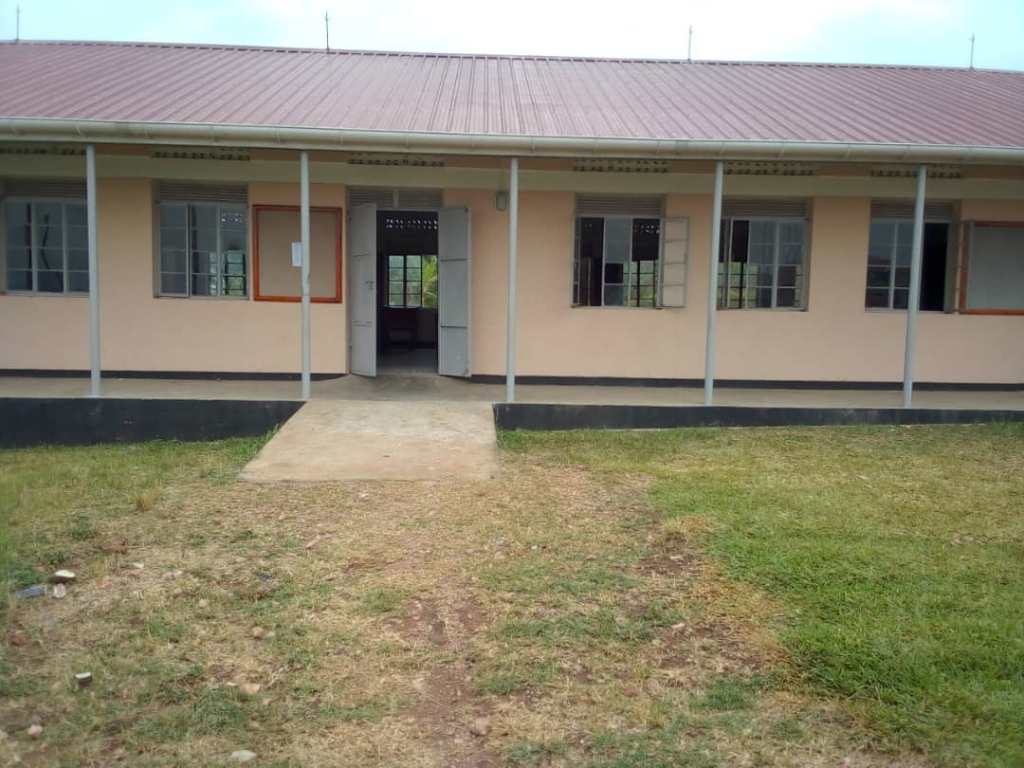
259 such schools are to be constructed in three phases. Each school has classrooms and administration blocks ,teachers houses, a library, computer laboratory, a multipurpose hall and a playground.

Information available shows that of the 117 to be constructed in the 1st phase , 68 are complete.

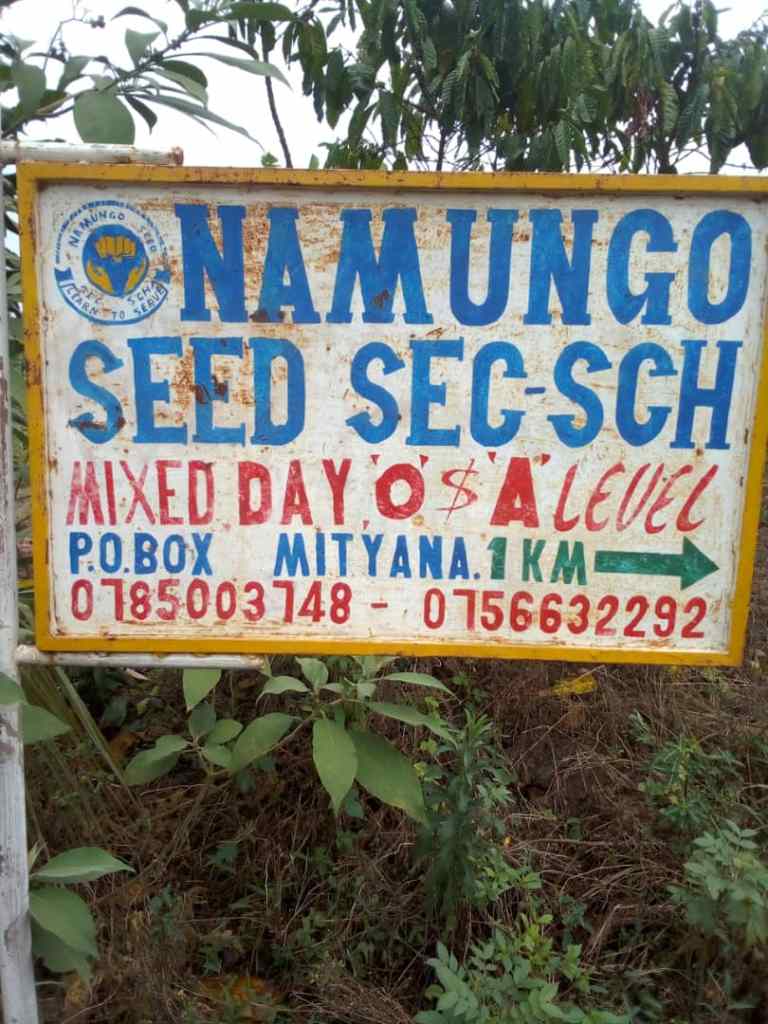
Namungo Seed school is one of these. Our village won the offer fair and square because they had a primary school at the site, more free land with  a title deed and the land was squatter free!    


Other districts had some challenges in acquiring free land, finding sources of clean water, electricity. The school fees or lunch fees though nominal are a burden to some of the parents.

Namungo Seed school has electricity and solar, has a new borehole to provide safe water and harvests rain water in tanks. However, some students travel from far to get to the school, making the necessity of a dormitory block urgent.

Generally, government funding for education has been declining for two decades. According to data worldbank.org, in 2021 the education spending was 8.21 % of the Gross Domestic Product. This has resulted in understaffing of schools and lack of basic requirements like water and electricity.

I am yet to visit this school, opened in 2019, currently with a total of 400 male and female students, to know exactly what is going on. Having a ravenous mind developed through consistent reading of books and an insatiable curiosity about the world, I can see myself taking a keen interest in the library and helping the students develop a reading culture.

  The Administration block.

Not forgetting that I am a medical doctor, I shall visit that Health centre 3 as well.

My grandparents and my father must be smiling over the children in that school!

They valued education and were able to send my father to the then established church school in Namukozi, Mityana. He excelled to enter the prestigious Kings College Buddo. He would walk barefooted for three days to get there. He went on to become an outstanding public servant and a Katikkiro/prime minister of the Buganda Kingdom ( 1950-1955). He was immensely proud of his village.

 I can safely say that the future of the young generation is bright – huge opportunities and wide choices in a global village. Many will be assisted to develop their full potential.

Who knows 25 years from now, the Prime Minister of Uganda could have his origin from this Seed School.

One Luganda Proverb spells it out clearly: Nezikokolima gali maggi. Loosely translated says: Even the roosters crowing now were at one time mere eggs.

QUESTION :

Have you taken off time to move around your community to know what is going on and decide on how you can be a part of it?

LEARNING TO LAUGH AT YOURSELF

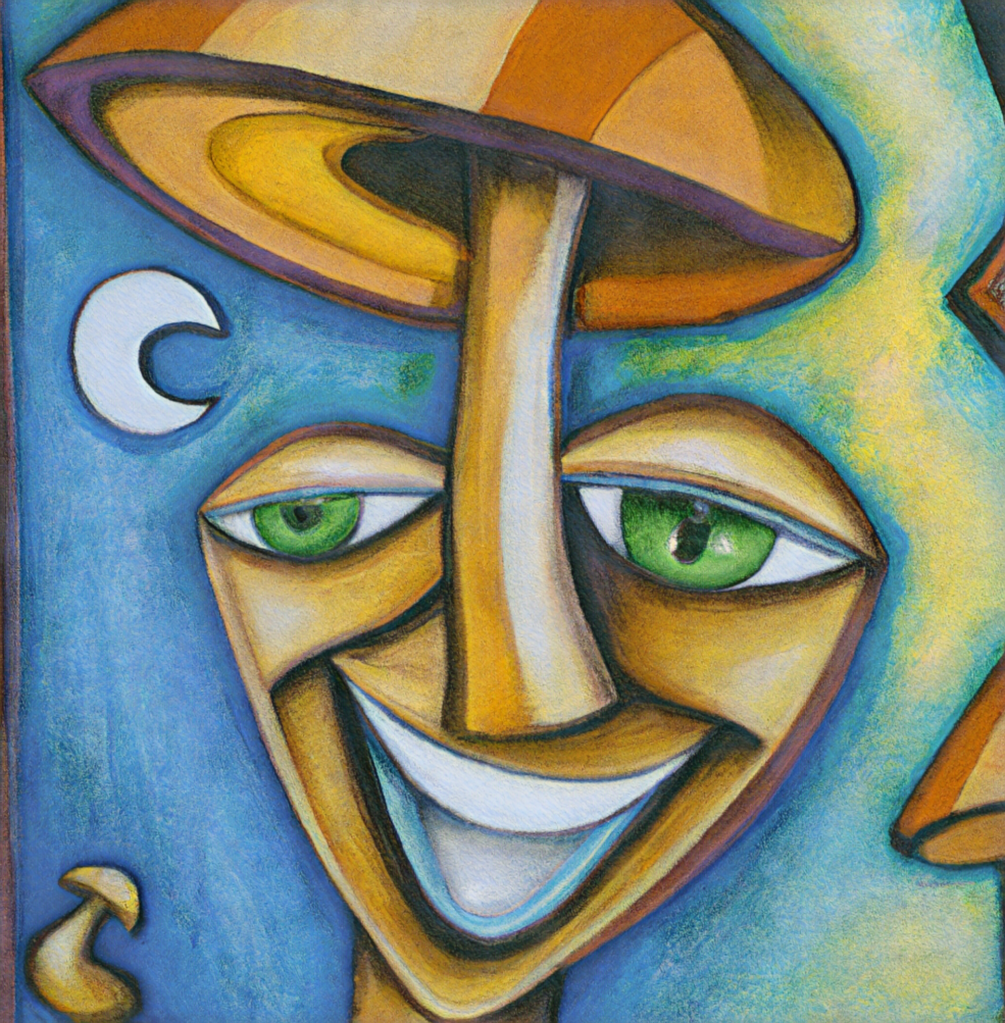
Fantasy Art The Big Laughter Mushroom by David S. Soriano

In life there are things you and I can control like our thoughts, our view of ourselves, how we treat others , our level of integrity and honesty, how we respond to what the world throws at us and how we feel. At the same time, there are numerous things that we cannot control like change, actions of other people and predicting our future. You get back some of your control in your life when you focus on what you can control. Trying to control the inevitable, causes a lot of stress in our lives.My father used to tell me that the best way of reducing the control of the inevitable over your life is to prepare for it. If I wanted people to respect me, I had to prepare for it by respecting myself and those around me.In our twenties, we feel like the Caterpillar road construction machine: strong, full of energy and ready to take on almost anything and flatten it. In the thirties we are more competitive and would want to dominate.In our forties, we still try to perfect the competitive game. Being serious and important people. Then the half mark, 50, strikes and the majority of us are forced to shift our mindset from Competing to Connection. Feeling the urge to connect with your spouse, children and friends at a deeper level. It dawns on us that developing close human relationships gives us a sense of personal meaning in life. From that age, loving and respectful relationship with the spouse and children combined with a tight network of friends tend to prove more enhancing than having a lot of money. We try hard not to lose this closeness with the most important people in our lives. We learn to trust ourselves, to give ourselves permission to learn from other people in our quest to become better parents, spouses and friends.This is when learning to laugh at yourself also becomes an integral part of your daily life.No human being is perfect; perfection is for God only. Each human being is unique with strengths and weaknesses. Since we are infallible, we all make mistakes and take wrong decisions in life.One way of reducing the stress on yourself for having made a mistake, is to acknowledge the mistake made, talk about it and even laugh at it. It reduces the control of the mistake over your life and fosters resilience.

“Laugh at yourself first, before anyone else can.’’- Elsie Maxwell.

“Be able to laugh at yourself, you’ll live longer and happier.’’- Unknown

“As long as you can laugh at yourself, you’ll never cease to be amused.’’ – Unknown

Laughing at your own mistakes reflects that you are self –aware, you are modest about your yourself and your abilities. The Behavioural Scientists consider laughing at yourself as “self-directed laughter without putting yourself down’’. It is not healthy if it is motivated by self-demeaning damages.The ability to laugh at yourself has several benefits to you:It helps you to remain humble and stimulates a positive outlook in life.When you laugh at yourself, you immunise yourself against any insults hurled at you.It helps you to deal with criticism in future.As you grow older you find that laughing at yourself more contributes to your mental wellbeing.It reflects that you have insight in your problem and self –acceptance hence reducing the stress on you.Generally, laughter releases the “feel- good hormones”- Dopamine, Serotonin, endorphins and Oxytocin from the base of the brain. These natural pain killers ease pain in the body, reduce stress and make us feel good. Studies done by the behavioural scientists have shown that the effect of these cocktail of hormones on the individual is like the combined effect of exercise, meditation and having sex at the same time.

Other benefits of healthy laughing at yourself include the presentation of the real” you” to people: with your strengths and flaws, limitations and vulnerabilities. This is essential in forging -meaningful and genuine integral relationships.It also allows the people around you to relate to you and improve themselves where they can.

Proverb 27:17 says: As iron sharpens iron, so one person sharpens another.

The same behavioural scientists have come up with some tips on how to learn to laugh at yourself.They include:

  1. Accept yourself – no one is perfect. Some things like the colour of your skin, your height cannot be changed, just live comfortably with them. You can even exploit what you cannot change like a high pitched voice and earn something from it in voiceovers or Audio books.

2.Separate yourself from your performance. Who you are has very little to do with your performance at work, home or in your community. The People with disabilities have a very good motto: Disability is not Inability. You are not defined by one mistake at work or in the community. Laughing at yourself is about laughing about one mistake you once made not laughing at who you are as a person.

3.Be humble- only humble people can accept and own the mistakes they once made. You can be humble by practising mindfulness.Sometimes you may have to lower your expectations depending on the situation you find yourself in.

4.Stopping to control the uncontrollable in your life.

5.Not being afraid to ask for help.Trying to listen more than you speak- Max Ehrmann in his prose poem, Desiderata, of the 1920s said that the dull and the ignorant, they too have their story.

6.Not to take things for granted.

7. Always using the magic words: Thank You.

Many times in my life, I have used humour to point out my flaws and to acknowledge the many ways in which I am not perfect. As we find humour in the mistakes we make, we have to be mindful of others to avoid hurting them.At the same time, we have to avoid becoming our own worst critic. After all, everyone has an inner critic – the negative voice in your head telling you that you are not good enough,you don’t deserve this or that. No matter how good you are, the self- critic voice in you always shows up.

Along with learning to laugh at yourself, you need optimism and hope to keep you moving forward. If your glass is half-full then the onus is on you to fill it to overflowing.In a world full of wars, conflicts, famine, job losses and confusion and yet closely connected through the internet, we need more optimism to devote more time and energy to finding trust, companionship and community with others- more human. It all start with each individual by learning to deal with her/his negative circumstances or self-doubt.

“When you have confidence, you can have a lot of fun. And when you have fun, you can do amazing things.’’- Joe Namath

The unprecedented Covid-19 pandemic lockdown gave us plenty of time to reflect on our lives and to laugh at the mistakes we had made along the journey of life. Let us now move into the future more confident, focused and committed not forgetting that each generation has to live fully in its own time.

QUESTION :

Has this post inspired you to keep believing in yourself while gaining confidence in laughing at your mistakes without pulling yourself down?

THERE IS NO TIME LIKE THE PRESENT

Tick Tock

There is an old adage that says that :  There is no time like the present. It implies that that best time to do something is now- the past is passed and the future is yet to come so be in the “here and now’’.

If you are not fully present, your thoughts are either turned towards the past or fixated on the future.

Everything around us changes with the passage of time-everything is completely time-dependent.

Men created clocks to measure time so generally we have clock time  and neural clocks.

There is a 12-hour clock and a 24 hour clock used by railways, aeroplanes. The Clock time has three dimensions: the past, the present and the future.

Time comes to us in seconds which add up to minutes that add up to hours that add up to days, that add up to weeks, months and years.

According to the neuroscientists, our brains have the capacity to organise the flow of our experiences into an orderly sequence of events. Our sense of time is expressed within experiences and memories. Our brains have multiple biological clocks that help us to keep track of time. One example of the neural clock is the circadian clock tuned to the rise and fall of daylight. It helps living organisms to adapt to the rhythm of the day.

  A New year gives us a sense of renewal that drives us to think about areas of our lives we want to improve or change as we go forward in life. By tradition, on the brink of a new year, we re-evaluate and take inventory of our lives. Then we set goals and objectives  to direct us into meaningful change in the new year. These are the new year resolutions.

Recent studies showed that 64% of people abandon their new year resolutions within a month.

The psychologists advise us on the following to help us honour our Resolutions.

  • Goals take time to be achieved
  • Not to focus on the outcome mainly but instead break the main goals into small measurable ones.
  • We only achieve goals by consistently taking small steps daily or weekly.
  • Be honest with yourself so that you do not set too lofty goals.
  • When making resolutions, consider and anticipate challenges so be ready to be flexible and to use your core values to inform and guide your decisions and behaviour.

Peter Turla once said: “ Don’t spend a dollar’s worth of time on a ten cents decision.’’

Since life is made of time and  New Year serves as cyclical marker, we  set goals and objectives to be implemented and achieved in a set time. I have collected some quotes about Time and Life to help each one of us to use the 24 hours of the day effectively and efficiently. Being here and now.

 “Time is the most valuable thing a man can spend.” – Theopbrast

   “Time comes to us one second at a time.” Author unknown

 Generallyup to our mid- thirties, most of us feel that we have all the time in the

                                 the world to be what we want to be and to do what want to do.

           When we hit our forties, it dawns on us that we have lived more than half of our lives and we start to face our mortality. By the fifties, many of us are feeling emotionally and socially liberated and have accepted our mortality. We are no longer driven by titles or status, ambition and fears, but instead, we allow death to guide us through life.

We get ourselves ready for death but at the same time get into the habit of living for today-living life to the fullest.  We live life on purpose and use the time left well.                   

 We endeavour to create something that will touch people’s lives and outlast us.

   Reaching the Age of Mastery(45 to 65)

     and the Age of Integrity  (65to 85+) where I happen to be , endows you with deep

    friendships, satisfaction for mentoring the young and to explore your innate creativity.

   You have the freedom to awaken a “dormant self” that was left behind as you worked for status and titles in society. This “new self” gives you a sense of aliveness like a fourteen years old. You write, you paint and dare to do new things. The psychologist call it passing the Time

Flies Test– immersing yourself into some pursuit or pleasure with such passion that

   time flies without you knowing it. At peace with your mortality, you try to be more

    efficient and more effective with your time; you want to conquer and savour more

    out of life. At the same time, you pay more attention and time to maintaining

     an adequately functioning body with an agile mind. You open yourself to new

      learning every day and you become quick to absorb new experiences.

     I would say that you look at life as the most priceless gift you have and you open your heart, mind and soul to receive it and enjoy it fully.

   Reflecting on my life at this moment in time has helped me to understand

   the real meaning and true purpose of life.

     I am hopeful that these quotations about time and life would help you appreciate

  the true meaning of life and to recognise that life is short but you can get it right.

1.Time is the school in which we learn, time is the fire in which we burn.”

                                                                                                            –Delmore Schwartz.

2. This time, like all times, is a very good one, if we know what to do with it.”

                                                                                                  – Ralph Waldo Emerson

3. “Take care of the minutes and the hours will take care of themselves.”- Henry David Thoreau

4. “ You’re writing the story of your life  one moment at a time.”

                                                                               – Doc Childre and Howard Martin

5.  Never let yesterday use up today.”- Richard .H. Nelson

6.You cannot build a house for last year’s summer. – Ethiopian proverb

7.“Don’t be fooled by the calendar. There are only as many days in the year as you make use of. One man gets only a weeks’ value out of a year while another

man gets a full year’s value out of a week.” – Charles Richards.

8 . Not everyone who chased the zebra caught it, but he who caught it, chased it.- African proverb

9.“Ordinary people think merely of spending time. Great people think of

Using it.” – Authour Unknown

10. He who rests grows rusty. –   German Proverb

11. An inch of time is an inch of gold but you can’t buy the inch of time with

     an inch of gold.  – Chinese Proverb. 

12. “The way we spend our time depends on who we are.” – Jonathan  Estrin

13. “The two most powerful warriors are patience and time.” – Leo Tolstoy

14.  “Time is the best teacher.”

15. “The common man is not concerned about the passage of time, the man of

          talent is driven by it.” – Shoppenhauer 

16. “They say that time heals everything but I would say that after losing a loved one, time just makes it comfortable to live with the loss.” – Jane Nannono

17. “At this moment in time, nothing fascinates me as watching my grandchildren

          blossom into independent human beings more so during the times we do not see each other.” – Jane Nannono

18. “If you love life, don’t waste time for time is what life is.” Japanese quote

Last but not least :  Harry Emerson Fosdick’s Definition of a Successful Life:

                                      To laugh often and much;

                                       to win the respect of intelligent people

                                       and the affection of children;

                                       to earn the appreciation of honest critics

                                        and endure the betrayal of false friends;

                                        to appreciate beauty, to find the best in others;

                                        to leave the world a bit better,

                                         whether by a healthy child,               

                                           a garden patch or redeemed social condition;

                                         to know even one life has breathed easier because you have lived.

– HARRY EMERSON FOSDICK

As we enter the new year, may we all learn to use our time effectively and efficiently as we go about doing the most important things in our lives.

     QUESTION : 

 Are you busy just being busy or are you committing 80%

                               of your time to the 20% most important things in your life?

A FEW QUOTES TO INSPIRE US AS WE ENTER 2023

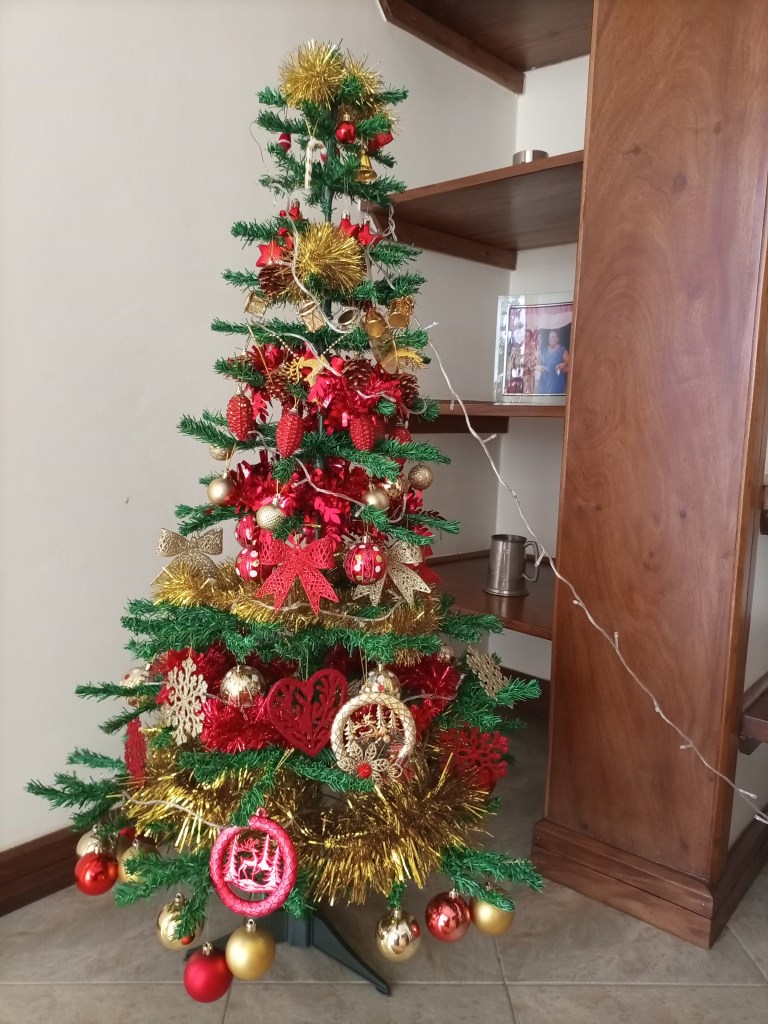
It is a light atmosphere with Christmas carols  clamoring

 on radio, television, on  our phones , in our homes and in the streets.  The Christmas tree lights are glowing in most of the shops. The Christmas carols are announcing the birth of Jesus Christ, our Lord, and the new year following on its heels.

A calming and relaxing atmosphere despite the hardships and challenges we faced during the unsettling uncertainty of the two years COVID- 19 pandemic lockdown. This global medical emergency caused by a virus, changed our lives forever. It changed how we live, how we work, how we interact with others and how we spend our leisure time.

It taught us some good lessons:

  • that we have to work together globally on the problems that affect the entire human race.
  • There is a need to address the inequalities between the rich and the poor in our society.
  • Our economies should work to deliver prosperity and safety for all.
  • Misinformation and disinformation are part of the Digital information systems and affect the way individuals interprete daily developments. Technology companies have to invest in tools that improve online accountability.
  • Digital transformations like telemedicine,  video conferencing, online teaching and e-commerce should be exploited fully to improve ways of accessing and delivery of health care and education.
  • The greatest asset of each country still remains its people.

These lessons and many others learned through the pandemic should be applied to respond effectively and timely to future epidemics and pandemics.

According to coronavirus.jhu.edu – the Johns Hopkins Coronavirus Resource centre, as on the 22nd December 2022:

 A total of 656,350,602 cases of COVID-19 had been confirmed  

And 6,676,588 total deaths.

13,098,830.125 vaccine doses had been administered.

UGANDA:

The Confirmed cases were   169,810

 while the Deaths were              3.630

Total doses administered  were   26,244,519

Currently, there are some new cases of COVID-19 in China following the recent easing of strict lockdown restrictions under their zero-COVID policy.

 Since March 2022, we have all been struggling to find the new normal after the two- years lockdown.

This tough period, which is considered the worst humanitarian crisis since world war 11, has reminded me of the struggles that Okonkwo, the main character in Chinua Achebe’s fiction novel: Things Fall Apart (1958). Okonkwo, known for his aggressive personality and wrestling prowess tried his first year at yam farming. Unfortunately for him, the crop failed miserably due to a combination of uncontrollable factors: a severe drought followed by a great flood and non-observance of the traditional sacred week of peace.

In his attempt to encourage himself he said to himself, “ Since I survived that year, I shall survive anything.’’

In a world  where there is a lot of change, confusion and disorder:

the war in Ukraine, the floods and landslides in Pakistan the fires in Croatia and Extreme weather events leading to food insecurity and conflicts.

Nearer home; the civil war in the Democratic Republic of Congo, the floods in Kinshasa, the civil war in Ethiopia and the drought in Somalia.

Here at home we have had floods, drought, famine and some cases of Sudan Ebola disease in Mubende district since 20th September 2022.

One thing is for sure life goes on – time and tide wait for no man.

Each one of us has a vital role to play in creating a future we deserve. We have to keep moving upward and forward. One famous quote says , “ Never underestimate the power you have to take your life in a new direction.’’

 “ Life is not about expecting, hoping and wishing, it’s about  doing, being and becoming.’’- Mike Dooley

“ I like the dreams of the future better than the history of the past.’’- Thomas Jefferson

Without life, I cannot think of a future beyond where I am.’’ – African Proverb

I have compiled some quotes and proverbs to inspire and encourage us to move into the future after the COVID-19 pandemic.

  1. Sosolye bwatafa, atuuka kulyengedde- the bird that survives a hunter’s trap lives on to enjoy the banana of the next harvest.
  2. Bwekatarigyirya eribiika amaggi- loosely translated says that a female chick that survives being eaten by a hawk, grows up to lay some eggs.
  3. When the roots are deep, there is no reason to fear the wind
  4. A little hope each day can fill rivers to overflowing
  5. It is better to live as a lion for one day rather than 100 years as a sheep.
  6. The strength of the crocodile is in the water- people can be very strong in their right environment.
  7. However long the night, the dawn will break.
  8. Trouble does not discriminate. It comes to everyone at some point.
  9. Not everyone who chased the zebra caught it, but he who caught it , chased it.
  10. Once you carry your own water, you’ll remember every drop.
  11. Even the lion protects herself against the flies.
  12. All monkeys cannot hang from the same branch.
  13. The axe forgets but the tree remembers.
  14. Don’t think that there are no crocodiles just because the water is calm.
  15. Lack of knowledge is darker than the night.
  16. If you’re not part of the solution, you’re part of the problem.
  17. Wisdom is like a baobab tree; no one individual can embrace it.
  18. In the moment of crisis, the wise build bridges, and the foolish build dams.
  19. The wise man never takes a step too long for his leg.

QUOTES:

The first step towards getting somewhere is to decide that you’re not going to stay where you are.’’- J.P Morgan

Don’t be afraid to give up the good to go for the great.’’- John . D. Rockfeller

“The secret of change is to focus all your energy, not on fighting the old, but on building the new.’’- Socrates

Resolve to keep happy, and your joy and you shall form an invicible host against difficulties.’’- Hellen Keller

Strength shows not in the ability to persist, but in the ability to start over.’’– F. Scoff Fitzgerald

Go confidently in the direction of your dreams.’’– Henry David Thoreau

“What the new year brings to you will depend a great deal on what you bring to the New Year.’’- Vern Melellan

“You will never win if you never begin.’’- Helen Rowland

“I close my eyes to old ends and open my heart to new beginnings.’’ – Nick Frederickson.

“Life begins at the end of your comfort zone.’’- Neale Donald Walsch

“There are better things ahead than any we leave behind.’’- C.S Lewis

“It always seems impossible until it’s done.’’- Nelson Mandela

“The future belongs to those who believe in the beauty of their dreams.’’- Eleanor Roosevelt

“The new year stands before us , like a chapter in a book, waiting to be written.’’- Unknown

“With the new day comes new strength and new thoughts.’’- Eleanor Roosevelt

“If you’re brave enough to say goodbye, life will reward you with a new hullo.’’- Paulo Coelho

Although no one can go back and make a brand new start, anyone can start from now and make a brand new ending.’’- Carl Bard

We are social animals by nature who need social support systems to thrive. We are given to each other to be there for one another- sharing, encouraging and lifting each other up. Regular human connection keeps us healthy; less stressed and our immune systems function better.

Technolgy seems to be connecting us but face –to-face interaction is superior.

As we celebrate the festive season, may we all do it out of an attitude of gratitude and appreciation and be generous to the needy among us.

Thank you for following my blog.

MAY THE SPIRIT OF CHRISTMAS BE WITH YOU THROUGHOUT THE NEW YEAR.

THANKSGIVING

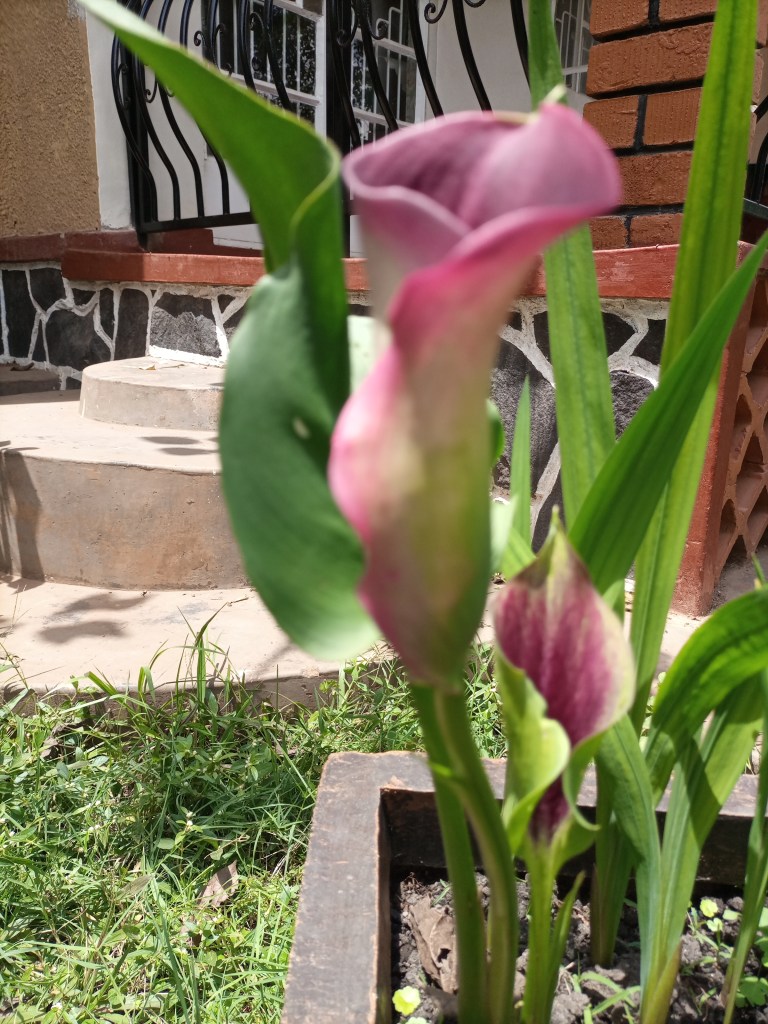
A lot to be grateful for including this beautiful addition to my small garden-an elegant pink arum lily.

I am a senior citizen, I grew up hearing four magic words in my parents’ home which I later taught my children and they are now teaching them to their children. They include: “ Please’’, “Thank you’’, “I’m sorry’’, “ You’re Welcome’’. As I grew up, they expanded to include, “excuse me’’ and “May I’’. Like the dynamite, they are small but very powerful words. They are used in our daily life and have come to represent good manners across the board.


Good manners are not absorbed but are seen and copied by children as they watch their parents do what they do. Among the commonly used words in my childhood were “Thank you.’’ These words were as natural to my parents as the first greeting of the day and were always part of their normal conversation. They could thank me several times for the same act of kindness. Their behaviour rubbed on to all of us and continues in the grandchildren.
As 2022 draws to the end, I have a myriad of things to be grateful for more so after the unprecedented two-years COVID-19 pandemic lockdown. In a world full of wars and natural disasters: floods, fires, earthquakes, famine and here in my country, Uganda, facing a grim post-COVID economy,
drought in Karamoja , northern Uganda, floods in Kasese and Mbale in eastern Uganda.
And most worrying, the break out of the Sudan Strain of the Ebola disease in two of the districts in central Uganda. Being up and about today cannot simply be taken for granted.
Thanking God by counting my blessings other than my burdens is the right thing to do. If not, I may remain buried under the rubble of life. Practicing an attitude of gratitude irrespective of what is going on around me makes me feel positive and hopeful, energises me to be able to deal with adversity and build strong relationships.
Acknowledging the good that you already have in life is the foundation for all ABUNDANCE.’’ – Eckhart Tolle


Among the things I am most grateful for are:
• Being alive- up and about- the COVID-19 pandemic crystallised well how fragile life is.
• Writing- making a difference to people’s lives in my small way.
• Caring for my nonagenarian mother- continued sharing of our lives together and other siblings.
• Motherhood- it never ends. It has now endowed me with the gift of being called “Jajja’’/grandmother.
• Lifetime friendships- making it easier to share highs and lows and to trust life more.
• Being open to continued dreaming and learning- it has taught me that there is no limit to what is possible in life.

According to Mindful.Org
Living with an attitude of gratitude improves our mental health and helps us to appreciate small positive things and little moments in life.
We have all to learn to practice gratitude every day. Here are some of their recommendations to encourage us practice gratitude every day while building our lifetime capacity for gratitude.

  1. Keep a gratitude journal to record and recall moments of gratitude.
  2. Remember the hard times that you experienced before-it multiplies the gratitude.
  3. Meditate on your relationships with family, friends, colleagues at work- Consider what you have received from them, what you have given them and what troubles and difficulties you have caused. Affirm the good things that you receive from others and acknowledge the role other people play in providing your life with goodness.
  4. Gratitude lubricates all relationship as it reduces friction between people.
  5. Share your gratitude with others- it strengthens relationships.
  6. Apply your five senses of: touch, smell, vision, taste and hearing, to express your gratitude for being alive.
  7. Make a vow to practice gratitude every day. It reminds us of the goodness of the people in our lives and builds our capacity for being more grateful.
  8. Focus on the good things that others have done on your behalf- with the aim of expressing and thanking them through gifts.
  9. Notice the people and things around you and appreciate them. Acknowledge gratitude through smiles, saying thank you, writing notes of gratitude.
  10. Spread gratitude through your social media platforms- grateful people are more mindful of others.
    Carry the attitude of Gratitude wherever you go.
    The psychologists tell us that when we notice goodness and beauty and are thankful for them , we experience pleasure. This feeling stimulates the brain to release the ‘feel good hormones’: Dopamine, Oxytocin, Endorphins and Serotonin. Dopamine makes us feel pleasure, satisfaction and motivation.
    Endorphins are the body’s natural pain killers, they reduce stress and discomfort while oxytocin promotes social interaction; bringing people closer.
    Grateful people are happy , less depressed, they are optimistic and positive.
    Showing gratitude strengthens our immune systems, improves sleep patterns and makes us feel more helpful and generous.

Observing what is going on around me during the period of October to January, I have come to define this period as the main Season of GRATITUDE.
Harvest Thanksgiving
I am a Christian and I know very well that during the month of October up to early November, Anglican churches hold Harvest celebrations to thank God for the abundance of the harvest of the fruits of the earth. Offering the best of all that your land produces honours God and has great rewards: Proverbs 3:9-10.

Thanksgiving in USA
In 1942, President Franklin Delano Roosevelt declared the fourth Thursday in November as Thanksgiving day in America. It is a day for family and friends to gather to celebrate the harvest and other blessings of the past year. Currently it is the busiest holiday of the year and falls on the Last Thursday in November.
From economist.com, Thanksgiving day has been celebrated in America since 1621. In November 1620, a group of English pilgrims landed in Cape Cod, Massachusetts and a year later, they had a successful harvest which they celebrated with a Turkey feast. It is a day for being thankful- sharing what you are most thankful for in your life. They also give back by collecting and giving food to the needy.
This year, it was celebrated last Thursday 24th November.

The Festive Season
Out of habit, by early December, radio stations start playing the Christmas carols ushering in the Festive season, centred on the story of the birth of Jesus Christ.
Familiar Christmas carols like Long Time Ago in Bethlehem, Jingle bells, Silent Night, Joy To the World, We wish you a merry Christmas, and a variety of local ones are common staples that flood my heart with joy; bringing my faith alive. They also remind me of what it was like to be young and to have big dreams.
No doubt this year I shall be most thankful for 65 plus Christmases that I have so far celebrated with family and friends. It is a welcome throwback to childhood as well as a celebration for the gift of Life.
We are now in the Festive season- a season for family gatherings, religious services and gift giving.
The Christmas holiday will be followed on its heels by the New Year holiday. We can all use this opportunity to express our gratitude to God by caring for the needy among us.

There is a local proverb about thanking people for what they do. It says: Ndyebaaza ndya tagunjula munafu. Loosely translated, it means that waiting to thank anyone for a task completed does not motivate lazy people to be useful. Ideally thank someone for the little effort taken towards completing the main task.
The Buddhists consider gratitude as a reflection of someone’s integrity and civility.
QUESTION
How often do you use the short but significant two words: Thank You?
What effect do they have on the people around you?
Thank you for taking time to read this post and leaving a comment.

WHAT I HAVE BEEN READING LATELY

Reading has been an integral part of my life since I was five years old. It has brought me so much knowledge, entertainment and fun and turned me into a world citizen long before Vint Cerf and Bob Kahn invented the global free Internet.

“ I read books as one breathes air, to fill up and live.’’ – Anne Dallard

  1. I read because it is one of my key attributes.
  2. As a medical doctor of the 21st century where things change fast, I have to keep myself well informed about new advances in medicine, best care practices , new diseases like COVID-19, other disease outbreaks. I have to read beyond medicine to fill in the gaps in my general knowledge and logic.
  3. In this Information Age, where there is instant access to information: fake and true, one has to be well informed to discern the truth about the most important issues and ideas of our time.
  4. As an emerging writer, I have to read to expand my knowledge and unlock my critical thinking skills- all essential in honing my writing skills. I have to read across genres, time periods and cultures since there is a lot to know and understand in the world. Reading as a writer helps me to fill the gaps in my knowledge and logic and removes my biases.
    As I grow older, I have noticed that I seek more to know the truth and understand the world- searching for the reality behind appearances, the deeper truth about life. The old age says, “ That you shall know the truth , and the truth shall set you free.’’
    English is my second language and my main language of writing, reading makes me proficient in the English language.
    This is what I have been reading lately:

THE FIRST DAUGHTER (1996) by Goretti Kyomuhendo
Goretti, one of Uganda’s leading novelist, wrote her debut novel in her early thirties. It is about Kasemiire’s journey from infancy in a remote rural area in western Uganda to working and being a mother in the big city of Kampala. As the story unfolds, it reveals the common issues of the time- children being seen but not heard, the boy child being treasured more than the girl child, arranged marriages, teenage pregnancies and bullying in schools.

Kasemiire, a bright girl in her family of six, passes highly to join the nearest government school. To the surprise of many including her mother, she is fully supported by her father. At the boarding school she struggles to fit in and with the help of a friend, Anita, she thrives and excels. Unexpectedly, youthful and naive, she falls pregnant just one term before she writes her O-level exams. She condemns herself to a life of abject poverty as she is banished by her father while the boyfriend, Steven, continues with his education,
Through numerous struggles some of which befell on her because of her beauty, she is rescued by a Catholic nun who gives her a second chance at life through education up to university level.
The past catches up with her while at Makerere university; when a mutual friend unknowingly to her, connects her to Steven.
She is so determined to break the cycle of abject poverty in her family that she finds it hard to rekindle her relationship with Steven, the father of her son. She learns of Anita’s betrayal over Steven.
Gradually she trusts herself and rebuilds her relationship with Steven. They go on to have a set of twins together, sharing the care for Kasemiire’s mother and family in a very harsh environment.
It is written brilliantly, flowing smoothly to engage the reader all the time. It reminded me of that 1989 film entitled: Consequences. A popular film about teenage pregnancy in Africa with emphasis on the need for parents to communicate with their children at all times.
The first daughter should be read by all young boys and girls to know and understand the consequences of the decisions and choices they make.

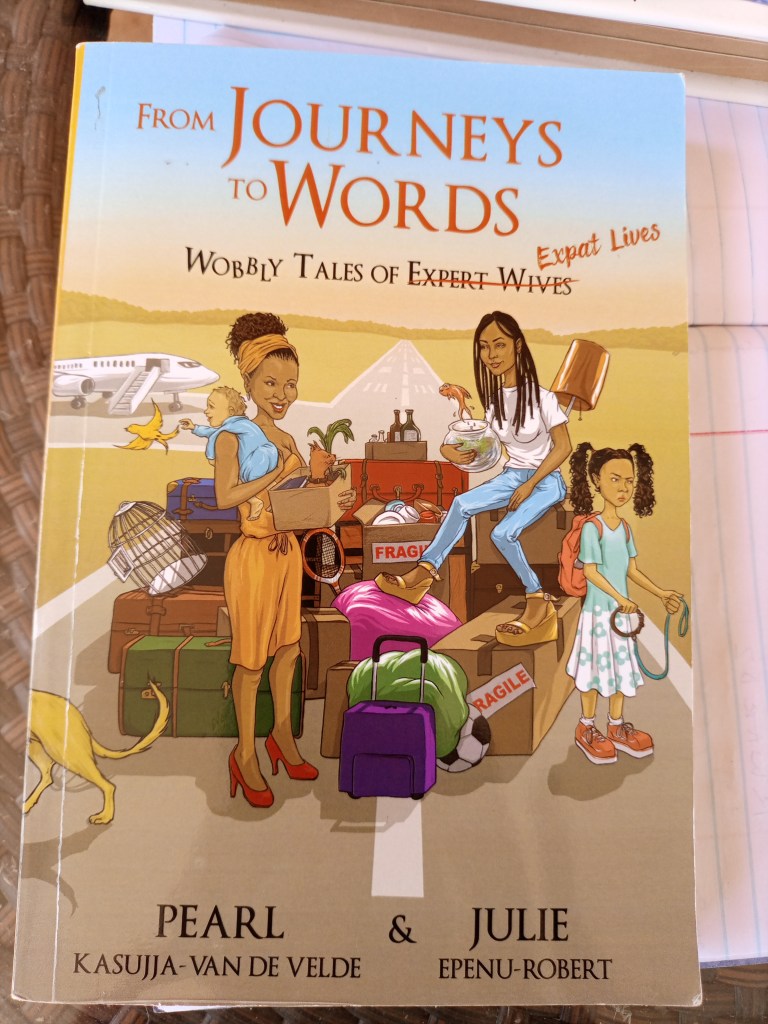
FROM JOURNEYS TO WORDS(2022)- WOBBLY TALES OF Expat Lives by Pearl Kasujja- Van De Velde and Julie Epenu- Robert

Two young Ugandan women: Pearl married to a Belgian and Julie married to a French national, born and raised in Uganda share their real life personal experiences of living as expatriate wives as they follow their husbands to their work stations for over twenty years. Starting off as wives, they become mothers and world citizens.
For Pearl, home is Uganda and Belgium and for Julie, home is Uganda and France.
Living in different countries, they start again every four years or less. Countries like Bangladesh, Zambia, South Africa, Zimbabwe, China, Lebanon, Madagascar, Guinea, France, The Comoros Islands.
They have no control over their next destination but have to make a home where thy find themselves.
They honestly share the challenges they face as they live this nomadic lifestyle.
The stress of moving across the world, fitting in , language barriers, learning new languages, lonely lives, the friendships, the food, the climate, cultures and traditions, and safety, health care, finding reliable house helpers, schools for their children , finding employment , raising children in different cultures- third culture kids, struggling to find a sense of belonging.
One constant in this changing environment is the support of the Expatriate community- keeping them together and focused.
The COVID-19 pandemic lockdown found Pearl and her family in China. Initially, they chose to ride out the storm but 3 weeks into the pandemic they went home only to return seven months later when China opened up at the peak of the pandemic in Europe.
The two ladies , their spouses and children are forced to adjust, integrate while keeping their cultural identity. They have had to let go of some things- apart from their core values and principles, so as to live their true lives
Over the years they have learned to get the best out of each place, become very flexible and thus finding it easier to adapt to any place. They are both empowered and dynamic persons having learned a lot of new things in each place.
It is a well written book; those of us who have lived away from home can relate to some of their experiences.
They carry you easily with them to each new station.
I would recommend it to anyone who wants to expand her/his horizons.
Not forgetting that: Home is where the heart is.

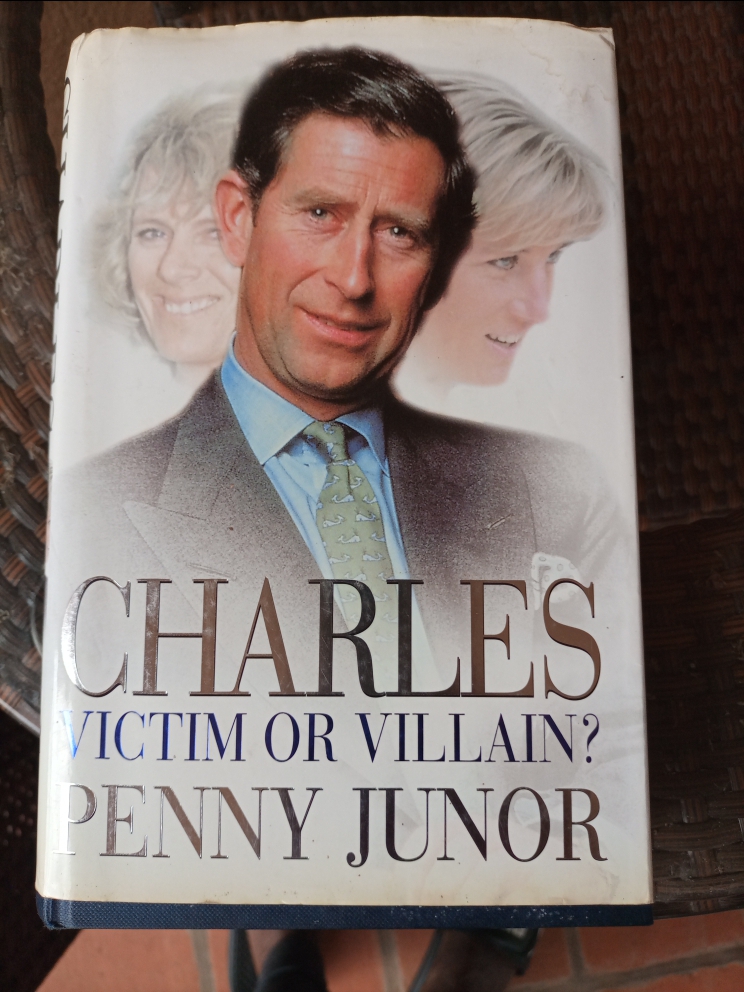
CHARLES- VICTIM OR VILLAIN– By Penny Junor

This book was first published in 1998 to present the true picture of the Prince of Wales after Princess Diana had published: Diana- Her True Story/ In Her Own Words(1997) by Andrew Morton.
I read it by then but I had to retrieve it from my Collection after Prince Charles became King Charles 111 on 8 September 2022 after the death of Queen Elizabeth 11.
I am rereading it to find the reality behind appearances- know the King for who he is.
A lot has happened since that book was written to change the world, the people and attitudes.
It starts off with the shocking, distressing death of Princes Diana on the 31st August 1997 and ends in eighteen chapters. In 18 chapters, it tries to explore what led to the destruction of their marriage of fifteen years. It brings out the pressures that go with position in a modern world. The Prince’s life is controlled by a system he has grown up into unlike Diana, an outsider who had to carve her own path. Diana was never guided through the system more so to understand that she had to share the Prince with his staff, family, United Kingdom and the Commonwealth.
From the onset, the media trailed her for photographs and stories to sell to the hungry public. Later it translated into losing her freedom and privacy.
When the Prince and Princess started drifting apart, the intrusive media exploited the inadequacies in their personalities. The media took sides and Diana chose to manipulate it to suit her purpose. At the end of the day, the media profited from it all while Prince Charles’ philanthropic work went unnoticed.
Family, friends and the public watched miserably as the marriage was dissolved. The children themselves also suffered as they lived under cameras and prying eyes, so did the ‘other Woman’, Camilla Parker Bowles.
Diana had the knack of playing the staff of the Palace of St. James, Buckingham Palace and the media against each other. Some marriages of her staff did not survive the storms.
The divorce left both the Prince and Princess badly hurt and her death was a terrible shock to the Prince.
The friction between the Royal family and the Spencers remained palpable.
I respected the Prince for choosing never to speak ill of Diana though she blamed him for the breakdown of their marriage. He lives history to judge both of them. It is not lost on me that the two were human beings living in a modern world.
Thankfully, Prince William and Prince Harry were supported by family and friends to grow into confident men. The two of them wish to see their father recognised for his selfless work to his Trust and want to see him happy. They have accepted Camilla in their father’s life and have moved on with their own lives.
As more books get written about King Charles and Camilla, Queen Consort, they will help us to make our own conclusions about the Royal family.
The writer asks us the readers/public about the role we play in making the royals into victim of their positions other than villains.

Last but not least, I have the best news for readers and writers of African stories; Leap Publishers of Uganda, an African –Christian publishing Hub, launched a Digital Bookstore in September 2022. The aim is to have a one stop centre where you can buy and publish your stories as you preserve the African heritage. Emerging writers can be assisted through the publishing process at an agreed cost and terms and published writers can be helped to have their work reach a global audience. We are living in the Digital-driven era where recent studies have shown that in 2021, Africa had 591 million Internet users with an estimated 800 million by 2025. Digital technology has made book publishing a huge business that will continue to grow. Currently in Africa, 53% books sold are digital, 43% printed and 0-4% Audio.
The new eBooks store is found on : AfricanBooks.com
Its publishing Platform: AfricanBooks.pub
Email: info@AfricanBooks.com
eBooks can be bought in the Ugandan shillings using Mobile Money accounts or in USD using VISA cards.
As a writer, I have checked them out and found them solid and credible. My fiction novels : The Last Lifeline (2014) and And The Lights Came on (2015) were published on this new platform last week under my pen name : Jane Nannono.
AfricanBooks.com currently has writers from Uganda, Ghana, America, Nigeria, Australia and Kenya.
It has made sales in Kenya, Ghana, America, Sweden, Tanzania, Rwanda, Europe and Uganda. Opening an account on this platform is free. The youngest writer on the platform is a 10-year-old primary school student from the Rainbow International school, Uganda.
Now let us sharpen our pencils, dust off our laptops and turn our minds into an open playground where our imagination can run wild. The Digital Book store is on our laptops and Smart phones.
“Reading is a free discount ticket to anywhere.’’ – Mary Schmich.

LIVING A LIFE OF CHARACTER AND BLESSING

Human beings are works in progress. (Photo from creative Commons)

Indeed, it is true that storms in our lives always take us back to the basics and laws. The first week of October has left my peers battered and bruised forcing us to reflect on our lives.

In a space of two days , we lost two irreplaceable  classmates Mrs. Joanna Nakalema Kamanyi – Abowe and Mrs. Joyce Aedeke Acigwa. 

56 years ago, 56 young, innocent, driven girls were selected from all the districts of Uganda including the remotest then, Karamoja, to join the oldest and most prestigious girls school in the country. Before the Junior Leaving examinations, they had proved that they were gifted, had the potential of becoming leaders and agents of change.

They were divided into two streams of 28 girls. Among them were Joyce Mary Aedeke from Teso district of Eastern Uganda and a chubby, ever smiling Joanna Nakalema Kamanyi from Buganda in Central Uganda.

Joyce was tall and lean but rather shy. Even at that young age, we knew that her father was an Anglican Reverend in the Ugandan army, but found it too difficult to comprehend.

Being in the right environment, Joyce, soon blossomed into a confident,  open-minded,all round student who was a delight to be around. She excelled in chemistry, physics and biology. She played tennis and she and I were members of the school netball and hockey teams for some years. At A-level , she passed brilliantly to join the faculty of Medicine of Makerere University, the only national university then. Two years down the road, she was determined to follow her passion for agriculture other than continue doing what her father wanted for her so she applied to cross over and she succeeded. Three years later, I graduated in Medicine while she graduated in Agriculture.

She immediately joined the Uganda Commercial Bank and worked diligently to become a chief manager in a male- dominated environment. Her brilliant mind, big heart, her strong Christian values and loyalty kept her confident and emotionally strong.

“ A good heart and a good mind are always a formidable combination.’’ – Nelson Mandela

She got married to Mr. Acigwa and they had five children. Unfortunately, the husband died of natural causes early on. Some years later, she lost two adult boys; a lawyer and an administrator. Her strong Christian faith enabled her to gradually heal and move on.  She was instrumental in the building of the Agape Baptist church in Ntinda.  Riding on her wealth of experience in banking, she was head- hunted to work with the renown Ugandan  economist and banker, Ezra Seruma and others to start the Uganda agency for Development Limited which later became a microfinance bank- UGAFODE. A bank founded on Christian values to help the Active poor in our communities- the poor engaged in small businesses like selling a sack of charcoal to help themselves out of poverty. These poor people could not secure loans from the traditional banks of the day. Joyce went on to become a board member of many financial institutions like Uganda Development Trust, National Social Security Fund. She served  devotedly and with fierce loyalty until her death on  4th October 2022.

 At home she was a hands- on mother; loving, nurturing and caring but cautious not to maim herself in the process or lose her children’s trust.  She died a proud grandmother.

In the early 90s, one of our classmates from West Nile district, lost her husband and was unemployed by then. Joyce in her thoughtfulness allowed her and her three children to stay in one of her houses in  Kampala for two years for free until she found her feet again. Joyce felt that she could not have done less for our classmate!

As for Joanna , her and me were neighbours in our village in Mengo.  Our fathers used to ferry us in weekly turns to the nursery school near the King’s palace. We both joined the primary section of the prestigious girls’ school the same year and qualified to join the secondary school in 1966.   Joanna was among the youngest  in a big, close-knit family She was so loved and cared for that she trusted herself to go out and love others unconditionally.  She loved life and lived it every day. Her energy was infectious.

 In the secondary school what she lacked in sports prowess, she made it up in music, dance and drama. She spoke impeccable English like her father. She wrote plays and acted in them. She was an avid reader.

She sang as she bathed, as she cooked and as she worked. She was a joy to be around. She excelled in the Arts subjects and joined Makerere University for a Bachelor’s degree with Education, majoring in English and Literature.

After her masters, she joined the department of literature and also lectured in the department of Music, dance , drama and film. Open-minded and free-spirited, she thrived most in the performing arts.

 She met her husband, Abowe, while working in the department of Literature.

Due to the civil strife of the early 80s, they were forced to flee for their lives to Botswana where she was appointed a lecturer in the biggest college of Teachers’ Education. 

Like Joyce, she lost her husband early on but with her tenacity, she took on the responsibility of raising 3 sons in a foreign country. They became extremely close to each other; looking out for one another. 

She willingly gave fully and completely to the many children she raised but always being aware of her own limits and her own priorities. To her credit, she raised three loving, independent, disciplined and responsible sons. 

She was promoted to senior lecturer in  the Department of  English  at  the University of Botswana, established in 1982.  Joanna served willingly, wholeheartedly and joyfully for all the years she worked there. She guided and nurtured many of her students who needed mothering.

At one time I asked her why she had to squeeze herself like a toothpaste tube while helping others. She told me that she was doing it out of gratitude for God’s grace in her life!

She retired in 2019 after a distinguished career and returned home.

A month before her return to Uganda, she gave me a surprise call asking for my passport details.

“Why would you want them? I asked,  greatly puzzled.

“ I sold sixty copies of your books after you left. I want to send the money by MoneyGram.’’

I was at loss for words but then that was Joanna in her true colours.

COVID-19 Respiratory Disease struck just when we were trying to figure out how she could apply her skills and wealth of experience in Uganda’s Book Industry.

She had helped me edit my first novel  The Last Lifeline  in 2015 and even helped me to sell it.

Our parents and the school gave us a firm foundation for honesty, integrity and serving others joyfully.

Both Joyce and Joanna served as role models wherever they worked- never telling people what to do but instead by their actions, they showed the young generation what was right and how to do it. Their love and loyalty to those around them made them succeed during that difficult period of our country. The Duka duka(run for your life) days that lasted till  the end of the late 80s. 

They were teachers, mentors and sponsors who worked for the success of those under them. They were never distracted by their personal tragedies or made to compromise on their Christian values and principles. They belonged to  their time but also to the future.

 Every day, they wrote their lasting legacy of : leaving their families, their communities, their country and the world better than they found them.

I lived in their time, watched them work professionally and diligently to the top, I can claim to understand them.  I give them a resounding applause.

Jim Rohn said: “If you are not willing to risk the unusual, you will have to settle for the ordinary.’’

And Ralph Waldo Emerson said: “The purpose of life is not to be happy. It is to be useful, to be humble, to be compassionate, to have it make some difference that you have lived and lived well.’’

If each one of us worked diligently at her/his part that fits in the big picture, the world would be a much better place.

As we the peers mourn Joanna and Joyce, I keep asking myself whether I have done enough with my life so far.

The answer is ‘’NO’’ and for the simple reason that each one of us is a “Work in Progress’’ that can never be finished in a lifespan. I still have a big capacity for growth that will change me into the best person I was created to be.  I have to keep doing more and wanting to be more-improving and repackaging myself as a product. I shall keep looking for the beauty in people and situations, listening to the voices within and without and reading and writing more to become the best me.

I thank God for giving us these 56 rewarding years together. I celebrate my two classmates as ordinary, God-fearing women who unknowingly turned themselves into extraordinary women of their time as they followed their hearts and dreams. They lived a life of character and blessing.

They will live on in their children, all those they inspired, motivated and influenced, in our hearts and in all the treasure trove of memories we created together.

May God rest their souls in eternal peace.

QUESTION:

The psychologists tell us that one constant in our lives is change.  Are you giving yourself permission to change with time and grow into whom you were created to be?

IT IS DIFFICULT TO IMAGINE A TENNIS TOURNAMENT WITHOUT SERENA WILLIAMS

Serena Williams in her element

Long ago, I attended a prestigious girls boarding school which offered us a rigorous academic and extracurricular engagements. Sports, music and arts were highly valued. I was privileged to belong to the school athletics team, netball and hockey teams. I also played some tennis. The experiences endowed me with a love for sports up to today. By the time I left the school, I was a well-rounded student prepared for university and a career.

In the 70s, Arthur Ashe, the first African-American to win the U.S Open (1970) and later Wimbledon (1975) visited Uganda and conducted a tennis clinic at my school. It was an unforgettable event for us. Since then , many of us developed a keen interest in tennis and went on to become regular followers of the Australian Open in January, the French Open in May-early June, Wimbledon in June- July, and the U.S. Open as the final Grand Slam tournament of the year.

The Williams sisters: Venus and Serena have given us tremendous joy since Serena’s first victory in 1999 at the U.S Open Grand Slam singles. Venus last made it to the final of the Australian Open and Wimbledon and the semi-finals of the U.S Open in 2017 but Serena has continued to dominate the game until today. They had to stay competitive with other professionals, they just could not stop playing.

Experienced tennis coaches tell us that it takes more than ten years to really get good at the game because there are so many areas to develop in each individual. People pick up tennis and spend entire lifetimes to master the game. You train systematically and compete in tournaments to achieve your physical best. This is exactly what Serena has been doing for twenty-seven years!

A lot has been written about these tennis greats over decades as they rose to fame and greatness.To understand and appreciate how far the two tennis greats and particularly Serena have come, one has to go back to where it all started.Both of them were introduced to tennis by their father, Richard Williams, a former American tennis coach while living in Compton city, California. Before they turned ten, he had had a vision for them to become all-time tennis greats! In 1991, he moved the family to Florida so that the two daughters could attend the Tennis Academy.

In 1995, he withdrew them from the Academy and started coaching them himself. He was determined to use tennis as a vehicle to change how whites viewed blacks. He defined the girls’ world. They both turned professional before their fifteenth birthdays. King Richard– a biographical sports drama based on the life of their father was released in November 2021.Will Smith starred as Richard Williams while the two sisters served as executive producers.

In September 1999, Serena aged 17, won her first Grand Slam at the U.S Open. She became the first African –American to win a major singles title since Althea Gibson in 1956. At the same tournament, the two sisters won the doubles title; opening up their winning streak as they played to win and to please themselves. At the 2000 Olympic games in Sydney, Venus won gold for the singles title and the two won a gold for the doubles title! They went on to win 22 titles when playing doubles together of which 14 were Grand Slams , 3 Olympic gold medals. They met 31 times in professional tournaments.

If you can dream it, you can do it .’’ – Walt Disney

Venus, the eldest though more of an introvert, led from the front on the courts. She had speed, grace and fierce confidence, always aimed at being among the greatest. According to Wikipedia, Venus has so far won 7 Grand Slam Single titles, 5 Wimbledon titles and 2 at the US. Open Serena initially followed her big sister until Venus conceded that Serena was the best competitor among the two. Serena then began her meteoric rise, demonstrating her unique play, her prowess, tenacity and drive. Serena has dominated the women tennis game for 27 years! Years of intense pressure and endurance. So far, Serena has 7 Australian Open, 7 Wimbledon titles, 6 US Open titles and 3 French Open ones under her belt. A champion of Champions. Venus and Serena have over the years developed and polished the main traits of a successful professional player; becoming the dominant duo. They continued to polish them as they competed, confidently holding their own even at 40 years of age. The women of the world cheer and celebrate them as their own. The tennisconnected.com website lists the following as the main traits of a Successful Professional Player:

. Confidence- unshakable self-belief in your abilities and skills

.Determination- to push through hardships, struggle to become the best.

.Engaged

.Professional

.Resilient

.Respectful

.Tough- mental strength and physically fit.

Paul “ Bear’’ Bryant, an American college football player and coach said: “ It’s not the will to win that matters- everyone has that . It’s the will to prepare to win that matters.”

It has not been plain sailing; they have both suffered from occupational-related injuries. Venus- suffered a leg injury during the Australian Open in 2014 and a brutal ankle injury during the Australian Open in 2021. Her general health suffered a setback when she was diagnosed with a rare autoimmune disorder in 2011. Serena had left knee surgery in 2003. In 2010, she was out for almost a year due to Pulmonary embolism. In 2017 , she suffered life-threatening issues after the delivery of her daughter. In 2021, she suffered a hamstrung injury during the Wimbledon tournament. On the 2nd September 2022, at the Arthur Ashe Stadium, Serena Williams (almost 41), played against Ajla Tomljanovic (29) of Australia in the third round of the US Open tennis championships. It was the final tournament of Serena’s 27 years’ remarkable career. It was a long three hours’ match in a packed stadium. It turned out to be a huge emotion for the two of them. Tomljanovic won and acknowledged Serena as her top role model. Serena waved to the fans and thanked them for their support throughout her long career. Thankfully, she has broken so many boundaries and barriers that she has inspired many young girls to take up the game.

As if Serena’s news of retirement was not enough for the raving tennis fans, Roger Federer, a Swiss and another all- time great is set to retire from professional tennis by end of September 2022. He has 20 Grand Slams under his belt. During his career of 24 years, like the William sisters, he has pushed the tennis game to unimaginable heights and inspired emerging players like Rafael Nadal and Novak Djokovic. These two and himself had become the dominant trio in men’s tennis. He turned pro at 16 now at 41, injuries and surgeries have cut his career short. He will be remembered for his smooth, effortless technique that turned him into a champion of champions. Like life itself, you cannot control the outcome in tennis but you can only control how you respond to the triumphs and disasters.

The two sisters from Compton, California, driven by their forward looking father, have grown into the games and come to love it. No doubt they have become the symbol of what is possible for women in sports. Their places are secure in the Women’s Sports Hall of Fame. Over the years, they have developed the courage, the fierce confidence to play to win. They have changed the game of tennis for ever.One local proverb says: Even the best dancer has to leave the stage at one time. Venus and Serena climbed the mountain and each chose when to come down, leaving indelible footsteps along the way for other young women like Ajla Tomljanovic to follow their path. Over time, other players armed with consistency and excellence will rise up and establish themselves as dominants of the game. It will take a while; just like the 100 metres, 200 meters and 4 by 100 metres men’s relay have not been so exciting since the Jamaican track legend , Usain Bolt retired in 2017 after the world championships. As for now, I salute Serena in these borrowed words: “Thank you Serena for defining greatness.’’

There is more to life than our professions or careers – after living your childhood dream, you tend to yearn to open up and grow- you have to leave the world and the experiences you know and look for some spiritual depth and authenticity. Yearning for something better that has eternal meaning. You will not be satisfied until you gain some experience of something real beyond yourself. I have no doubt that Serena, the women’s tennis giant, is starting on the next chapter of her life. For us the women folks, it is hard to imagine an international tennis tournament without her.

QUESTION: As you grow and develop your career, do you intentionally strive to inspire the young generation to want to be as professional as you are?How do you do it?

africa book-review cancer climate climate-change education Educational Educative encouraging enspiring environment faith family feminism general global-warming graduation grateful gratitude health history hiv inflammation inspiring jesus life martyr martyrs motivation nature news nutrition personal-growth politics religion saints stimulate you into action Superhero sustainability thankful thanksgiving travel uganda women writing

THE KID IN EACH ONE OF US

For the children, life is a game to play for fun and enjoyment.

August is my birthday month and many times I find myself returning to my childhood. I have very fond memories of my childhood both at home and in the boarding school I attended for fourteen years!

On the 12th of August, I was reunited with one of my childhood friends whom I had not seen for the last forty years! I was in economic exile for almost 25 years while she stayed on but moved to USA almost seven years ago. We met over a dinner of local dishes at one of our classmates’ home in Kampala. The three of us had been classmates since Junior school and at Makerere University, the only university then, we were separated by the different courses that we studied. Two of us were in the same hall of residence but met occasionally amongst the hustle and bustle of my busy medical school schedules.

The three of us, now respected senior citizens, had the evening to ourselves. We hugged, embraced, cried tears of joy, inspected each other from head to toe, sang a few of the popular tunes of our time and tried to make sense of what happened to us during those turbulent years.

The smell of roasting chicken and beef filled the air and whetted our appetites as we talked thirteen to the dozen and peeled away the forty years that had separated us as we followed our hearts and dreams.

The inner child in each one of us was awakened to full innate capacity for spontaneity, playfulness and creativity.

For those hours we just lived in the moment, savouring it without wasting energy to grieve for order or meaning.

We were transported back to the age of twelve when we met in that boarding school: young , naïve , inexperienced very much open to imagination and new ideas. We could easily get ourselves in trouble and lied to cover our skins.

As we made choices whether to start with tea, juice or wine and which Luwombos to mix or not, we made the decisions that pleased us.

We took many photographs to capture the moments.

There is a child in each one of us who comes out in front of the person we are most comfortable with.’’- Uknown

My Ugandan-American friend and I, had from senior one to senior six belonged to a Novel reading syndicate. We borrowed books from the big library, from friends in upper classes and had to pass them  on to another member in not more than four days. With the school’s tight schedule that included sports , country dancing and club activities after classes, we had to find time to read and enjoy these books. We hid ourselves in the dormitory’s pantry after the official ten O ‘clock lights out. I lost count of the number of times  we were punished for this by our headmistress. After punishing us for a number of times, she took us to task to find out what we did consistently after lights out.

 We looked into her eyes and said, “We read novels and exchange them.’’

She shook her head in utter disbelief but from then on, she made the punishment lighter like picking litter from the tuck shop area. It could take fifteen minutes at the most and she would allow us to run back to join the morning class lessons.

Thanks to her for unintendedly growing our reading culture.

Through books we would be transported to different countries of the world!

We became top students in literature and the English language, we became story tellers.

We wrote a nativity play with a local touch and some other plays.

Life was sweet

The three of us were in the same stream class; motivating each other and competing with each other in a healthy manner. We played tricks on the young missionary teachers from Britain.

One trick the three of us remembered vividly was when the new geography teacher tried to count us and many of us cried out,   “ please, stop otherwise many of us  will  die. In Africa, we don’t count children; even our parents don’t know how many we are in the family!’’

The teacher’s face flushed red and she run out of the classroom to the headmistress’ office.

That evening as we enjoyed the delicious local dishes, we once again looked upon life as a game and we played it for the fun of it while we caught up on each other’s life.

In the Forty years, life had endowed us with many good things but it had also thrown curveballs at us.  Through these experiences, we had learned many lessons and grown; becoming stronger and better people.

“ View life as a continuous learning experience.’’ – Denis Waitley

We were most grateful for being alive and about; we had lost colleagues in the civil strife of 70s,  to HIV/AIDS and  to the recent unprecedented COVID – 19 Respiratory disease.

 We took comfort in recognising that though our faces had grown wrinkles, our spirits have remained vibrant for we have continued to look for beauty in everything around us.

Once you stop learning, you start dying.’’-  Albert Einstein

We could have gone on reminiscing but each one of us lived in a different part of the city

Filled with good food, good memories and ‘feel good hormones’ we retired close to midnight.

Like the joker in a deck of cards, the inner child in each one of us had shown up unexpectedly, wanting to play and take risks.

In the company of childhood friends who knew each other well, we had let each other be and appreciated each other for whom we were- having long given up living life in terms of achievements, goals, making a difference but instead enjoying living life for its own sake, day by day.

Yes, the child like learner/ dreamer still allows us to dream as we recreate ourselves and find new identities like- being a published writer.

The following day, still buoyed by the inner child’s energy, I decided to read more about the psychology of patterns of behaviour in human beings, inherited from our earliest human ancestors. They include: the innocent, the orphan, the warrior, the caregiver, the lover, the creator, the ruler, the magician, the sage and the Inner child. They influence our behaviour and guide us through life.

It helped me to understand fully why the inner child in each one of us had opened us up for greater joy.

The kid or inner child within each one of us is the individual’s childlike aspect. It includes what a person learned as a child before puberty. Our behaviour as adults is born out of our childhood experiences.

 The psychiatrist Carl Jung (1875-1961) first came up with this term of “ the inner child’’.

The inner child is part of each one’s subconscious. It holds emotions, memories and beliefs from the past and hopes and dreams for the future. He/she is always alive at all stages of our lives, keeping the spark in our lives.

It endows us with wonder and optimism and simple joy.

It is full of adventure, lives for the fun of it- without the inner child in each one of us, there is no capacity to enjoy life for its own sake.

When the inner child predominates, you tend to explore the world around you. You are motivated by curiosity. You play life as a game without concern about tomorrow, no concern about what the neighbours will say, no concern about traditions and rules. It is called the ‘ be here now’- always in the moment.

The inner child can lend you strength like finding drama in a negative situation. Regaining your youthful feelings of wonder, optimism and simple joy, your confidence and wellbeing are boosted.

Unresolved trend of childhood makes us frozen at the time and age it occurred.

 The Analytical Psychologists ‘advice on how to embrace your inner child:

  • Live in the moment
  • Be more honest
  • Do not stop questioning things
  • Take a risk
  • Trust more
  • Go out to play- life is a game, played to have fun and pleasure
  • Stop worrying about what others think about you.
  • Be more creative and innovative.

Without the inner child in each one of us, there is no capacity to enjoy life for its own sake.

Between 3-25 years of age, our inner child is highly active- curiosity motivates us to explore and experiment with life. We want mostly to be free with little interest in being responsible.

28-50- Adult responsibility years. The inner child tends to be overshadowed by the responsibilities. We pay great attention to advice and etiquette and stop taking pleasure in the little things that life has to offer. We get wrapped up in achieving our dreams, goals. We are concerned about what others think about us.

The joker shows up occasionally to keep a spark in our lives more so if you are with people that let you be and appreciate you for who you are. On your own, you can tune out the noise of daily life by spending time in nature or journaling to release your emotions. He/she can also show up in our worst moments like the loss of a loved one- you can still find laughter as the inner child reminds us that life is sweet despite the losses.

Middle Age – During this time, you reclaim your power to create a new deeper more enthusiastic sense of self. You change the beliefs about yourself and recreate your life. You give up what no longer serves your growth and add only what really fits who you are. The inner child shows up often and you feel alive , invigorated. Without her/him you feel repressed, uptight, tired, bored , depressed and lacking in curiosity.

Old Age – 60+

During this period, the inner child is very alive and well. Most decisions are now based on the pleasure principle. Do things if it feels good, do not do it if it feels bad. Once again you have a zest for life, for sensuous delights, ideas and experiences even spiritual bliss. The inner child’s hunger for experience and pleasure motivates us.  No longer caught up in people’s expectations- free and unafraid.

Little wonder for me that I picked up Creative Writing seven years ago to awaken this creative part of myself which was lying idle inside me. It is my inner child expressing herself.

No wonder I felt young, happy, contented and grateful in the company of my three school friends.

The poem : When I am An Old Woman I shall Wear Purple by Jenny Joseph (1932-2018) brings out this desire to have fun and freedom in old age. The writer now in her late twenties and expected to live a life of sobriety portrays the kind of life she would want to live in old age – getting away with all the mischief. She would not want to take any more personal responsibility and would be delighted to break the rules, violating the social norms in humorous ways to pay for the sobriety of her youth!

QUESTION:

Are you aware that once you stop taking risks you stop learning and growing?

Are you ready to reconnect with your inner child to keep learning, growing, joyfully to thrive in a fast-changing world?