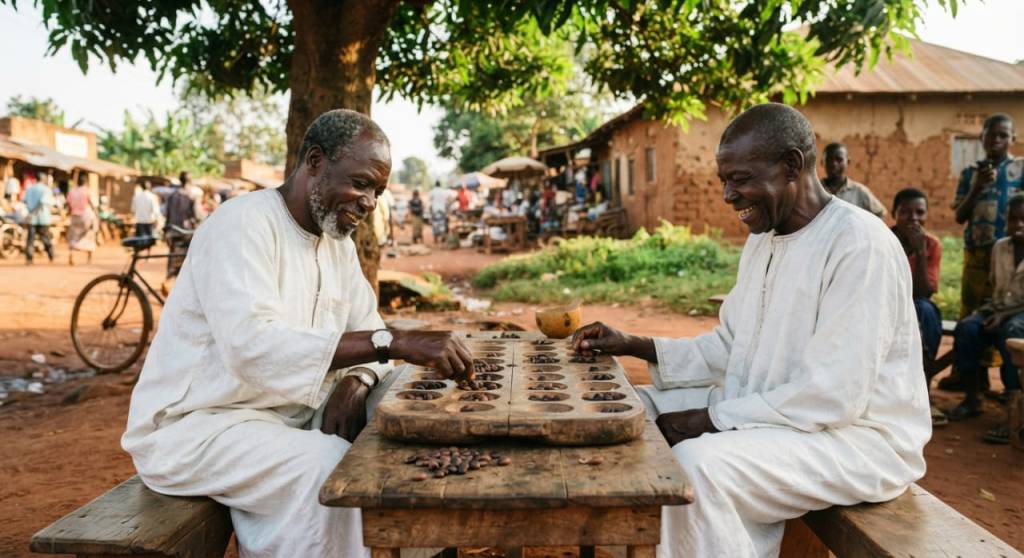
Source: Image created by Gemeni
From early on in my childhood, my parents made me understand that the heroes I was reading about in story books tended to have two extremes of the same trait. It first caused me a lot of confusion, but over time, my father simplified it for me and I got it for keeps. The best example was that such a hero could be the strongest and at times be the weakest. Depending on the prevailing circumstances, that hero can tap into either to rise above the challenge. Much later in life, I learned that the psychologists called this capability psychological flexibility and believe that emotional resilience and mental strength come from a balance of adaptability and integration of opposing traits.
They also recognise that any positive trait, when pushed to an extreme, can become a liability:
- High focus can become obsession
- High caution can become paralysis
- High productivity can become burnout
The strongest among us can regulate the two and slide between the two opposing traits intentionally to fit what the situation requires.
Now that I am in my 70s, I am able to look back and pick out the four main traits that have been the main drivers of my purposeful life.
AUTHENTICITY
Living to what you are: your own core values and beliefs which make you the unique “You”.
Human beings reach their biological identity at 18 to 25 years of age, yet our personalities continue to change as we go along.
As children, we are hungry to please our parents and later our teachers. Teenagers and youths want to fit in with their peers, so they will do almost anything to belong.
Though our biological brains reach maturity at 25 years of age, becoming the true version of yourself is a lifelong process. Studies show that your personality stabilises around the age of 50. You start to question deep down who you are, what you can become in your lifetime, and what is most important to you as an individual. You then devise a plan of how to get there. Gradually you stop playing along to get along. It is a journey through the external and internal worlds where any choice made and path taken influences your identity. Knowing yourself, owning yourself, and being yourself is a position of great strength and enables you to be highly creative and innovative.
My parents liberated us early enough to want to be ourselves by telling us that each one was a special child who could be anything under the sun. This gave us the confidence to be ourselves. As I get older and more anchored into spirituality, I continue to accept myself as I am and strive to make the most of it by using my talents, knowledge, and skills to impact others’ lives.
Some individuals never get to know their authentic self until they get stripped of the people, like a spouse or children, whom they strongly leaned on for long. Spirituality in itself can deepen the root of one’s authentic self.
“To be yourself in a world that is constantly trying to make you something else is the greatest accomplishment.” — Ralph Waldo Emerson
COURAGE
The Oxford English dictionary defines “courage” as the ability to do something that frightens one; bravery.
Each day has its own challenges; some can be life-threatening, like a diagnosis of a serious chronic disease, Alzheimer’s, or late-stage cancer.
I have learned to give myself permission to feel the fear and yet go on to do what is mine to do in such a situation.
- We all need the courage to be unmoved by people’s opinions or societal pressure.
- One needs great courage to fight common, inevitable challenges rather than resign oneself to fate.
- Courage to stand up for any values and principles that you believe in.
- Courage to act when under great uncertainty and risk by telling yourself that you can still do it.
- To reinvent yourself at 60, putting some magic into your life that gives you a reason to wake up every day in anticipation.
DISCIPLINE
The self-control of emotions and impulses.
I do not know where I would be if I lacked the discipline to start and finish what I set out to do.
Psychologists consider discipline the most powerful predictor of an individual’s destiny, often outranking raw intelligence in determining long-term and life outcomes. Often, it is a more accurate prediction of high achievement than IQ.
Discipline is created by the cumulative result of daily choices, habits, and resilience. It endows us with organisation, responsibility, and the ability to delay gratification.
“Discipline is the bridge between goals and accomplishment.” — Jim Rohn
People may be in the same environment, but it is simple discipline that determines whether one takes up the offer to go for free medical check-ups or not, or whether I drink juice and throw the empty plastic container out of a car window or keep it until I find a good place for its disposal.
As adults, our mental health and well-being are governed by disciplined routines like healthy eating, regular sleep, regular exercise, regular brain exercises, and regular medical check-ups.
Over time, discipline changes from being an exhaustive mental effort into automatic habits. Like charity, discipline begins at home, and children are guided by parents and teachers. At university, we found ourselves with a lot of freedom and independence; it required a lot of discipline and sticking with positive people not to fall off the straight and narrow.
On the other hand, extreme discipline can cause hyper-regulation and rigid perfection, which in themselves can slow down our progress.
Anyone believing in God knows that spirituality powers one’s courage, making it easy to find the bravery to face the day’s challenges and the discipline to keep moving forward.
FUN AND PLAY IN ADULT LIFE
When all is said and done, “All work and no play makes Jack a dull boy.” I can safely add that all play and no work makes Jack as poor as a church mouse.
We all need some fun in our lives and the ability to find something beautiful in any situation. Not letting off steam or being constantly serious is not good for our health.
Engaging in fun activities shifts our mindset to playfulness, full engagement in life, and connection with the people and nature around us. Studies suggest having fun taps into the playful part of each individual. It supports emotional balance, eases body tension, and strengthens social connections.
It allows each one to reconnect with one’s inner child: parts of yourself that feel open, curious, and alive. As we become adults, we take on responsibilities, routines, and expectations which push the inner child deep down. We forget having fun, and yet it is essential for mental health and well-being.
Adult playfulness is associated with higher life satisfaction, better coping, and less stress. Intentional fun times stimulate the release of feel-good hormones from the brain. We feel good about ourselves and build strong social connections, becoming more resilient.
Small, repeatable actions like gentle humour, music, gardening, painting, fishing, and other creative hobbies improve our well-being and reduce depressive symptoms in us.
Gardening, writing, voluntary work in my community, and intentionally staying deeply connected with family and friends have helped me bear adversity with great strength, great courage, and dignity.
In today’s fast-paced world, the young and adults suffer from digital overload. Human beings are by nature social animals who thrive best if surrounded by their own kind. As we were traditionally hunters, our brains evolved to perform this craft to the best while ensuring survival in the wild. The brain gives you two options: fight or flee. These two require energy, fitness, quick action, and alertness to succeed. The body produces the adrenal hormone and cortisol (stress hormone) to increase your performance. After such an experience, you eat, rest, and sleep for recovery.
In today’s modern world, smartphones and 24/7 services keep people connected and overloaded with information. Our brains, which are designed to process a limited volume of information in a given moment, feel the mental strain. Feeling threatened stimulates the body to produce stress hormones like adrenaline and cortisol, simulating a constant fight-or-flight mode. Such a life is very draining and harms us by reducing our mental and emotional well-being. Life stops being a lived experience.
- The productivity obsession: The new work culture demands that we have to be busy most of the time. Tight deadlines, long working hours, and the pressure to achieve keep the brain and body in the fight-or-flight mode. In some working environments, there is very little time for human interaction. Over time, the demands on your time, attention, and focus can easily make you forget about yourself.
- Economic and social pressures: The pressure to provide for yourself, family, and dependants in a constantly changing environment creates mental strain, adding insult to injury.
The sobering realisation that life never stops for anyone demands that we all learn how not to be swept away by societal expectations and the hustle culture.
- Set healthy boundaries – let your no be a no and your yes be a yes.
- Set time aside for you to rest and just be. It is in these moments of stillness when you find and nurture yourself.
- Find time to nurture deep, meaningful connections. These become a most important, solid pillar in old age.
Fun time is a biological necessity of healthy adulthood.
“We don’t stop playing because we grow old; we grow old because we stop playing.” — George Bernard Shaw
For now, I make choices that align with my authentic self, while spirituality has become the lens through which I see and live my truth.
Our experiences consistently remind us to have compassion for ourselves and the discipline to unlearn what no longer serves us while learning and relearning what feeds our minds, bodies, and souls.
QUESTION: What do you normally do when you feel overwhelmed by the demands on you and your time?


