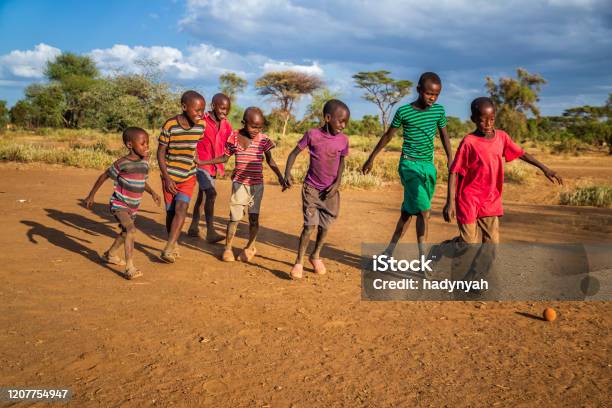
The challenges that today’s parents face in my local community have forced me to look back to the times of my childhood.
According to the National Population Housing Census 2024, about 72.6 percent of Ugandans live in the rural area depending on subsistence farming for their livelihood.
The under 30 years of age in Uganda make up 73.2-78 percent of the population and this has its own challenges too the main one being unemployment.
Many of these youths end up migrating to the urban areas where they believe that the grass is greener- more opportunities for securing jobs and thriving.
They end up living in overcrowded slums or areas of social and economic deprivation.
Alcohol and drug abuse are on the increase as well as domestic violence.
Those left behind in the rural areas especially the girls, are forced into child marriages and teenage pregnancies, resulting in limited opportunities for the girl child and her children.
This happens at the backdrop of a world shrank to a global village by the use of the internet: well -connected and changing fast every day of the year!
Even the youths from the middle income age group also face challenges of their own:
The high levels of unemployment push those in employment to shoulder high burdens(83.3 %) of supporting dependants- parents and siblings.
They are stressed by the pressure for success- to give their children a better life than what they themselves had though the economic environment is not that conducive.
The high inflation erodes their pay, They know what they want out of life but they struggle to build themselves up. Most systems are not functional to support them or create opportunities for their development.
The traditional extended family network has also shrank.
The country lacks a natural framework to guide parents and care givers, communities on parenting skills so the mushrooming day care centres are not well regulated.
Getting reliable helpers in the home has become fiercely difficult since the Middle East opened up for Ugandan domestic workers in 2015.
And yet a huge number of women are now contributing towards their family incomes and wealth.
Children are now left on their own in homes or sent to Day care centres for the few who can afford it or raised by helpers who change as often as dresses.
Single –parent households are on the increase due to family breakdowns – divorce, separation and death, socio-economic challenges and shifting norms like lack of financial support from fathers, unstable relationships, teenage pregnancies and early marriages.
Women are caught in an unenviable place of choosing between earning a living or staying at home to raise the child.
As more women are empowered by education and given opportunities to develop into their full potential , more challenges in raising well-disciplined and emotionally strong children are likely to crop up.
Global data shows that more men and women are choosing to live single lives for various factors.
My mother was raised by an illiterate mother whose duty was to stay at home and take care of the children, sick relatives and the household. Unfortunately, my grandmother lost her husband in her early thirties and was forced to rise up and bring up two daughters and a son with little support from the family.
My mother was a stay- at- home mother for 12 years but later reclaimed her independence to go back to work. She worked for 35 years till the HIV/AIDS pandemic of the early 90s made it risky to continue being a midwife.
I for one chose to take up a medical career and juggled it with motherhood and society’s prescribed duties. A good education offered relative stability and I knew that if I worked hard and kept improving my worth, I could be promoted through transparent systems.
My daughter, a millennial child with the best education, has dared to take on self-employment and raising a young family.
Today’s youths have found safety in their big numbers; well informed, connected across borders and are demanding for opportunities, justice , accountability and inclusiveness in the economic and social development. They demand to be heard. Due to their big numbers, they take long to find gainful and sustainable employment.
Looking back, I am more than grateful for the way my siblings and I were raised.
The world was then small and relatively predictable. We grew up in small communities where everyone knew and protected the other. All children belonged to the community and were raised by it.
The teachers went beyond teaching and the leaders lived to serve all other than self -aggrandizement.
At home, both my parents were open people who received neighbours and our friends with great ease
and shared what they had with the needy. Our land line telephone was the emergency phone for the whole village for free. Our friends were always warmly received in the home and we would be allowed to visit their homes often with a deadline to be home by 6pm.
Tough love which is a contentious issue today,
was the order of the day. We all knew our limits and knew who held the reins.
Respect, trust, kindness and good communication were our staples
as was sharing or giving and praying together to stay together.
Healthy competitions among ourselves were encouraged as we practised story telling, read books and played Ludo, Snakes and Ladders and cards.
We were taught early that life was more about developing into your full potential other than being perfect. Perfection was for God only. I learned early that learning was for life and that I could always improve my personal best.
Our parents worked in tandem – a No from one of them was a no from both so was a Yes.
They never feared to show us their vulnerability – when they lost a close relative
or when they could not afford to buy us what we wanted- living within one’s means. They encouraged us to speak up for ourselves and others and involved us in some important decisions about ourselves.
We always cleaned up our own mess and looked out for each other.
Honesty and integrity were among the priceless badges of honour to wear for life.
We had to guard our family name and like the laysan albatross, home was always open to us.
Fun and Laughter were equally important as was celebrating each other’s wins and lifting up the weak.
Last but not least, we were taught the “small things that matter in life’’- being humble to say: “Thank you’’, “I’m sorry’’ and “How can I help you’’.
Little wonder that we grew up into confident and bold adults with strong bonds.
Some Proverbs and Quotes which I still treasure:
Akuba owuwe akuba awumba ngalo- loosely translated : A little empathy is required as you punish your own.
Ndyebaaza ndya tagunjula munafu: Encouraging a lazy person to improve requires cheering and celebrating the small efforts she takes towards doing something not waiting for completion of the task.
Akakyama mammera kazibu okugolola : It is difficult to straighten a twig that has been allowed to grow up bent.
What your mother does not teach you, the world will teach you at a price.- Swahili proverb.
Obwetowaze businga obuziira: In the long run , humility is better than bravery.
Enjala evumbula : Hard times reveal one’s true character.
Akuwera omwana, aba awadde gwe: Any generosity extended to your child is yours too.
Omuddo omunyirivu, waliwo agufukirira. The grass is greener where you water it.
“New level , new devil’’ – Joyce Meyer . Challenges and obstacles change as you advance in life.
The 5th commandment: “Honour your father and your mother, so that you may live well and have a long life.” The only one with an attached promise.
The poorest man in the world is not the one without money but the one without people.- African Proverb
Watching my children raising their children has given me the wisdom to understand that the best gifts a parent can give to a child are not found in any toy shop ; it is what you invest and leave in them. Principles and values to guide them through life.
Each generation has its work cut out and each one lends to the next-adding on to what has been laid down as a foundation: principles and values. The onus is on each one of us to make the most of your time and strive to make the world a better place than you found it.
I am appreciating all the good in my childhood and accepting what was not done right to free myself to live in the present comfortably.
QUESTION:
Do you feel visible, heard and integrated into the systems around you?
How do you think you could be accelerated to belong?
Start at home , school and community to build your confidence.

 apagefrommunakusbook