ME TIME

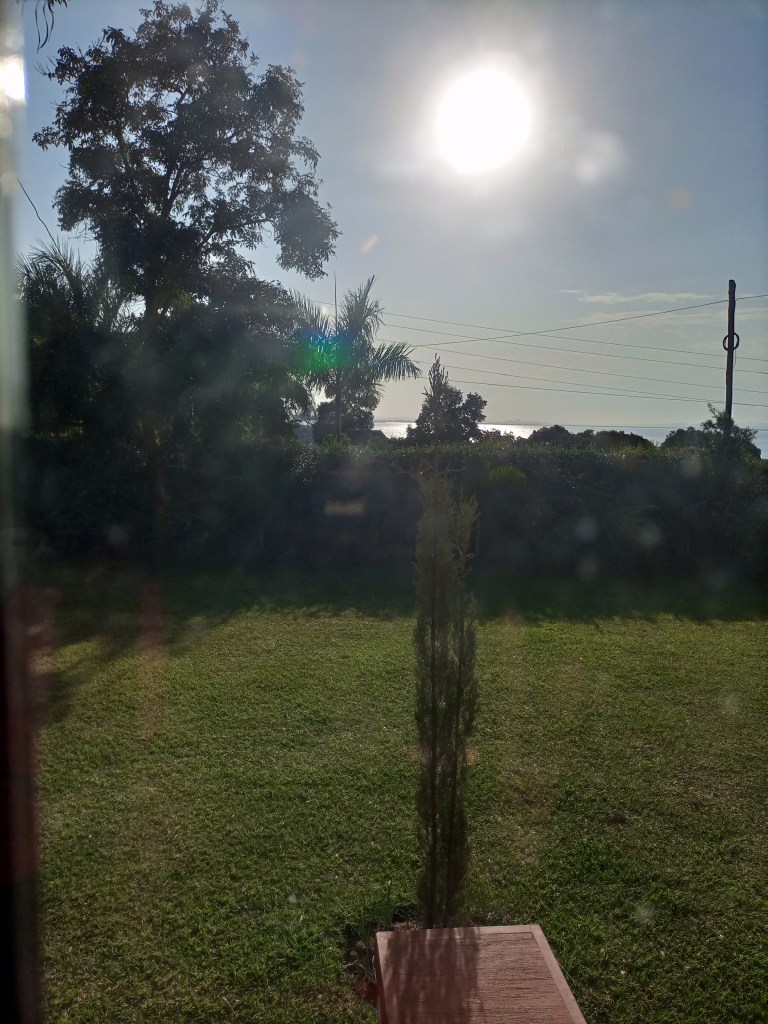
Spending time out in the wild can help you find your inner Self.
the photo is from Unsplash.com

Today’s world is a fast-paced one, demanding for constant urgency, relentless productivity and expectations, and a sense of being busy, driven by technology, demanding schedules and pressure to achieve instant gratification. Being exposed for long to such a harsh environment causes stress, burnout, poor mental well-being and a constant struggle to find the right balance between work and meaningful connections. Each one of us especially those in the 25-60 age group need a constant reminder for the vital need to set aside some ”ME TIME ” every day to find herself/himself and to refresh.

Spending time alone with yourself allows you to reboot, meditate, focus and be more creative and productive. Being away from it all reduces the distractions and interruptions.

Women in particular, as the natural Caregivers and nurturers in our communities, have many demands made on their time by family, friends and careers that they may fail to find time for themselves. And when they do, they tend to feel guilty about it.

The psychologists never cease to remind us that each one of us needs time to look within herself/himself to know who he/she really is.  Knowing your inner thoughts and beliefs, your gifts, talents and weaknesses and embracing them, helps you to act authentically and results in meaningful and fulfilling lives.

As children we very much want to please our parents then our teachers and later as teenagers we want to please our peers mainly because we want to belong and even fit in. We step into predetermined roles that in a large measure come to define us. Between 30and 40 years of age, we go through life being guided by our ambitions, desires and aspirations.

After 40 most of us throw away the cultural and society conditioning and embark on a journey to find our own way of expressing our uniqueness in the world. Through our identities and vocations we express who we are.

The Merriam – Webster dictionary defines Self –awareness as an awareness of one’s own personality or individuality.  The psychologists refer to this state as a state in which oneself becomes the focus of attention. It involves being aware of the different aspects of the Self including traits, behaviours and feelings. It is about understanding your own needs, desires, failings, habits, why you feel what you feel and why you behave in a particular way and everything else that makes you, you.

“ I care for myself. The more solitary, the more friendless, the more unsustained I am , the more I will respect myself.”- Charlotte Bronte.

 Self-awareness is a challenging and a lifelong effort. Through the experiences we go through: loses and achievements, failures and successes and how we respond to them  and our interactions with other people and how we respond to them , help us to explore and understand ourselves . We find the Self- the inner you. We act on what we get to know about ourselves and use it to change ourselves for the better. The inner you has to be constantly renewed and healed by connecting to the mind, soul ,  and heart .

The Benefits of self-awareness/Knowing yourself.

“ I have been and still am a seeker, but I have ceased to question stars and books; I have begun to listen to the teaching my blood whispers to me.” – Hermann Hesse

Knowing your inner self is essential for you to live a more meaningful and satisfying life. It helps you become more objective about yourself. Other benefits include:

  • Having a clear sense of purpose- you get to know
    your purpose and direction in life. You get to know what is important to you
    and what you hope to achieve.
  • Self-acceptance- you understand that you are not
    perfect but have strengths and weaknesses. You recognize the form of your own
    beauty, whether it is the beauty of your body, mind or your character. It helps
    you to gradually become honest and authentic.
  • You build strong relationships- the more you
    know and understand yourself, the more you get to understand others and the
    more you can influence them positively.
  • Experience greater well-being. The more you are
    in touch with your soul, the more you recognize the great worth within you, you
    begin to respect and have reverence of oneself.
  • Happiness- you align your thoughts, actions with
    your core values.
  • More creative and productive- When your mind,
    your soul and heart are in harmony, you are more focused, imaginative and
    creative. You create things out of who you are organically.

       How to increase Self-awareness.

The psychologists advise us to increase our self awareness by practicing the following every day:

  1. Devote time to yourself- everyday spend time
    with yourself by reading, writing, praying and connecting with yourself.
  2. Mindfulness practice- pay attention to your
    inner state and external experiences occurring in the present moment. It can be
    done through training or by practicing meditation.
  3. Keep a journal- Record your thoughts, feelings,
    ideas and important decisions. It helps you to process your thoughts and to
    connect with yourself at a deeper level. It helps you also to track your
    progress in life.
  4. Train yourself to become a good listener- Listen
    beyond the words. Listening to others makes you a better listener to your own
    inner voice and you become your own best friend.
  5. Feedbacks- have the courage to ask what others
    think of you- at home, at work and ask the friends you consider important to
    you. As you learn about yourself, you also learn about others and how they
    respond to you. Use the objective feed back to change yourself for the better.
    The more you accept yourself, the more accepting of others you become.

Researchers have proved that the best way to get to truly know yourself is to disconnect from it all; people, gadgets and be alone with yourself.

In the Bible, on several occasions, Jesus Christ would go off alone to pray and refresh himself.

A day before he chose the twelve disciples, he went up a hill to pray and spent the whole night there praying to God.

“Everything that irritates us about others can lead us to an understanding of ourselves.” Carl Gustav Jung.

As a daughter, wife, mother, friend, medical doctor and member of my community, I used to find it difficult to make time for myself. As I grow older, I have found it easier to find time to give to myself without feeling guilty. I developed it gradually after I recognized that I was not indispensable, neither could I be available 24/7 nor do everything. I learned to prioritize to free up time to focus on the 20% most important things in my life. I learned to delegate tasks and to empower family and friends to do things for themselves. I have learned to set boundaries and limits to safeguard myself against burn out.

I regularly give to myself by reading the Bible, reading novels, listening to good music, country and  oldies tunes.  I am a keen gardener too. I tend to my vegetable garden and small orchard. Right now I have a graviola/soursop tree bent with spiky green fruits. I cannot wait to eat them and share a few with friends.

Walking about in the bush in the village is a privileged experience that enables me to connect with the beauty of nature and to find my place in the universe. It feeds my soul.

My best time with myself is when I wake up as early as 5am to write a chapter for a novel or a post for the blog for two and half hours. By that time it is peaceful and calm as most people are still in bed and the deafening noises of the boda bodas– motorcycle taxis, are also silent. I try to pack in as much as I can before the sunrise. Thankfully, the ideas flow freely. I am strongly focused as I paint on the day’s blank canvas using all the colours of the rainbow. I tend to be more productive and effective at this quiet time. At that moment in time, I am fully conscious of who I am and what I am doing.

I have come to understand that all human beings are born to be creators of things including their own lives and that the most magnificent works are created only when the mind, soul and heart are working in tandem. The works themselves are an expression of who we are at that moment in time. When the mind and soul are at odds, we live a life of struggle. Many people pass through life not knowing who truly they are and what they want out of life. Sometimes the people around us influence us to the extent of suffocating who we are or the choices available to us are limited. We miss out on expressing our wholeness- not expressing what is most unique about each one of us towards making a better world.

“ We are alive or dead according to the condition of our Souls.”- James Hillman

The Soul is the most creative and transformative part of ourselves.

And Ralph Ellison said: “When I discover who I am, I’ll be free.’’ Being in touch with your Soul awakens your imagination and this drives you to find meaning and beauty in your life. Life ceases to be a struggle and instead things flow easily.

According to Wikipedia, the multilingual free online encyclopedia, One of the mottos inscribed on the 4th century BC Temple of Apollo at Delphi in Greece was : “ Know Thyself.’’ The ancient Greek philosophers, Socrates and Plato often referred to this motto in their works. Essentially it served to draw  the attention of the worshippers entering the temple to the fact that : When you know and understand yourself then you are able to understand other human beings better.

After all, much of our lives are created collectively not individually.

QUESTION:

Do you set aside “Me Time” everyday  to get in touch with your Soul? Have you started creating beautiful things authentically from your Soul?
THE LOYAL FOLLOWER

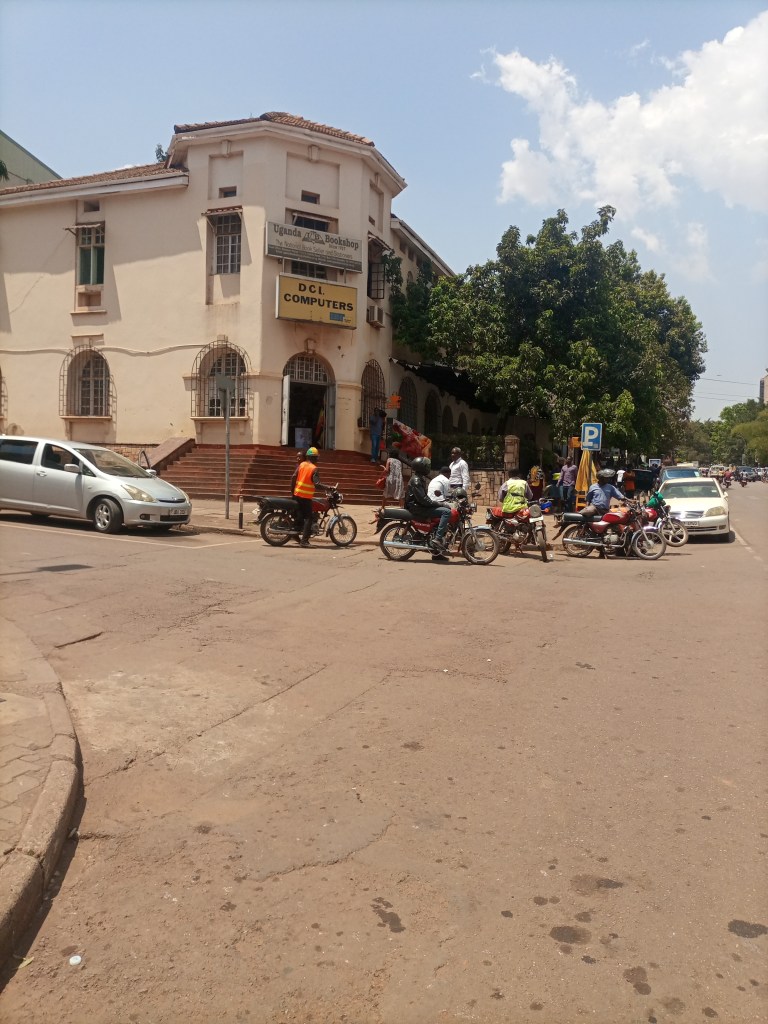
The oldest bookshop in Uganda located at Ebenezer House Plot 4 Colvile Street Kampala, Uganda.

There is one place that always makes me feel like a kid in a candy store; very excited, overwhelmed by choice and difficult to stop myself from looking around in fascination.
Amazingly, I still remember vividly when I first had that experience. I could have been six years old as my father held my right hand as we entered a huge place filled with books. Books of all sizes and colour. He knew exactly where we needed to go: The Children’s Books Corner. At one big table, there were many hardback books of the Ladybird Books series. Majority were blue in colour.
“ Look through and choose at least ten that we can buy for our home library,’’ he had offered me with a glint in his eyes.
My eyes had widened in surprise and wonder as Christmas had come early that year!
He had waited for me patiently as he looked through other bigger books at the next shelf.
As I flicked through the Ladybird books , I noticed that the faces of all the characters were white and the stories talked about Peter and Jane and their parents. I was overwhelmed by the choice and yet I managed to pick at least 12 of them. My father gladly paid for them all and an assistant carried them for us to the car, parked opposite the Central Police station. My siblings and I became regular customers of that book store. Visits to it were like a special treat for us. The home library expanded to include many other Children’s books.
As we grew older we came to know that the huge place was called the Uganda Bookshop
and our curiosity led us to find out much more about it. It was Uganda’s biggest bookstore, sold Bibles, Childrens’ books and many others and also supplied textbooks and scholastic materials to all schools in Uganda. It had regional branches across the country.
It had been started by a Church Missionary official by the name Mackay, the same Mackay of Mackay Martyrs church in Natete, the oldest church in Uganda. It started in Namirembe as a printery for the Anglican church ; printing Christian materials to ease the spread of Christianity in Uganda. By 1927, it had expanded to sell books and Bibles and had become the business arm of the church. Over time it became the main supplier of textbooks and scholastic materials to all schools in Uganda. This dominance was broken during 60s by the government of Milton Obote when it opened up the Uganda school supplies agency.
Uganda Bookshop limped on and during Amin’s time it diversified into selling and exporting Ugandan hand crafts as far as Italy. It has changed locations several times but I still remember that its Post office Box number was 145 for decades. Like Mary’s little lamb, my siblings and I followed it wherever it moved merely to buy books to read and be entertained.


As a teenager, I was a talented sports person and four of my other siblings.
I could run as fast as a hare so for many years I was a member of the school’s relay team,
220 yards race and long jump. For some years, our relay team dominated the national school championships held in the city’s national stadium every July. The winning was exhilarating but the Uganda Bookshop vouchers that the top 3 in each race were presented with, were the cherries on the cake. They ranged from 25 and 10 Ugandan shillings and with each one, you could buy several story books or a text book from the Bookshop. This fanned my culture of reading books for years. Little wonder that I am now writing fiction novels and short stories of my own!
I hardly think twice when buying a masterpiece novel or the autobiography of icons
like the late Nelson Mandela and fellow Ugandans like Rhoda Kalema and the late Joyce
Mpanga.


Then between 1962 and 2003 something incredibly exciting happened on the literary
scene: a collection of works by African writers; 359 books, was introduced on the literary scene by Heinemann Educational Books company of United Kingdom.
We started reading African stories written by Africans, stories we could easily relate to. African Literature at its best. First among these was Chinua Achebe’s THINGS FALL APART, which became a set book at
the O-level Cambridge school certificate exam.
In East Africa , first among these series was Ngugi wa Thiong’o’s WEEP NOT CHILD and Okot p’Bitek’s Song of Lawino and Song of Ocol . They were Colour-coded: Blue for nonfiction, Orange for fiction and green for poetry and drama. The series sowed the seeds for more emerging African writers.
Thankfully, my father never spared any money as we expanded our home library with these new gems.

As regular customers, we came to know some of the long-time assistants at the bookshop as friends
and the long-time serving manager, late Martin Luther Galiwango. Closing my eyes , I can see the big white, windowless van with the Uganda Bookshop emblem: an open book, parked outside the store.
Books opened my mind and imagination at a tender age and turned me into a global citizen long before the invention of the Internet followed by the World Wide Web.
The Internet opened up another option of Electronic books and Audio Books . I read them but still I prefer to touch and smell the Hard book as I turn over the pages.
By 1977, the old faithful bookshop had moved to its current corner: Ebenezer House Plot 4 Colvile Street
right in the Kampala city centre. It was rescued from a huge debt that almost put it under the auctioneer’s hammer, by the business mind-set of the late Archbishop Livingstone Nkoyoyo.
It has continued to run as the business arm of the Anglican church and has contributed towards the building of the Church house located in the city centre.


I last visited it in 1990 after the death of my father; this time round I was aggressively looking for the manuscript of my father’s autobiography in all printeries around Kampala. Since he was a member of the Anglican Church , Uganda Bookshop was the best place to start. Mr. Moses Mulwana, the long serving member of the bookshop was more than willing to help. After all, he had known my father well.
To our disappointment, it was not among the manuscripts which had gathered dust in the printery by then located in the basement. To this day the manuscript has never been found and yet my father had put a lot of energy and efforts to write and have it completed.
Thereafter, I went away in search of greener pastures for almost two and half decades and transferred my loyalty born out of the love of books, sowed in me by my late father and nurtured by my old school, to Bookstores in Botswana like Exclusive Books.
Having a zillion things to sort out after being away for long, combined with a radically changed Uganda and a city crowded with people, structures, cars and motorcycles, I had not yet touched base with one of my favourite pastime visiting places.


I was drawn to Uganda Bookshop in December 2024 after the launch of my father’s book: CRISIS IN BUGANDA 1953-55 the 2024 edition. The first edition was published in London in 1978.
Ugandan readers wanted to access it in a central place and no other place fitted that description than Uganda Bookshop.
I had no trouble locating the bookstore: same old location, almost the only old structure among the new high-rise buildings.
As I climbed up the ten red steps leading inside, I felt that I was returning to the old and familiar.
There were three young ladies; looking alike because of the braided hair and beige T-shirts and black skirts they were wearing.
I greeted them and asked them for directions to the manager’s office whose location I still remembered.
The place looked so small; could be due to the many shelves and tables of books. Two young tourists were browsing through the books as I made my way to the manager’s office through a narrow corridor.
In about forty minutes, I walked away with an agreement to supply my father’s book to the store and left five copies with the lady. Being me, I spent almost an hour browsing through the books. I was extremely thrilled to see many Christian books, short stories, fiction and nonfiction novels and biographies written by Ugandans-Ugandans telling their unique stories in their own voice to the world.

Curiosity led me to the back of the building and I was happy to note that the whole plot was intact apart from a few temporary small secretarial services , stationery booths and florists shops.
“ How did this prime plot survive being sold off or being newly developed?’’ I wondered out loud.

By late evening I had found out how it had survived. Ebenezer House is one of the few buildings in the city centre considered to be of historical significance and worth to be preserved by the city’s physical planning unit. It has to be maintained and kept looking historically accurate.


The church of Uganda continues to run the traditional bookshop but the bookshop has to be innovative to adapt and evolve to survive in the Digital era. It will have to go beyond book sales and evolve into a community space offering events, host events, book launches, workshops and authors book signings.
As for the loyal followers like me, the onus is on
us to write books and sell them in this bookshop as well as working with it to go out in schools to encourage the students to develop the reading culture early on in life.

There is no substitute for books in the life of a child.’’- May Ellen Chase
The greatest gift is a passion for reading.’’- Elizabeth Hardwick

QUESTION:

Are you among those who were enabled to develop the culture of reading books early on in childhood?
Are you passing on this beneficial culture to your children and other members of the community?

ORGANISING YOUR LIFE

A well-tended garden courtesy of AI

The beginning of each new year demands that each one of us pauses and reflects over the past one –

pick lessons from the failures and successes and apply them to inform the present and plan for the new year. The essence is planning to use your time effectively and efficiently for your personal and professional progress. This creates reasonable order and stability in your life amid the turbulence of the age.

It demands discipline to practice effective time management.

One has to consistently learn to prioritise what matters most to you in life, to prevent the URGENT from swallowing it up.

It’s the little details that are vital. Little things make big things happen.’’- John Wooden

Life Coach Michel Hyatt reminds us consistently that there are some high value tasks which support your key goals and if done right and on time, they will have a multiplier effect on your key goals.

From his experience, he advises the following:

 You identify 3-4 most important tasks of each day

  • The tasks should be clear, specific, and actionable
  • Stay focused on these tasks by using time blocks, dedicate time to a single task or a group of related tasks. 
  • Eliminate distractions like emails, social media texts while working.
  • Say “ NO’’ as a complete sentence to avoid anything that does not align with your goals.

Do it right every day and it adds up to weeks, months and before you know it, you have completed a full year!

“ Seasons change, and so do we.’’- B.K Borison

As each one of us adds another year to her/his life, we have to be mindful of the seasons of our lives relative to the seasons of our local environment.

The seasons in nature constantly remind us that things are changing. Each season gives you ideas to honour your intuitive nature.

The psychologists tell us that our emotions follow a similar cycle to that of the seasons of nature.

We should bask fully in the positive emotions like joy, happiness, hope and inspiration. These positive emotions create a protective buffering effect against the difficult times that we face later in life.

SUMMER- can be compared to being immersed in pleasurable experiences like walking in the wild , harvesting crops , dancing under a starry sky and other fun-loving activities. They add up to build a strong resilient armour within you.

AUTUMN- summer is long gone but you can still appreciate the beauty of the changing seasons and be transformed in a positive way.

WINTER- comparable to the difficult times that we go through in life. They fill us with fear, despair and worry. Our hope lies in knowing that they do not last forever.

 Time passes and seasons will come and go.

SPRING- the harshest winter is usually followed by a riotous spring. You recover from the hardships of the difficult winter. Rise from the ashes –stress, trauma and shock, you have experienced. Most times one comes out stronger and resilient.

A tree with strong roots laughs at storms.’’- Malay Proverb

As the years go by, you learn to look for the beauty and lesson in every season you experience.

You gradually learn the importance of order in life.

Order could be defined as a state of space where a system exhibits clarity, certainty or stability. It is a tool one needs to accomplish anything tangible in life.

 Order starts by recognising the priorities in your life and using available skills to do the things in the proper order.

Having order requires discipline and organisation in what you do and starts from within.

The psychologists believe that that an organised peaceful external life reflects one’s inner life while a disorganised external life reflects the chaos within.

Growing up in an organised environment of routine and cleanliness, children grow up to desire order as they mature. They tend to be responsible and dependable and prefer to live in orderly and organised surroundings.

 Children who grow up in a chaotic environment tend to have poor cognitive ability and poor language ability, tend to be less responsible, have less stimulation and develop problem behaviours.

Order in childhood has lasting effects on personality and behaviour.

Order creates the following effects:

  • It helps you get into a routine that reduces stress or feeling of chaos.
  • Boosts your self-confidence
  • Makes you more focused and productive and can save you money.
  • It enhances creativity
  • It improves your work-life balance.
  • Order improves your mental and physical well-being and helps you to feel more in control.

Some psychologists believe that there are seven key areas of one’s life that need to be organised and to flow in harmony so as to achieve life’s balance: a balance between work and personal pursuits.

1. Mental- intellectual growth and mental health

2. Spiritual – connecting with inner beliefs, values and sense of purpose.

3.Physical- the health state of your body.

4. Financial- income, savings and financial planning.

5. Personal-  you as an individual: your passions, interests and activities that bring you delight and pleasure

6. Family- your anchor that holds you through life’s storms and gives you a sense of belonging.

7.Career- work, achievements, professional growth and development.

To live a fulfilling and harmonious life, you have to balance work and personal life effectively. To most of us this work-life balance demands that we dance this delicate balance every day of our working life.

Life is like riding a bicycle . To keep your balance , you must keep moving.’’- Albert Einstein

From time to time, re-evaluate your PRIORITIES to set meaningful goals and intentionally improve areas that are lagging behind.

I vividly recall one time when I tried to play ‘ super woman’ ; taking on a post graduate course in Obstetrics and Gynaecology while at the same time starting a family. I nearly suffered burnout. I only saved myself by re-evaluating my priorities  at that moment in time. It worked wonders for me.

One other experience has been my return home after being away for almost 26 years.

Having grown up in an organised family, gone to a Church-founded school and later joined a profession which thrives on organisation, order and diligence ,many times I find myself almost losing my sense of control  due to the chaos around me. Both my creativity and productivity tend to be hampered and my energy drained in doing simple things like moving from point A to B!

There are times that I am like a derailed train!

What has kept me going is that there are still a few individuals who are still holding on to their core values of honesty, integrity, selfless service to their communities and just being decent human beings.

It is moments like this that make me appreciate the importance of order in life.

When Liberty destroys order, the hunger for order will destroy liberty.’’- Will Durant

“ For every minute spent organising, an hour is earned.’’- Anonymous

QUESTION:

At this moment in time, does each year added to your life make you more organised or disorganised?

How can you improve on this?


MAKING DECISIONS IN LIFE

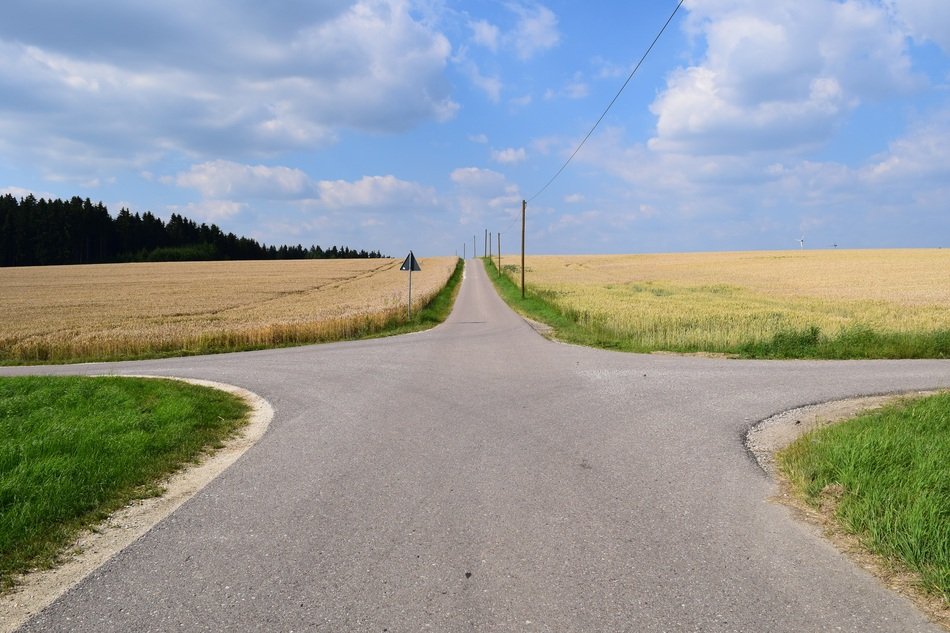
At the Crossroads: courtesy of pixy.org

MAKING DECISIONS IN LIFE

Life’s journey is created by a collection of decisions made every day. Each one of us makes countless decisions which when added together possess incredible power over our lives.

We ‘re our decisions.’’– Prof Salem Al Shereida

The quality of life is  built on the quality of your decisions.’’ – Wesam Fauzi

Nothing is more difficult, and therefore more precious than to be able to decide.’’- Napoleon Bonaparte

“Decision making is easy when your values are clear.’’– Roy Disney

“Sometimes you make the right decision, sometimes you make the decision right.’’– Phil McGraw

“The best decisions are not made with your mind, but with your instinct.’’- Lionel Mess

A decision can be defined as a conclusion or resolution reached after thinking through of the benefits and costs and considering short term and long term consequences.

Choice is the purest expression of free will but it can be difficult because it also represents sacrifice.

The choices we make determine and shape our decision making process and therefore are key to whom we are to ourselves and to others. Every choice made impacts our lives positively or negatively. These choices are key in determining our level of success, happiness and fulfilment.

There are some significant, life-changing decisions – the ones that seem to hold the keys to our future.

These tough decisions include:

1.Choosing a career

2.Pursuing an education

3. Choosing a life partner.

4.Managing the finances

5.Taking calculated risks

    Decisions on these major five aspects of our lives have a huge impact on our overall success and happiness in life.

    The decisions made are never written in indelible ink but can be changed especially when faced with the need to change- to open up to new opportunities and be willing to adjust your goals and plans. In pursuit of our personal and professional growth, we have to be ready for challenges at each stage of our lives. Resilience and determination help us to overcome obstacles and succeed.

    Surprisigly, it is the smallest decisions that we make every day that hold significance.

    Some of them like changing where you live could have a multiplier effect to almost all aspects of the life you are creating.

    Data from cognitive research on human beings and chimpazees shows that

    human beings have evolved over millions of years to develop a bigger and advanced brain especially the front lobe and cortex to enable them to think and remember. Our brains are approximately 3-4 times that of our closest relatives: the chimpanzees, while they share about 99 percent of the human genetic material (DNA) . Our brain is about 2 percent of our body weight and consumes 20 percent of the total body energy and oxygen. It is highly connected and active thus enhancing our cognitive ability. It also allows us to have specialised functions as language, tool making and reasoning.

    The human cognitive function is fully functional between 25 and late 40s.

    It this highly developed and intricately connected brain that allows us to learn and understand what we have to learn and to create analogue memories to recall and connect to the new memory.

    During this structured process, we form opinions, choose actions through our mental processes as informed by the brain, reason, emotions and memories.

    This enables us to weigh the benefits and costs of our choices and whether we can cope with the consequences.

     “Decision making is a sharp knife that cuts clean and straight ; indecision , a dull one that hacks and tears  and leaves ragged edges behind it. ‘’ – Gordon Graham

    You can’t make progress without making decisions.’’– Jim Rohn

    The psychologists believe that effective decision-making involves striking a balance between what the mind has evaluated as logical and what our emotions consider as our desires and preferences.

    After identifying and defining the exact issue at hand, the psychologists advise you to consider these basic principles to reach a decision:

    1. Clarify your values and principles- what matters most to you. Understanding your values enables you to evaluate your choices and align them to your core values.
    2. List the options available to you at that moment in time
    3. Write down the pros and cons of each option
    4. Step outside your comfort zone and think about the long term implications.
    5. Trust your instincts -rational analysis and logic are crucial but consider too the power of your intuition- gut feeling. Do this for each option to reach a choice that resonates with you at a deeper level. Sometimes the subconscious can pick on a detail that our conscious mind misses.
    6. Embrace the uncertainty-  rarely does one get to make the ‘’perfect choice’’, each decision is tagged with trade-offs. Sometimes you just make the right decision other times the best you can do is to gather the information, trust your instincts and move forward. Even if you make the wrong choice, later you can analyse it and learn from the experience.
    7. Practice Decision –making. It is a skill so like any other skill, you have to keep practicing to become better at it. Start with small decisions and move to bigger ones; that way you build your confidence and inspiration.

         “ There’s no wrong time to make the right decision.’’- Dalton Mc Guinty

    Looking back at my own life, I strived to make the right decisions but also made wrong decisions and some of them have stayed with me.

    One major one, was deciding to become a doctor to help people, when I was about eight years old. Being an all-round student, it saved me from being pushed into the A-level Arts class by my teacher of English and literature.

    To have decided to leave for greener pastures in Botswana mainly to get better opportunities for our personal and professional growth while at the same time opening up better opportunities for our three children.

    My decision to give up private practice in Botswana and instead return to start afresh in Uganda while taking good care of my octogenarian mother has paid huge dividends to the two of us.

    I vividly recall one small decision that ruined our day in the 90s. My late husband and I drove my young sister to catch an early flight the United Kingdom. Close to Entebbe airport, a traffic policeman waved us down . I convinced my husband not to stop but to deal with the policeman on our return. My sister got on the plane in good time but my husband, a surgeon, never touched a patient on his theatre list for the day. He never left the Entebbe magistrate’s court until 4pm, after paying a hefty fine!

    “Life is about choices. Some we regret, some we’re proud of. Some will haunt us forever. The message, we are what we choose to be.’’- Graham Brown

    As a senior citizen, I truly know whom I am : truly authentic, having been liberated  of conformity and masks. I choose courage over fear and self-awareness over societal expectations. My choices are more genuine than when I was :

    30-45 thrived on work and status

    45-65-the age of mastery- finding your voice to assert yourself, focusing on being independent. Clear about who you are. Doing what you feel is right and what is your own to do.

    65-85+  – The age of integrity, of new pursuits while fully emancipated. Repossessing your intellectuality and originality.

    Authenticity-fully embracing one’s true self: unique qualities and imperfections, comes to us late in life usually after 50 years of age. After learning to trust your inner voice or intuition, you tap into its inner wisdom daily.  It helps you find clarity amidst the myriad of distractions in a fast-paced world. The consequence is that you live the life you love, a life lived with purpose and meaning. A life in alignment with your innate nature.

    As we grow older we become clear on what matters most to us in life and understand the unseen forces that drive the majority of our daily decisions. It translates into living the life you love one day at a time- turning your dreams into reality on a daily basis.

    Authenticity is the daily practice of letting go of who we think we’re supposed to be and embracing who we are.’’ – Brene Brown

    QUESTION:

    Do you realise that being unapologetically yourself is one of the key unseen forces that drive the majority of your daily decisions which themselves result in your living a fulfilled life?

    MY GRANDPARENTS’ GENOROSITY CONTINUES TO BEAR ABUNDANT FRUITS.

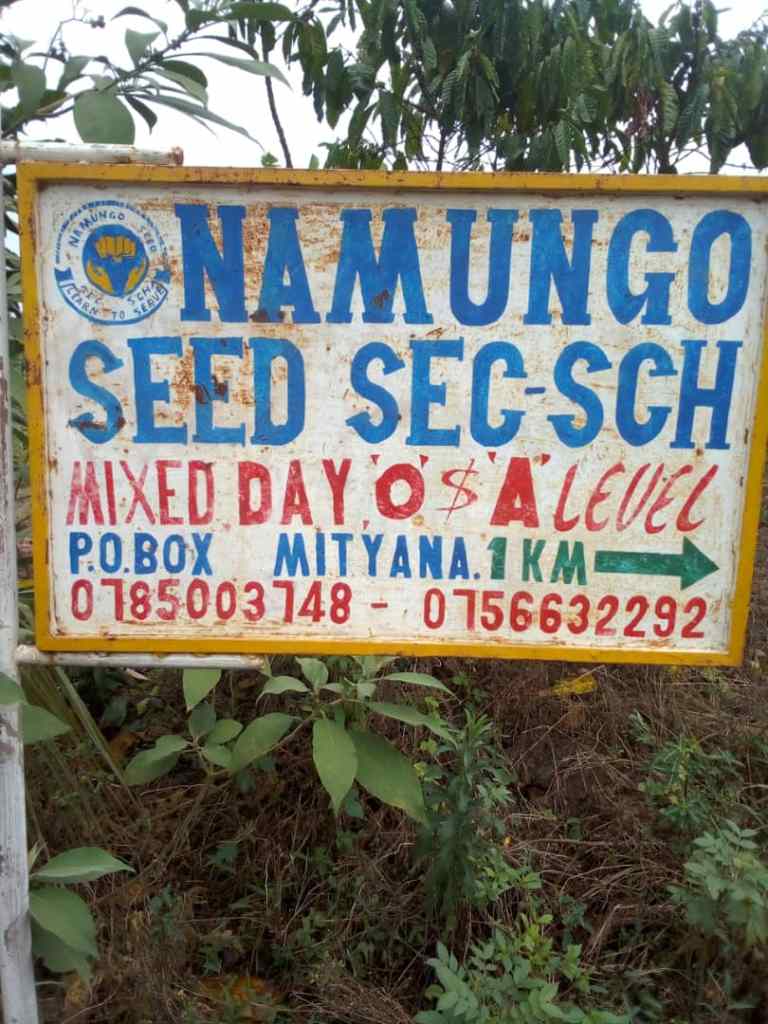
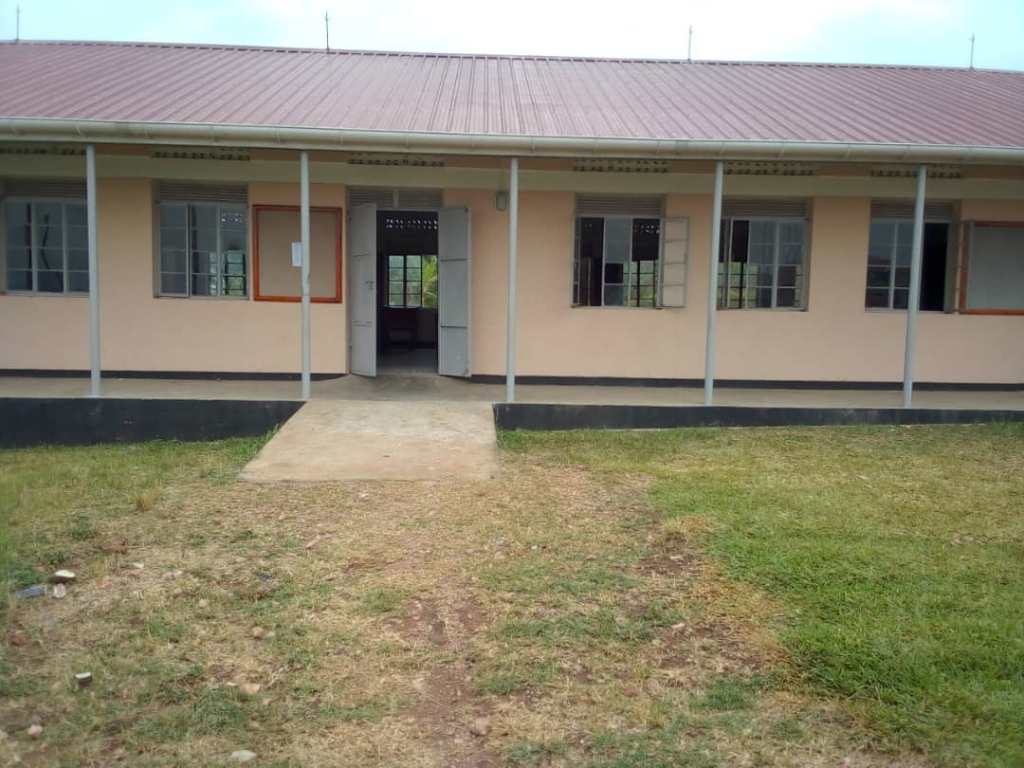
    During the unprecedented two years COVID -19 pandemic lockdown, I never had the luxury to visit my ancestral home and burial grounds in Namungo near Mityana. On the 4th February 2023, I had some good reason to visit it- the big family of the late Saul and Samallie Balirete Munaku Kavuma had to find closure by holding the last funeral rites of more than six close relatives many of whom had died of natural causes during the pandemic and a few others who had died before that. Looking around , the  village landscape had changed by several new corrugated iron-roofed houses and grocery stores. However, my attention was drawn to two new structures, a solar –powered health centre 3 and a new Secondary Seed school a stone’s throw away. Having been away for more than twenty five years, I was overcome with joy and was filled  with fresh hope for the young generation of this sub-county of Mityana.

    The two structures also fired me to raid the archives and read about the history of the growth and development of education in Uganda which is itself inseparable from the history of religion in Buganda and Uganda as a whole. Sadly, it had sparked a bloodbath.

     Being a voracious reader and a believer that learning is for life, I was happy to be educated about  SEED schools in Uganda.

    We are what we repeatedly do. Excellence, then is not an act but a habit.”- Aristotle

    Starting from the beginning, I was reminded of the history of Christianity in Uganda.

    By the 1840s, Buganda was a social and cultural cohesive kingdom being ruled by Kabaka Muteesa 1( 1838-1884 ), Swahili and Arab traders  from Zanzibar, had reached Buganda. They traded in cotton cloth, guns , ivory and slaves. They were exerting Islam and cultural influence in Bugada, the oldest kingdom around the shores of lake Nalubaale, later named lake Victoria by the explorers from Great Britain. Muteesa 1 learned Arabic and prayed in a mosque built in his court but never converted to Islam. Some chiefs and the court pages converted to Islam. They could read and write Arabic and Swahili. The kingdom still remained anchored on the pillars of kabakaship and the clans.

    The British explorer Henry Morton Stanley visited Kabaka Muteesa1 at his court in 1875. Muteesa 1 wanting to diminish the influence of Islam in his kingdom, in April 1875, wrote that famous letter to Queen Victoria of Great Britain requesting her to send missionaries to bring civilisation to his subjects.

    The letter was published in the Daily Telegraph of Britain in November 1875. Britain responded to this letter by sending the first batch of Church Missionary Society missionaries to Muteesa 1. They arrived  at Muteesa’s Court through Zanzibar in June 1877. A group of French Catholic White fathers  from France, followed in Feb 1879.

    All young men in their twenties, they started the evangelisation of the lake region. But they brought with them their rivalry  and hostilities as they defended their version of the faith. They competed for the control of the Kabaka’s court which by then had a number of Muslim converts. Muteesa 1 allowed them to stay but never identified with any of them to safe guard his authority and power. He remained in control of his kingdom. He died in October 1884 and was succeeded by his 18- year- old son , Mwanga 11.

    By 1885, some of Mwanga 11 chiefs and court pages had converted to either Protestantism or Catholicism. Christianity was slowly becoming the third pillar in the kingdom.

     Mwanga11 was convinced that the Christian groups in his court had become so powerful. He had to remain the centre of power and authority by asserting his authority over all elements and factions within his kingdom.

    He ordered these new converts or rebels to choose either to denounce their new religion and fall in line or die for their faith. Many of these young pages chose to die for their faith. Between 31st January 1885 and 27th January 1887, 22 Catholic converts and 23 Protestant converts had been executed under the orders of Kabaka Mwanga11. A few were beheaded but the majority were burned alive at Nakiyanja , Namugongo, the traditional site of execution.

    77 years later, in October 1964, the Roman Catholic Pontiff, Pope Paul V1 proclaimed the 22 young men as Saints. He consecrated the Basilica dedicated to the Ugandan martyrs at this same place in August 1969.

    In 1888, the Muslim converts joined forces with the Protestant converts and overthrew King Mwanga11. They installed his half-brother Kalema as Kabaka. During Kalema’s reign the Muslim converts and their power in Mengo increased. They turned against the Christians; killing many of them while others fled west to the kingdom of Ankole. These Christians later regrouped and with the support of the Catholics,  they re-installed Mwanga 11 as Kabaka .

    The bitter rivalry between the three groups continued. By the time Captain Frederick Lugard, a representative of the  Imperial British East Africa Company, arrived in Buganda in 1890, he found the battle to control Mengo very intense.

    Lugard was later appointed by the British government to prepare the way to take over a fragmented Uganda as a British Protectorate. He was sucked into the religious hostilities. Being British,  naturally he supported the Protestants against the Baganda Muslims  and their ally, Omukama Kabalega of Bunyoro.

    Lugard supplied the Protestants with guns enabling them to crush and drive the Muslims out of Mengo. The 1892 battle of Mengo  was quick and decisive and established the influence of the Protestants in the political affairs of Mengo and later in the politics of the whole of Uganda.

    Locally, in my grandparents’ village, the war of Muslims against  the Christians during the reign of Kalema divided their family. A Muslim brother and his family had to run for safety in Mubende and his descendants still live there today . They have a separate plot for burial at our ancestral home in Namungo.

    However, my grandparents became staunch Protestants. By early 1900, missions had added  a formal system of schooling to their work and the Protectorate Administration left education to them. Each village had to have a church and an elementary school next to it. The school was built by the village , teachers taught in the indigenous language. The students learned reading, writing and arithmetic and received instructions in religion. My grandparents thought ahead of their time by donating ten acres of their land to the Native Anglican church and later the heir to the grandfather gave it an extra four acres.

    My father  in his thoughtfulness used his position to separate these fourteen acres from the main Balirete Munaku Kavuma title deed. The title deed has remained in safekeeping with the Mityana Diocese  for over eighty years!

    Flash Forward.

     Since 1997, the government of Uganda has made great efforts towards taking education and health services nearer to the people.  Its goals is to build a health centre 3 and a  secondary school in each subcounty – a catchment area of 10,000 people,  across Uganda. The money for building the senior one to senior four secondary schools is from a World Bank loan under the Intergovernmental Fiscal Transfer( Ug IFT). These are what are called SEED schools; mainly built where there was no school, to cater for the low income  population who cannot afford private or boarding schools.

    259 such schools are to be constructed in three phases. Each school has classrooms and administration blocks ,teachers houses, a library, computer laboratory, a multipurpose hall and a playground.

    Information available shows that of the 117 to be constructed in the 1st phase , 68 are complete.

    Namungo Seed school is one of these. Our village won the offer fair and square because they had a primary school at the site, more free land with  a title deed and the land was squatter free!    


    Other districts had some challenges in acquiring free land, finding sources of clean water, electricity. The school fees or lunch fees though nominal are a burden to some of the parents.

    Namungo Seed school has electricity and solar, has a new borehole to provide safe water and harvests rain water in tanks. However, some students travel from far to get to the school, making the necessity of a dormitory block urgent.

    Generally, government funding for education has been declining for two decades. According to data worldbank.org, in 2021 the education spending was 8.21 % of the Gross Domestic Product. This has resulted in understaffing of schools and lack of basic requirements like water and electricity.

    I am yet to visit this school, opened in 2019, currently with a total of 400 male and female students, to know exactly what is going on. Having a ravenous mind developed through consistent reading of books and an insatiable curiosity about the world, I can see myself taking a keen interest in the library and helping the students develop a reading culture.

      The Administration block.

    Not forgetting that I am a medical doctor, I shall visit that Health centre 3 as well.

    My grandparents and my father must be smiling over the children in that school!

    They valued education and were able to send my father to the then established church school in Namukozi, Mityana. He excelled to enter the prestigious Kings College Buddo. He would walk barefooted for three days to get there. He went on to become an outstanding public servant and a Katikkiro/prime minister of the Buganda Kingdom ( 1950-1955). He was immensely proud of his village.

     I can safely say that the future of the young generation is bright – huge opportunities and wide choices in a global village. Many will be assisted to develop their full potential.

    Who knows 25 years from now, the Prime Minister of Uganda could have his origin from this Seed School.

    One Luganda Proverb spells it out clearly: Nezikokolima gali maggi. Loosely translated says: Even the roosters crowing now were at one time mere eggs.

    QUESTION :

    Have you taken off time to move around your community to know what is going on and decide on how you can be a part of it?

    THANKSGIVING

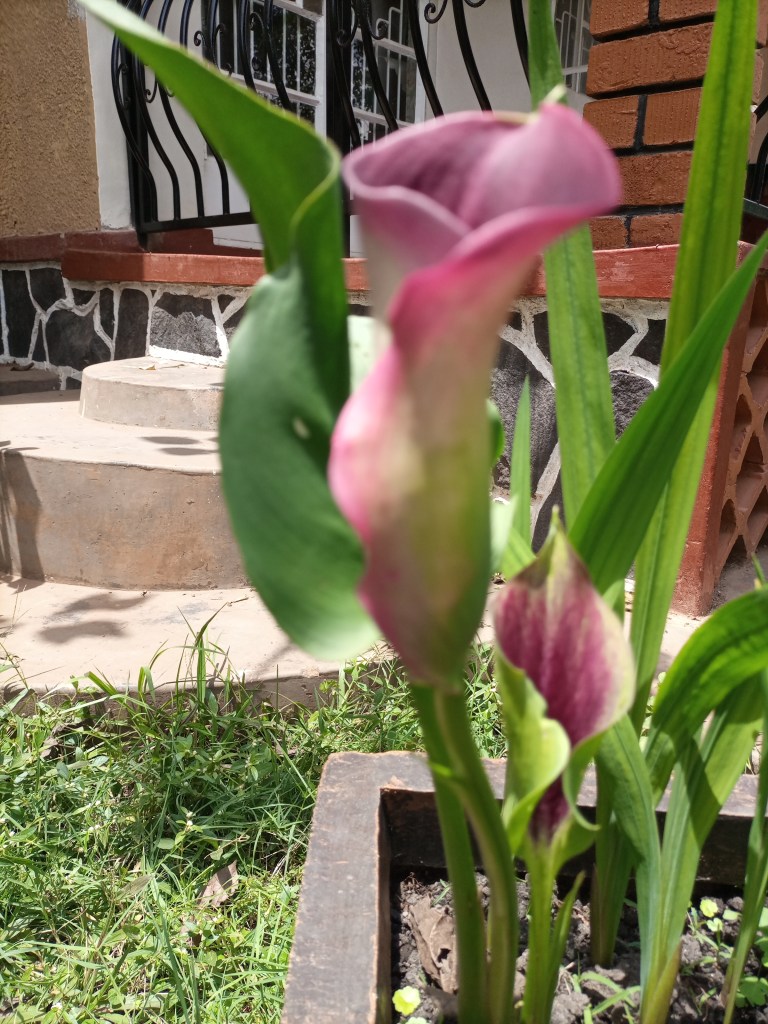
    A lot to be grateful for including this beautiful addition to my small garden-an elegant pink arum lily.

    I am a senior citizen, I grew up hearing four magic words in my parents’ home which I later taught my children and they are now teaching them to their children. They include: “ Please’’, “Thank you’’, “I’m sorry’’, “ You’re Welcome’’. As I grew up, they expanded to include, “excuse me’’ and “May I’’. Like the dynamite, they are small but very powerful words. They are used in our daily life and have come to represent good manners across the board.


    Good manners are not absorbed but are seen and copied by children as they watch their parents do what they do. Among the commonly used words in my childhood were “Thank you.’’ These words were as natural to my parents as the first greeting of the day and were always part of their normal conversation. They could thank me several times for the same act of kindness. Their behaviour rubbed on to all of us and continues in the grandchildren.
    As 2022 draws to the end, I have a myriad of things to be grateful for more so after the unprecedented two-years COVID-19 pandemic lockdown. In a world full of wars and natural disasters: floods, fires, earthquakes, famine and here in my country, Uganda, facing a grim post-COVID economy,
    drought in Karamoja , northern Uganda, floods in Kasese and Mbale in eastern Uganda.
    And most worrying, the break out of the Sudan Strain of the Ebola disease in two of the districts in central Uganda. Being up and about today cannot simply be taken for granted.
    Thanking God by counting my blessings other than my burdens is the right thing to do. If not, I may remain buried under the rubble of life. Practicing an attitude of gratitude irrespective of what is going on around me makes me feel positive and hopeful, energises me to be able to deal with adversity and build strong relationships.
    Acknowledging the good that you already have in life is the foundation for all ABUNDANCE.’’ – Eckhart Tolle


    Among the things I am most grateful for are:
    • Being alive- up and about- the COVID-19 pandemic crystallised well how fragile life is.
    • Writing- making a difference to people’s lives in my small way.
    • Caring for my nonagenarian mother- continued sharing of our lives together and other siblings.
    • Motherhood- it never ends. It has now endowed me with the gift of being called “Jajja’’/grandmother.
    • Lifetime friendships- making it easier to share highs and lows and to trust life more.
    • Being open to continued dreaming and learning- it has taught me that there is no limit to what is possible in life.

    According to Mindful.Org
    Living with an attitude of gratitude improves our mental health and helps us to appreciate small positive things and little moments in life.
    We have all to learn to practice gratitude every day. Here are some of their recommendations to encourage us practice gratitude every day while building our lifetime capacity for gratitude.

    1. Keep a gratitude journal to record and recall moments of gratitude.
    2. Remember the hard times that you experienced before-it multiplies the gratitude.
    3. Meditate on your relationships with family, friends, colleagues at work- Consider what you have received from them, what you have given them and what troubles and difficulties you have caused. Affirm the good things that you receive from others and acknowledge the role other people play in providing your life with goodness.
    4. Gratitude lubricates all relationship as it reduces friction between people.
    5. Share your gratitude with others- it strengthens relationships.
    6. Apply your five senses of: touch, smell, vision, taste and hearing, to express your gratitude for being alive.
    7. Make a vow to practice gratitude every day. It reminds us of the goodness of the people in our lives and builds our capacity for being more grateful.
    8. Focus on the good things that others have done on your behalf- with the aim of expressing and thanking them through gifts.
    9. Notice the people and things around you and appreciate them. Acknowledge gratitude through smiles, saying thank you, writing notes of gratitude.
    10. Spread gratitude through your social media platforms- grateful people are more mindful of others.
      Carry the attitude of Gratitude wherever you go.
      The psychologists tell us that when we notice goodness and beauty and are thankful for them , we experience pleasure. This feeling stimulates the brain to release the ‘feel good hormones’: Dopamine, Oxytocin, Endorphins and Serotonin. Dopamine makes us feel pleasure, satisfaction and motivation.
      Endorphins are the body’s natural pain killers, they reduce stress and discomfort while oxytocin promotes social interaction; bringing people closer.
      Grateful people are happy , less depressed, they are optimistic and positive.
      Showing gratitude strengthens our immune systems, improves sleep patterns and makes us feel more helpful and generous.

    Observing what is going on around me during the period of October to January, I have come to define this period as the main Season of GRATITUDE.
    Harvest Thanksgiving
    I am a Christian and I know very well that during the month of October up to early November, Anglican churches hold Harvest celebrations to thank God for the abundance of the harvest of the fruits of the earth. Offering the best of all that your land produces honours God and has great rewards: Proverbs 3:9-10.

    Thanksgiving in USA
    In 1942, President Franklin Delano Roosevelt declared the fourth Thursday in November as Thanksgiving day in America. It is a day for family and friends to gather to celebrate the harvest and other blessings of the past year. Currently it is the busiest holiday of the year and falls on the Last Thursday in November.
    From economist.com, Thanksgiving day has been celebrated in America since 1621. In November 1620, a group of English pilgrims landed in Cape Cod, Massachusetts and a year later, they had a successful harvest which they celebrated with a Turkey feast. It is a day for being thankful- sharing what you are most thankful for in your life. They also give back by collecting and giving food to the needy.
    This year, it was celebrated last Thursday 24th November.

    The Festive Season
    Out of habit, by early December, radio stations start playing the Christmas carols ushering in the Festive season, centred on the story of the birth of Jesus Christ.
    Familiar Christmas carols like Long Time Ago in Bethlehem, Jingle bells, Silent Night, Joy To the World, We wish you a merry Christmas, and a variety of local ones are common staples that flood my heart with joy; bringing my faith alive. They also remind me of what it was like to be young and to have big dreams.
    No doubt this year I shall be most thankful for 65 plus Christmases that I have so far celebrated with family and friends. It is a welcome throwback to childhood as well as a celebration for the gift of Life.
    We are now in the Festive season- a season for family gatherings, religious services and gift giving.
    The Christmas holiday will be followed on its heels by the New Year holiday. We can all use this opportunity to express our gratitude to God by caring for the needy among us.

    There is a local proverb about thanking people for what they do. It says: Ndyebaaza ndya tagunjula munafu. Loosely translated, it means that waiting to thank anyone for a task completed does not motivate lazy people to be useful. Ideally thank someone for the little effort taken towards completing the main task.
    The Buddhists consider gratitude as a reflection of someone’s integrity and civility.
    QUESTION
    How often do you use the short but significant two words: Thank You?
    What effect do they have on the people around you?
    Thank you for taking time to read this post and leaving a comment.

    THE KID IN EACH ONE OF US

    For the children, life is a game to play for fun and enjoyment.

    August is my birthday month and many times I find myself returning to my childhood. I have very fond memories of my childhood both at home and in the boarding school I attended for fourteen years!

    On the 12th of August, I was reunited with one of my childhood friends whom I had not seen for the last forty years! I was in economic exile for almost 25 years while she stayed on but moved to USA almost seven years ago. We met over a dinner of local dishes at one of our classmates’ home in Kampala. The three of us had been classmates since Junior school and at Makerere University, the only university then, we were separated by the different courses that we studied. Two of us were in the same hall of residence but met occasionally amongst the hustle and bustle of my busy medical school schedules.

    The three of us, now respected senior citizens, had the evening to ourselves. We hugged, embraced, cried tears of joy, inspected each other from head to toe, sang a few of the popular tunes of our time and tried to make sense of what happened to us during those turbulent years.

    The smell of roasting chicken and beef filled the air and whetted our appetites as we talked thirteen to the dozen and peeled away the forty years that had separated us as we followed our hearts and dreams.

    The inner child in each one of us was awakened to full innate capacity for spontaneity, playfulness and creativity.

    For those hours we just lived in the moment, savouring it without wasting energy to grieve for order or meaning.

    We were transported back to the age of twelve when we met in that boarding school: young , naïve , inexperienced very much open to imagination and new ideas. We could easily get ourselves in trouble and lied to cover our skins.

    As we made choices whether to start with tea, juice or wine and which Luwombos to mix or not, we made the decisions that pleased us.

    We took many photographs to capture the moments.

    There is a child in each one of us who comes out in front of the person we are most comfortable with.’’- Uknown

    My Ugandan-American friend and I, had from senior one to senior six belonged to a Novel reading syndicate. We borrowed books from the big library, from friends in upper classes and had to pass them  on to another member in not more than four days. With the school’s tight schedule that included sports , country dancing and club activities after classes, we had to find time to read and enjoy these books. We hid ourselves in the dormitory’s pantry after the official ten O ‘clock lights out. I lost count of the number of times  we were punished for this by our headmistress. After punishing us for a number of times, she took us to task to find out what we did consistently after lights out.

     We looked into her eyes and said, “We read novels and exchange them.’’

    She shook her head in utter disbelief but from then on, she made the punishment lighter like picking litter from the tuck shop area. It could take fifteen minutes at the most and she would allow us to run back to join the morning class lessons.

    Thanks to her for unintendedly growing our reading culture.

    Through books we would be transported to different countries of the world!

    We became top students in literature and the English language, we became story tellers.

    We wrote a nativity play with a local touch and some other plays.

    Life was sweet

    The three of us were in the same stream class; motivating each other and competing with each other in a healthy manner. We played tricks on the young missionary teachers from Britain.

    One trick the three of us remembered vividly was when the new geography teacher tried to count us and many of us cried out,   “ please, stop otherwise many of us  will  die. In Africa, we don’t count children; even our parents don’t know how many we are in the family!’’

    The teacher’s face flushed red and she run out of the classroom to the headmistress’ office.

    That evening as we enjoyed the delicious local dishes, we once again looked upon life as a game and we played it for the fun of it while we caught up on each other’s life.

    In the Forty years, life had endowed us with many good things but it had also thrown curveballs at us.  Through these experiences, we had learned many lessons and grown; becoming stronger and better people.

    “ View life as a continuous learning experience.’’ – Denis Waitley

    We were most grateful for being alive and about; we had lost colleagues in the civil strife of 70s,  to HIV/AIDS and  to the recent unprecedented COVID – 19 Respiratory disease.

     We took comfort in recognising that though our faces had grown wrinkles, our spirits have remained vibrant for we have continued to look for beauty in everything around us.

    Once you stop learning, you start dying.’’-  Albert Einstein

    We could have gone on reminiscing but each one of us lived in a different part of the city

    Filled with good food, good memories and ‘feel good hormones’ we retired close to midnight.

    Like the joker in a deck of cards, the inner child in each one of us had shown up unexpectedly, wanting to play and take risks.

    In the company of childhood friends who knew each other well, we had let each other be and appreciated each other for whom we were- having long given up living life in terms of achievements, goals, making a difference but instead enjoying living life for its own sake, day by day.

    Yes, the child like learner/ dreamer still allows us to dream as we recreate ourselves and find new identities like- being a published writer.

    The following day, still buoyed by the inner child’s energy, I decided to read more about the psychology of patterns of behaviour in human beings, inherited from our earliest human ancestors. They include: the innocent, the orphan, the warrior, the caregiver, the lover, the creator, the ruler, the magician, the sage and the Inner child. They influence our behaviour and guide us through life.

    It helped me to understand fully why the inner child in each one of us had opened us up for greater joy.

    The kid or inner child within each one of us is the individual’s childlike aspect. It includes what a person learned as a child before puberty. Our behaviour as adults is born out of our childhood experiences.

     The psychiatrist Carl Jung (1875-1961) first came up with this term of “ the inner child’’.

    The inner child is part of each one’s subconscious. It holds emotions, memories and beliefs from the past and hopes and dreams for the future. He/she is always alive at all stages of our lives, keeping the spark in our lives.

    It endows us with wonder and optimism and simple joy.

    It is full of adventure, lives for the fun of it- without the inner child in each one of us, there is no capacity to enjoy life for its own sake.

    When the inner child predominates, you tend to explore the world around you. You are motivated by curiosity. You play life as a game without concern about tomorrow, no concern about what the neighbours will say, no concern about traditions and rules. It is called the ‘ be here now’- always in the moment.

    The inner child can lend you strength like finding drama in a negative situation. Regaining your youthful feelings of wonder, optimism and simple joy, your confidence and wellbeing are boosted.

    Unresolved trend of childhood makes us frozen at the time and age it occurred.

     The Analytical Psychologists ‘advice on how to embrace your inner child:

    • Live in the moment
    • Be more honest
    • Do not stop questioning things
    • Take a risk
    • Trust more
    • Go out to play- life is a game, played to have fun and pleasure
    • Stop worrying about what others think about you.
    • Be more creative and innovative.

    Without the inner child in each one of us, there is no capacity to enjoy life for its own sake.

    Between 3-25 years of age, our inner child is highly active- curiosity motivates us to explore and experiment with life. We want mostly to be free with little interest in being responsible.

    28-50- Adult responsibility years. The inner child tends to be overshadowed by the responsibilities. We pay great attention to advice and etiquette and stop taking pleasure in the little things that life has to offer. We get wrapped up in achieving our dreams, goals. We are concerned about what others think about us.

    The joker shows up occasionally to keep a spark in our lives more so if you are with people that let you be and appreciate you for who you are. On your own, you can tune out the noise of daily life by spending time in nature or journaling to release your emotions. He/she can also show up in our worst moments like the loss of a loved one- you can still find laughter as the inner child reminds us that life is sweet despite the losses.

    Middle Age – During this time, you reclaim your power to create a new deeper more enthusiastic sense of self. You change the beliefs about yourself and recreate your life. You give up what no longer serves your growth and add only what really fits who you are. The inner child shows up often and you feel alive , invigorated. Without her/him you feel repressed, uptight, tired, bored , depressed and lacking in curiosity.

    Old Age – 60+

    During this period, the inner child is very alive and well. Most decisions are now based on the pleasure principle. Do things if it feels good, do not do it if it feels bad. Once again you have a zest for life, for sensuous delights, ideas and experiences even spiritual bliss. The inner child’s hunger for experience and pleasure motivates us.  No longer caught up in people’s expectations- free and unafraid.

    Little wonder for me that I picked up Creative Writing seven years ago to awaken this creative part of myself which was lying idle inside me. It is my inner child expressing herself.

    No wonder I felt young, happy, contented and grateful in the company of my three school friends.

    The poem : When I am An Old Woman I shall Wear Purple by Jenny Joseph (1932-2018) brings out this desire to have fun and freedom in old age. The writer now in her late twenties and expected to live a life of sobriety portrays the kind of life she would want to live in old age – getting away with all the mischief. She would not want to take any more personal responsibility and would be delighted to break the rules, violating the social norms in humorous ways to pay for the sobriety of her youth!

    QUESTION:

    Are you aware that once you stop taking risks you stop learning and growing?

    Are you ready to reconnect with your inner child to keep learning, growing, joyfully to thrive in a fast-changing world?

    THE CLOSURE

    A sunrise over Lake Victoria. It symbolises new beginnings.

    The COVID-19 Respiratory Infection has been with us for 2 years and four months and shows no signs of going away. We have no choice but to learn to live alongside it. Life has to go on for the living. Many of us have been affected, infected with the disease.

    Currently in my country, Uganda, the new infections are low and there is no lockdown but we cannot afford to become complacent. The Ministry of Health statistics indicate that for the week between 26th June and July 2nd, the confirmed new cases of COVID- 19 were 468 and NO deaths. This is a result of increased vaccine coverage and acquired herd immunity from previous infections. The variant driving the epidemic now is less transmissible and records show that about 51% of the population above 18 are fully vaccinated.

     During this period of relaxed restrictions, the tragic legacy of COVID-19 infection is unravelling. The bodies of those who died of COVID-19 infection in the diaspora are being brought back home for burial in their ancestral homes.

    It would at least help the bereaved to achieve closure- resolve their feelings and then move on with their lives.

    For the bereaved, the period of mourning has been unnecessarily long and painful. Nothing can put this in a better perspective for an indigenous African as the burial of the only known remains- a gold tooth, of the first democratically elected prime minister of the Democratic Republic of Congo. Patrice Lumumba was brutally murdered in November 1960 and most of his body dissolved in acid.  One of his killers, a Belgium police officer, kept Lumumba’s golden tooth which was recently officially handed over to the DRC authorities in the presence of the Lumumba’s family. It was buried in a Mausoleum in Kinshasha on the 30th June 2022!

    We are ending the mourning we started 61 years ago,’’ declared President Felix Tshikedi of the DRC.

    In psychology, closure is defined as: a feeling that an emotional or traumatic experience has been resolved. It is a process and involves having many questions like why, how and what, answered to your satisfaction to help you understand what happened during a painful experience in life like the death of a loved one, break up of a relationship or loss of a job. Not all questions have answers and the process of closure takes long depending on the significance of the loss or the event that happened to you. Some individuals seek closure while others avoid it. Even with people with a similar need to closure like the death of a loved one from COVID-19 Respiratory Disease, one answer does not fit all. Every person’s need for closure is different depending on the circumstances- significance of what was lost. Our personality and values play a big role in how each one approaches closure. The need for closure is also related to one’s faith or religion.

     Mentally understanding what happened helps you to accept the loss and move on with your life. Not everyone achieves closure more so after the death of a loved one. Failing to get closure can cause anxiety and depression.

    The psychologists have laid out some important factors to consider while seeking for closure.

    • Many of us take long to get closure.
    • Others never get closure and tend to suffer from anxiety or depression as a result.
    • You are in charge of getting your own closure not anyone else.
    • Often you have to admit that you will never get the perfect answer.
    • Closure is necessary for your own mental health.
    • You have to give yourself time, space to mourn, to try to figure what happened, learn a few lessons from the loss which you can use to inform you in future when encountered with a similar loss.
    • Do not blame yourself, focus on the positives to achieve closure.
    • Closure is a complicated cognitive process. Accept that sometimes things go wrong though it may feel not fair.
    • Life goes on. If you wait for so long, you may run out of time.

    “Sometimes you don’t get closure, you just move on.’’ – Unknown

    I was driven to read about closure as the bodies of relatives and friends who died of COVID- 19 infection during the lockdown, started being brought back for burial. Among them was my niece Maria Gorrette who had worked as a nurse in Arizona , USA, for over twenty years. She died in the line of duty in June 2020. She was 54 years old and a mother of three boys. To them, she was the strongest and most loving person they had ever known.

    I for one was both happy and sad at the same time. I was happy that the ordeal was over- a sense of closure to allow them to go on with their lives. I was sad for having lost someone younger than me and so far away.

    Her husband and three sons accompanied the body to lay it at rest in the family home.

    Going through the funeral rituals was like opening and old wound.

    I shudder to imagine what this family has been going through during these two years of the COVID-19 pandemic lockdown.

    As Khalil Gibran said, “The mother is everything- she is our consolation in sorrow, our hope in misery, and our strength in weakness. She is the source of love, mercy, sympathy, and forgiveness. He who loses his mother loses a pure soul who blesses and guards him constantly.’’

    I still have the nagging reminder that my best friend’s ashes are yet to be brought home for the final rest. The family will only do it when ready to go through the ordeal one final time. Her death still tears me apart. I just pray that time will gradually make it easier for me to live comfortably with it. Life is for living.

    Another set of relatives who were able to bring back their father for burial in March last year, came back to perform the cultural and traditional last funeral rites three weeks ago.

    In my culture, the period of mourning starts immediately after the death of the person and only ends after the Last Funeral Rites have been held. No celebration event like a wedding can be held in that family until the period of mourning has officially ended. Traditionally, it used to take about nine months for the family to organise this function . As times have changed; many people are in employment and many young ones now live and work outside Uganda, this period has become flexible.

     The essence of the Last Funeral Rites is for the members of the same lineage and the heads of the clan to gather and officially mark the end of the mourning period for a deceased family member and be free to move on with life. Usually it starts on a Friday. Grass-thatched huts are built in the home of the deceased, plenty of meat and food is prepared overnight. One special hut is built at the entrance where anyone who is still overburdened by pain and grief could go in and cry one more final time. Friday night is a time for singing, drinking and dancing. In the wee hours of Saturday, following the guidance of one particular member of the family, everyone is compelled to move out of the house to the outside. Traditionally, this is the gist of the function- to clear death out of the house.

    Later around 9 am, the chosen heir and his assistant or the heiress are officially installed in the presence of all members gathered. The head of the lineage dresses the heir/heiress in a piece of bark cloth, hands her/him the official symbols of authority, responsibility and duty . The heir is handed a spear, a rod and small gourd of local brew while the heiress is handed a basket and knife. The chief passes on words of wisdom and some money as a token. Other family members and clan heads can also participate in this function.

    To move with the times, this cultural ceremony is followed by a church service or Islamic prayers to bless the heir/heiress and the family. Thereafter, celebration and merry making- food and alcohol are served and dancing follow for the rest of the day. By the time the members leave, they are hopeful about the future.

    Our ancestors knew that death was universal and that mourning was for a season otherwise we would get stuck in it.

    Even the elephants in the wild rumble loudly in distress after losing one of their own, mourn for some days and move on.

    “Finding closure opens the door for us to see the new path we will take on our journey of life and living.’’ – Debbie Ziemann

    QUESTION:

    Have you had to go through an experience of COVID-19 infection –related closure during the pandemic?

    How did you manage to gather the power within you to rise above it?

    FINDING JOY IN THE LITTLE THINGS IN LIFE

    The first rains after a dry spell lift my spirits. Little things like this one, add up.

    There are big life events like births, weddings, graduations, career progression and there are little things like a smile, a walk in nature, the first rain drops after a drought, finding the perfect avocado fruit, patting a pet, watching the children play and these always add up to give us lasting happiness in our lives.

    Little things seem nothing, but they give peace, like those meadow flowers which individually seem odourless but all together perfume the air.’’ – George Bernanos

    The death of my 102 years old cousin, Norah Nakintu Nsubuga , on the 22nd May 2022, drove me to look at her life and life in general in a different perspective. She was already married by the time I was born and by the time she died, she seemed to have it all. She and her late husband never owned a car; they had a simple home, she was a simple homemaker whose greatest gifts were compassion and generosity. She excelled in caring for her husband, children and friends. She gave without maiming herself or others.

    They lost one child in a road traffic accident before their eyes as she quickly crossed the road to meet my father. They had an epileptic son whom they nursed and is alive today, yet epilepsy was not talked about until the 80s. Norah outlived her husband by 20 years.

    But she was a contented woman; always appreciating life and appreciating the love around her. She always wore a warm smile no matter what she was going through. She lived joyously in the moment without worrying much about tomorrow.

    “Every day may not be good, but there’s something good in every day.’’-  Alice Morse Earle

    The psychologists tell us that this deep sense of contentment is a result of the release of the “feel good hormones’’: Dopamine, Serotonin and Oxytocin from the brain. The hormones promote positive feelings, including happiness and pleasure. They relax our bodies and we end up feeling less stressed.

    The Clinical psychologists advise us to find such lasting happiness in our lives by practising the following every day to boost our happy hormones.

    • Be mindful of the small moments, cherish these little moments that often go unnoticed.
    • Practice gratitude every day.
    • Be kind to others.
    • Treat yourself as a friend.
    • Strengthen your social connections of family friends, colleagues. Engage and collaborate with them regularly.
    • Make self-care as part of your routine.
    • Surround yourself with positive people.
    • Laugh more often every day.

    Joy is simply defined as feeling happy, relaxed and feeling contented with things as they are. You are more engaged in the world around you, you share your feelings with others. You create your own happiness in the chaos or calmness around you.

    Norah never went beyond primary school, which was the normal for women of her time and yet she inherently followed the list above. For her, there was never an ordinary moment; each moment was special so she collected a treasure trove of beautiful moments over the 102 years she lived!

     She was calm, had a gentle voice but could be persuasive at times. In all the years I have known her I have never heard her raise her voice!

    Our late aunt saw the potential in Norah and encouraged her to join the Young Women Christian Association (YWCA). She learned to grow vegetables, make crafts from local materials like barkcloth, seeds, sewing, baking bread and cakes in a simple locally designed tin oven over hot coals. Eating such a cake, you could not tell how it had been baked.  She was chosen to become a

     life member of YWCA. Years back, under the YWCA Heifer Project, she was given a cow and up to today there is a cow and its calf in the pen. YWCA helped to unlock her potential in working with nature and her own hands.

    She had green fingers, always had seeds or saplings for local vegetables and fruit trees to share with family and friends.  She grew trees for fruits like mangoes, guavas, avocado, jackfruit, soursop, java plum and grape fruit.

    No wonder, with her generous heart, no one left her home empty –handed whatever the season.

    By sheer coincidence, Norah lived along the way to our ancestral home. From my childhood, one had to make a decision to stop at Norah’s place either on your going or your coming back. What made it gratifying was Norah’s welcoming smile and walking through her vegetable and banana gardens to pick the right bunch of bananas or sugar cane for you. In her gentle but persuasive voice, she would harvest fresh maize and roast it over hot coals for you. She was content just to sit and watch you enjoy the fresh sweet maize kernels.

    She would then fill your car boot with anything fresh that she could lay her hands on. One time she gave my mother a small cardboard box only to find a puppy inside! Even after losing her husband of 55 years, her love for the little things in life made life worth living.

    Even after celebrating her centenary birthday, she continued spending time in her gardens and none of us could stop her ; because that is what she loved and enjoyed doing.

    “ The more you praise and celebrate your life, the more there is in life to celebrate’’ – Oprah Winfrey.

    During the times of the unprecedented COVID-19 lockdown, she had a way of enquiring about most of us, ensuring that we were safe.

     As a woman of her time, she had twelve children. At her 100 years birthday celebration, she had built her own ‘tribe’ of children, grandchildren and great grandchildren!

    Norah could be generous to a fault. She weathered many storms but she kept on looking for treasures in her life as she gained more clarity. I greatly admired her attitude of gratitude.

    Unknowingly, she lived a big life not only in years but from what was really true about her. By her 50th birthday she really knew who she was- fully human and took responsibility of her life. She became very respectful of herself and then respected people for who they were. She looked inside herself searching to know what was genuinely in her and hers.

    She was able to see her inner beauty, intellect, and goodness and used them effectively for herself and others.

    “ Let your unique awesomeness and positive energy inspire confidence in others.’’- Unknown

     Out of her love for God, she was instrumental in building the village Anglican church right across the road. In the last ten years of her life she focused more on preparing herself for eternity.

    When all the children followed their hearts, she learned to relax and love and be loved.

    By the time she died, she had healed herself and others and was committed to truth and had great capacity for joy and spontaneity. She had everything she needed to claim her full humanity. She also understood fully her significance in our lives.

      Her life has been intimately interwoven with our journeys of life. As for her legacy: she taught us to claim our own lives and transform our lives daily.

    Indeed, she is worth the company of angels. May her soul rest in eternal peace.

    QUESTIONS:

    Are you aware that you are creating your own legacy every day by what you say and do?

    Do you really have as much as you think you have?