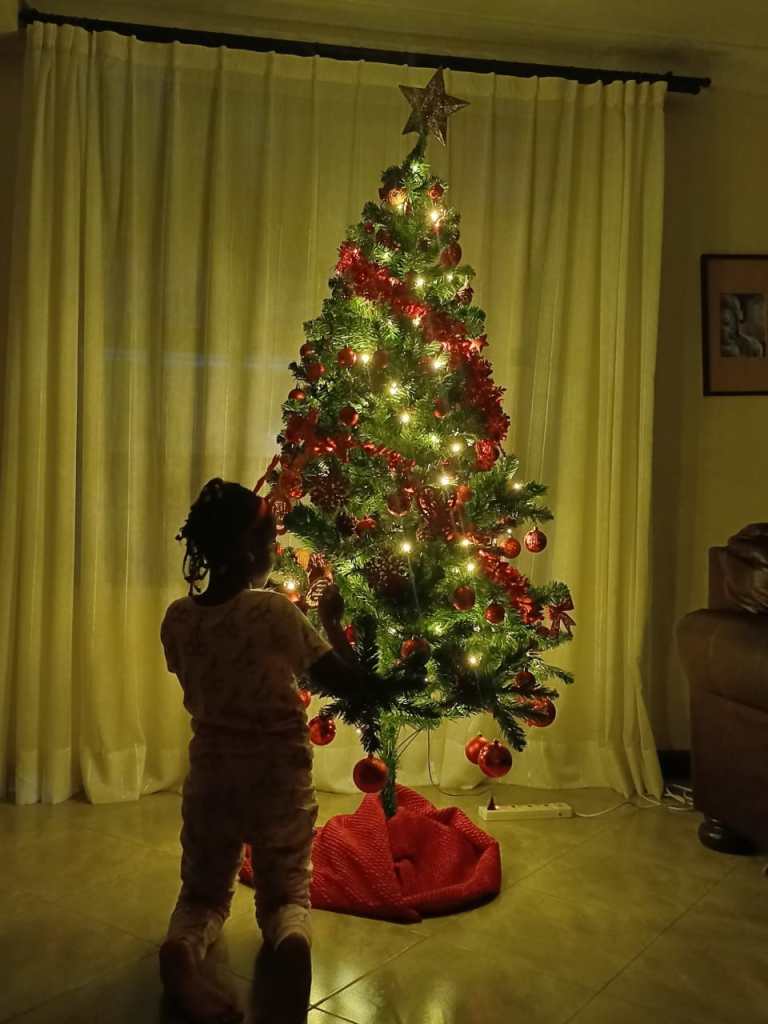
THE FESTIVE SEASON CREPT UP ON ME LIKE A THIEF

Here in my country, Uganda, the festive season has crept up on the majority of us like a thief.

It has come amidst intense political campaigns for a general election slated for 15th January 2026, the rising cost of living not forgetting the extremely hot and dry December weather.

As Geoffrey Chaucer said, “Time and Tide wait for no man.’’

Time relentlessly moves forward unaffected by human concerns. Nothing can express this better than Nature with its four seasons of Winter, Spring, Summer and Autumn, each one serving a purpose and preparing you for the next.

Last Monday I had some important work to do mid-morning, in an office close to the city centre.

The area was swarming with people, cars, boda boda motorcycles, all navigating the road repairs and closed off roads due to political campaigns going on around the city. I felt a sense of being trapped in that place.

At the same time, I was awakened to the fact that the festive season was gradually tightening its grip on the city.

The scents and sounds of the festive season were everywhere I passed or entered:

  1. The hot and dusty weather that has enveloped this special season since my childhood.
  2. The packed December calendars filled with social events as if everything has to be done by the end of the year
  3. The decorated Christmas trees in the traditional colours of the festive season- green ,red, white and royal gold, decorated with lights, in public places like hotels, supermarkets and shops.
  4. The wafting music of traditional Christmas carols like:  We wish You a Merry Xmas, Silent Night and Joy to the World confirming the season and connecting people across generations.
  5. Shops filled with shoppers young and old; lured there by the music, decorations, singing and limited offers like  “buy one , get one free’’.  A constant reminder of today’s world of consumerism that taps into the traditional spirit of the season of Giving and induces people to spend more.
  6.  The teenagers who have very little to do with themselves during this long holiday stretching beyond the election period.
  7. The opportunists that mingle with the crowds just to snatch anything of value like phones and handbags. 

No doubt, all these elements transport us to our childhood.

And for the likes of me who have enjoyed the blessing of celebrating more than sixty such seasons, we cannot help but be grateful for the joy and love at the centre of this season.

Digital technology controls almost all aspects of our lives  but some elements of this diverse and vibrant celebration have remained the same. The joy of the season combined with the festivity is good for our emotional well-being.

  • For the Christians, Christmas celebrations mark the birth of our saviour, Jesus Christ, who later on in his life reconciled us to the Lord our father by his death at the cross. For the young, this core theme of the faith tends to be lost in the celebrations and feasts.
  • This season reminds us that a new year is in the wings, giving us hope for a better tomorrow-  to evolve into the best versions of ourselves- doing more and being more.
  • This still remains a time to remember the good emotional connections to family  and loved ones giving us a sense of belonging.
  • A time to reinforce traditional rituals like decorating the churches and homes and donating essentials to the needy in our communities.
  • Traditions offer us a sense of continuity. The psychologists tell us that our brains are wired  to fear the unknown  so sticking to what we know causes us less stress.
  • Gift giving spirit – ever since I can remember, the festive period has served to give family and friends opportunities to give each other actual gifts or emotional support. Acts of goodwill born out of shared values. They evoke the release of the “feel good hormone’’: Dopamine for both the giver and receiver and strengthens the bonds between them.
  • A period of rest and reflection- a time to unwind and celebrate achievements.

You consider your goals for the year and asses your failures and achievements. It helps you to monitor personal growth and mental well-being. It provides you with a sense of purpose and direction for the future. You pick valuable lessons which you can then use to inform actions and decisions in future. You reset your focus by letting go of the past to be free to focus fully on the future.

Celebrating Christmas in the Digital Era

 For almost three years, the COVID -19 pandemic lockdown imprisoned us where we were. It denied us the opportunities which we had grown to take for granted: physical presence and inclusiveness. We were forced to make the most of available digital tools like video calls, Zoom video conferencing, virtual reality(VR) virtual gifts or shared meals. They helped us to enjoy some Christmas magic.

Some of these have since then gained ground, like virtual Christmas carols and church services (livestreaming) and cooking and eating together via video calls.

I for one prefer physical presence to virtual gatherings, if the distance can allow. According to the psychologists, non-verbal communication –body language, facial expression, tone of voice, eye contact offer 60-90 percent of the emotional communication compared to 7 percent offered by the spoken words.

Looking back, there are some activities that I  strongly associate with the festive season.

Attending some Christmas carol services in churches and community centres followed by lighting up the Christmas trees.

Decorating the Christmas tree at home.

Choosing the best gifts for the family and friends

Baking the traditional fruit cake

Attending the early morning church service always fosters gratitude.

Planning the dishes for the lunch

And much later , mid-life, the freedom to travel away from it all and just be looked after.

Writing a post of this kind in the festive season for the last 8 years, has allowed me to acknowledge and process my thoughts, emotions and feelings accumulated over the years.

The smells and sounds of the festive season continue to evoke vivid memories of loved ones lost, the beauty in people and nature offering me peace and calm amidst a fast-paced world.

Anyone who keeps the ability to see beauty  never grows old.’’–  Franz Kafka

None are so old as those who have outlived enthusiasm.’’- Henry David Thoreau

Thank you all for following my blog throughout 2025. I trust that we will continue to

 walk together in 2026.

 MERRY CHRISTMAS and a HAPPY NEW YEAR

Wishing you all peace and prosperity in 2026.
WHAT I REMEMBER MOST ABOUT MY UPBRINGING

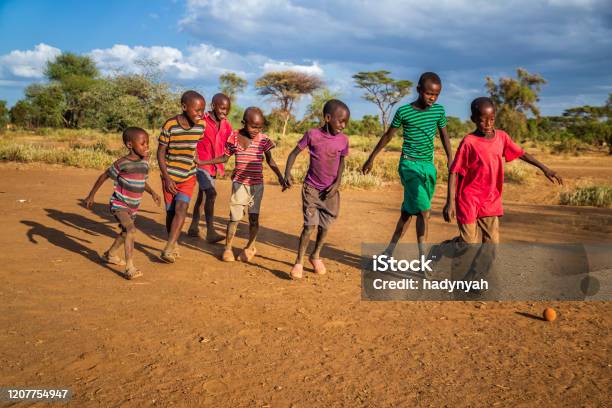
African children from Masai tribe playing football in the village near Mount Kilimanjaro, East Africa, Kenya, East Africa. Maasai tribe inhabiting southern Kenya and northern Tanzania, and they are related to the Samburu.

The challenges that today’s parents face in my local community have forced me to look back to the times of my childhood.

According to the  National Population Housing Census 2024, about 72.6 percent of Ugandans live in the rural area depending on subsistence farming for their livelihood.

The under 30 years of age in Uganda make up  73.2-78 percent of the population and this has its own challenges too the main one being unemployment.

Many of these youths end up migrating to the urban areas where  they believe that the grass is greener- more opportunities  for securing jobs and thriving.

They end up living in overcrowded slums or areas of social and economic deprivation.

 Alcohol and drug abuse are on the increase as well as  domestic violence.

Those left behind in the rural areas especially the girls, are forced into child marriages and teenage pregnancies, resulting in limited opportunities for the girl child and her children.

This happens at the backdrop of a world shrank to a global village by the use of the internet: well -connected and  changing fast every day of the year!

Even the youths from the middle income age group also face challenges of their own:

 The high levels of unemployment push those in employment to shoulder high burdens(83.3 %) of supporting dependants- parents and siblings.

They are stressed by the pressure for success- to give their children a better life than what they themselves had though the economic environment is not that conducive.

The high inflation erodes their pay, They know what they want out of life but they struggle to build themselves up. Most systems are not functional to support them or create opportunities for their development.

The traditional extended family network has also shrank.

 The country lacks a natural framework to guide parents and care givers, communities on parenting skills so the mushrooming day care centres are not well regulated.

Getting reliable helpers in the home has become fiercely difficult since the Middle East opened up for Ugandan domestic workers in 2015.

And yet a huge number of women are now contributing towards their family incomes and wealth.

Children are now left on their own in homes or sent to Day care centres for the few who can afford it or raised by helpers who change as often as dresses.

Single –parent households are on the increase due to   family breakdowns – divorce, separation and death, socio-economic challenges and shifting norms like lack of financial support from fathers, unstable relationships, teenage pregnancies and early marriages.

 Women are caught in an unenviable place of choosing between earning a living or staying at home to raise the child.   

As more women are empowered by education and given opportunities to develop into their full potential , more challenges in raising well-disciplined and emotionally strong children are likely to crop up.

Global data shows that more men and women are choosing to live single lives for various factors.

My mother was raised by an illiterate mother whose duty was to stay at home and take care of the children, sick relatives and the household.  Unfortunately, my grandmother lost her husband in her early thirties and was forced to rise up and bring up two daughters and a son with little support from the family.

My mother was a stay- at- home mother for 12 years but later reclaimed her independence to go back to work. She worked for 35 years till the HIV/AIDS pandemic of the early 90s made it risky to continue being a midwife.

I for one chose to take up a medical career and juggled it with motherhood and society’s prescribed duties. A good education offered relative stability and I knew that if I worked hard and kept improving my worth, I could be promoted through transparent systems.

My daughter, a millennial child with the best education, has dared to take on self-employment and raising a young family.

Today’s youths have found safety in their big numbers; well informed, connected across borders and are demanding for opportunities, justice , accountability and inclusiveness in the economic and social development. They demand to be heard. Due to their big numbers, they take long to find gainful and sustainable employment.

Looking back, I am more than grateful for the way my siblings and I were raised.

The world was then small and relatively predictable. We grew up in small communities where everyone knew and protected the other. All children belonged to the community and were raised by it.

The teachers went beyond teaching and the leaders lived to serve all other than self -aggrandizement.

At home, both my parents were open people who received neighbours and our friends with great ease

and shared what they had with the needy.  Our land line telephone was the emergency phone for the whole village for free. Our friends were always warmly received in the home and we would be allowed to visit their homes often with a deadline to be home by 6pm.

Tough love which is a contentious issue today,

was the order of the day. We all knew our limits and knew who held the reins.

Respect, trust, kindness and good communication were our staples

as was sharing or giving and praying together to stay together.

Healthy competitions among ourselves were encouraged  as we practised story telling, read books and played Ludo, Snakes and Ladders and cards.

We were taught early that life was more about developing into your full potential other than being perfect. Perfection was for God only. I learned early that learning was for life and that I could always improve my personal best.

 Our parents worked in tandem – a No from one of them was a no from both so was a Yes.

 They never feared to show us their vulnerability – when they lost a close relative

or when they could not afford to buy us what we wanted- living within one’s means. They encouraged us to speak up for ourselves and others and involved us in some important decisions about ourselves.

We always cleaned up our own mess and looked out for each other.

 Honesty and integrity were among the priceless badges of honour to wear for life.

We had to guard our family name and like the laysan albatross, home was always open to us.

 Fun and Laughter were equally important as was celebrating each other’s wins and lifting up the weak.

Last but not least, we were taught the “small things that matter in life’’-  being humble to say: “Thank you’’,  “I’m sorry’’ and “How can I help you’’.

Little wonder that we grew up into confident and bold adults with strong bonds.

Some Proverbs and Quotes  which I still treasure:

Akuba owuwe akuba awumba ngalo- loosely translated : A little empathy is required as you punish your own.

Ndyebaaza ndya tagunjula munafu: Encouraging a lazy person to improve requires cheering and celebrating the small efforts she takes towards doing something not waiting for completion of the task.

Akakyama mammera kazibu okugolola : It is difficult to straighten a  twig that has been allowed to grow up bent.

What your mother does not teach you, the world will teach you at a price.- Swahili proverb.

 Obwetowaze businga obuziira: In the long run , humility is better than bravery.

Enjala evumbula : Hard times reveal one’s true character.

Akuwera omwana, aba awadde gwe: Any generosity extended to your child is yours too.

 Omuddo omunyirivu, waliwo agufukirira. The grass is greener where you water it.

New level , new devil’’ – Joyce Meyer .  Challenges  and obstacles change as you advance in life.

The 5th commandment: “Honour your father and your mother, so that you may live well and have a long life.” The only one with an attached promise.

The poorest man in the world is not the one without money but the one without people.- African Proverb

 Watching my children raising their children  has given me the wisdom to understand that the best gifts a parent can give to a child are not found in any toy shop ; it is what you invest and leave in them. Principles and values to guide them through life.

Each generation has its work cut out and each one lends to the next-adding on to what has been laid down as a foundation: principles and values. The onus is on each one of us to make the most of your time and strive to make the world a better place than you found it.

I am appreciating all the good in my childhood and accepting what was not done right to free myself to live in the present comfortably.

QUESTION:

Do you feel visible, heard and integrated into the systems around you?

How do you think you could be accelerated to belong?

Start at home , school and community to build your confidence.

YOU WIN SOME AND LOSE SOME


Caption: My high school netball team, waiting to take on another school’s team on home ground in the late 60s.

I have always been keen to watch the Wimbledon tennis championships, especially the semi-finals and finals for both male and female competitors.

On Saturday , 12th July 2025, I sat glued to the TV watching the 57 minute final  match between  the  23 year old Amanda Anisimova of USA and 24 year old Iga Swiatek of Poland. Both of them were playing for the first time in  the final of a Grand Slam at Wimbledon.  The fans remained quiet and still as they watched Swiatek outperform  Anisimova who was expected to win. But then that is the beauty of  a competitive game , you cannot know the actual winner until the game has ended. Each player has to keep offering her best and play fairly to be a deserving winner.

Swiatek offered her best  and won while Anisimova after the match admitted having  been slow in movement  and frozen for some moments due to the pressure put on her by Swiatek.

There is always life after the game. Anisimova has to do  a rebuilding job to come back on top.

 “I never lose; I either win or learn.’’-  Nelson Mandela.

What has always defined  a fighter is how well he/she rises after falling.

Then by sheer chance on the 22nd July 2025, I stumbled on the 13th edition of the Women’s Africa Cup  of Nations  semi-finals at the Olympic stadium, in  Rabat,  Morocco. Eventual tournament winners Nigeria were playing against South Africa and Nigeria won  2 to 1. 

These two games took me back to my childhood and I reflected on the timeless lessons I had learned as a member of my high school relay team and long jumper, lessons that I could never have been taught in any class, and I greatly appreciate how they have guided me through my life’s journey.

Whether playing on your own or as a team , you enter the competition to win but at the back of your mind you know very well that losing is the other side of the same coin. You have to seize  the opportunity to be a deserving winner. You can come from behind and win ; the game is never over until the final whistle is blown.

In the tennis singles you are playing  on your own but in the football team you are an integral part of the  team and the success of the team depends on how well each member performs her/ his part.

Singles

  1. Preparations: practice makes perfect. The more you play, the better you become. 

Mentally- The game starts in your mind by planning and strategizing on how to achieve your goals. You anticipate your opponent’s moves.

When you are on the field or court , your mind should be at work

Focus on the whole process, not the outcome only. What you focus on grows.

Self motivation by positive self-talk to encourage yourself goes a long way.

Handling success and failure

Harness the lessons you learn from failure –  You cannot blame anyone for your loss. Learn from your mistakes and use the lessons and experiences to improve your personal best.

 As time goes by, you have to listen to your body to decide when to call it a day. Two of the greatest tennis players of all time left us still applauding. Martina Navratilova who turned professional aged 18 in 1977 stopped playing singles in 1994 but continued with mixed doubles till she was almost aged 50 in 2006.

Serena Williams turned professional aged 14 in 1995, played her last game aged 40 in 2022 with 23 grand slams under her belt. 

In 2023, Anisimova chose to take an eight month break from the demanding tennis schedule due to mental health challenges.

 She came back when she felt that she had regained her mental strength. 

                Team games require all that is demanded of you when playing as an individual plus factoring in         and accommodating and tolerating the weakness and strengths of the members of your team.

Teamwork – Synergy:  Each member should give her\his best towards each moment of the game to amplify the final outcome.

Discipline- success demands dedication, consistent effort, adherence to the training schedule and game plans.

Resilience and perseverance help everyone to overcome challenges and to be able to bounce back from losses; something that  will  carry them through life.

Communication skills- verbal or just by body language to communicate quickly. It demands listening and good eye contact. 

Responsibility and accountability – each player is responsible for her/his behaviour on and off the field including keeping in top shape . 

              Leadership- good leadership guides and motivates the team mates.

Time management- has to be learned over time to enable all players to balance training, games and personal life.

Humility- keeps you open –minded to keep learning from others and your own experiences.

       “ The only true wisdom is  in knowing  you know nothing.’’ – Socrates.

                 Sports builds character and should be integrated into school activities.

I know for sure that a good balance of losing and winning in games and in life in general, keeps you on your toes; never to take things for granted. You learn to persevere, eventually becoming resilient enough to adapt to changing circumstances.

                 How the psychologists interpret  the Win some, Lose some mantra:

  • They tell us that in sports and in the journey of life, winning and losing some is a natural cycle of success.

It is not possible to win all the time- both losing and winning are equally important as one grows into the best player.

  • They advise us not to allow ourselves to be defined by the loss or failure nor take winning for granted.
  • They remind us that winning keeps pressure on you to stay at the top.

Be humble in victory and graceful in defeat – Circumstances keep changing : Today’s winner may be tomorrow’s loser.

Being humble in victory prevents arrogance and energizes one to learn from success. Grace in defeat promotes resilience and healthy coping mechanisms. You accept defeat other than deny it, opening yourself up to learn from your mistakes and bounce back from setbacks.

  • They emphasize to us that in the grand scheme of things: life,  setbacks are inevitable and should always be accepted.

We learn more from our failures than in victory. Take time to reflect on why you lost and use it in planning how to play better in future. You can always bounce back from challenges. 

 In today’s world of sponsorship and social media, it is important that each player is equipped with guidelines of handling pressure- the training and competitions by themselves exert a lot of pressure on the players but the fans and followers can overwhelm the players .

If you have learned how to handle winning and losing, sometimes you find yourself comfortable with the loss- you were fully prepared for the game, were focused to be fully present and gave it your all. It only happens when you have developed the mental toughness to be the best.

Parents and teachers should consistently teach children and prepare them on how to deal with both. This will help them navigate through today’s highly competitive world. At all levels in life, you can experience either but what matters most is how you deal with each one. Life will always go on whether you win or lose. At the same time remember that shallow victories leave a hollow echo.

Question:

 Is there a time in your life when you found it terribly difficult to accept loss or defeat?

How did you pick yourself up from this situation?