The end-of –the –year festive season is fast approaching and before we know it, we shall be singing Christmas carols, attending church services, feasting and exchanging gifts with loved ones. I only hope that the true meaning of Christmas to any Believer will not be lost in the merry making.
The birth of Jesus is a free gift from our Father; given to us out of his love. Jesus was later to die at the cross for our sins so that we could have eternal life. For as Jesus rightly said: If the Son sets you free, then you will be really free.
Just as I was thinking about giving and sharing, I found myself singing The Twelve Days of Christmas song. It is an old English Christmas carol (1780) which I was taught in junior school some donkey’s years ago! In this song a generous person sends a gift to his true love each day for the twelve days of Christmas – from the 25th December to the 6th January and the gifts become increasingly grand as the days go by. I surprised myself by remembering all the twelve gifts though I have not sang this song for more than ten years!
Can you imagine receiving a gift from your true love each day for twelve days? I would probably walk on cloud nine or walk around as if I owned the world. For the love he feels in his heart would be driving him to send those twelve gifts. Amy Wilson Carmichael, an Irish Protestant missionary in India said:
“You can give without loving, but you cannot love without giving.’’
I laughed out loud and then I got the idea of writing this post just to remind ourselves of the importance of giving and sharing what we have all the year round. It is not the gift that I give that is important but the reason of why I give. You give because you want to and you give out of the love and concern in your heart for the person you give. This also makes us understand why the best gifts that a parent can give to a child cannot be found in any shop simply because they are too priceless: namely love and prayers from your heart.
Those of us who read the Bible cannot forget the Widow’s offering of two little copper coins into the temple treasury while the rich people dropped what they had to spare of their riches. I also remembered that the poor and needy are always among us throughout the 365 days of the year so they need to be shown our loving kindness every day not just during the twelve days of Christmas.
This was ingrained in me by my late father at a tender age. There was a time when our home had the only telephone in the village ( compare with the present time of mobile phones). It became the public phone to use for all emergencies in the village: to call a father at work to come home to take a sick child to the hospital, to call a father at work to attend to a child sent away from school due to unpaid fees, to call the Fire brigade to attend to a house on fire or kill a python at someone’s home. Thankfully, the service was never abused for the emergencies were genuine. My father never charged for this service for all those years. He provided the service out of concern and love for his many neighbours.
My favourite writer Kahlil Gibran, the Lebanese born American writer and philosopher said, “You give most when you give of yourself- your time, efforts and energy.”
“I slept and I dreamed that life is all joy. I woke and saw that life is all service. I served and saw that service is joy.’’
My father made time to serve gladly with Uganda Red Cross Society, YMCA, Lions’ Club, Uganda Boys’ Scouts Association, The Bible Society and many School boards. Up to today I cannot figure out how he managed to get the hours to serve wholeheartedly during the 24 hours of the day! Surprisingly, he had time to play games with us and to supervise us do our holiday homework and even watch whether you held the pen properly!
For all the festive seasons we spent deep in the village, my father would order a cow or two slaughtered then have small packages neatly wrapped in banana leaves sent to all his neighbours. He was not looking for their votes; he just wanted to share what he had with them. He understood that by giving to others , you live a meaningful life. Winston Churchill, a former Prime Minister of Britain once said that: “We make a living by what we get. We make a life by what we give.”
I have also come up with my own simple ways of giving to the needy for if I do not do it ; I would me dishonoring my father’s memory.
As one of King Solomon’s proverbs says : “Teach children how they should live, and they will remember it all their lives.”
Giving gladly is a form of ‘Double’ currency in that it enriches both the receiver and the giver. I have experienced this first hand; for some years until the children flew the nest, together we would collect and sort out toys, books and items of clothing and shoes they had outgrown and I would take them to the nearest orphanage or SOS Village. When I close my eyes now, I can see the big smiles on the administrators’ faces as I handed them the items. Much later when I would see a child wearing any of those items; I would smile to myself out of the joy in my heart.
May we all learn to give gladly to the poor and needy throughout the year not only at Christmas time.
Wishing you all a peaceful, joyful Christmas and a prosperous 2020. May it turn out to be your best year yet.
QUESTION:
Love is what it does. How has the love in your heart made you give and share gladly what you have with others?
Being surrounded by loved ones often, gives long term fulfillment.
I thought that as I grew older, I needed less to be more happy and content. I had come to believe like Architect Ludwig Mies van der Rohe that less is more: less decoration properly deployed , has more impact than a lot of it. The same way a makeup artist believes that light make up makes the individual features more prominent. I have been reading widely about happiness and life satisfaction and to my shock and amazement,the psychologists are telling me that I am wrong: what makes one happy and content does not vary much with age but some of the contributing factors to life satisfaction may change with age.
Kahlil Gibran once said: “To be able to look back upon one’s life in satisfaction , is to live twice.”
According to the psychologists, happiness is a state of living an enjoyable, meaningful , rewarding and exciting life. It is born out of a deep satisfaction with one’s relationships with others, surroundings, accomplishments and oneself.
Some psychologists like Martin Seligman of USA think that happiness has 3 distinct elements:
The pleasant life- having fun, joy and excitement in life. Having as many as positive emotions as you can as you go through your day- to- day activities.
The good life – achieved by identifying your unique skills and abilities and applying them to enhance your life and others. You cannot engage fully with life until you find out who you are- your strengths and flaws. You then apply this knowledge to find the great story of your life.Secure in this knowledge you are less likely to be confused by the inessentials or be pulled down or manipulated by others.
The meaningful life- involves a deep sense of fulfillment that comes from using your talents to make a difference in the world around you.Living your genuine story makes you feel deeply satisfied and gives meaning to your life. No life no matter how successful and exciting it might be, will make you happy , if it is not really your life. No life will make you miserable if it is genuinely your own.
The happiest people tend to pursue a full life encompassing these 3 elements.
It should be noted that each of our individual journeys is intimately interwoven with the journeys of family members, friends and co-workers. The steps I take toward becoming truly myself affect them in the same way the steps they take affect me.
Mahatma Gandhi once said: Happiness is when what you think, what you say, and what you do are in harmony.”
Extensive research done over the years has shown that age is related to happiness but happiness is not related to gender. Life satisfaction tends to increase as people get older.
A growing child needs to feel safe and secure in a home, loved and valued by the parents. He/she needs to be surrounded by happy loving parents and people. As emotions are contagious, children who are given much love and care in their childhood learn to be kind to themselves and then go out to love other people and animals.They grow up very optimistic ; resilient and can face life’s bigger challenges better.
The teenagers in any given population, are going through a period of rapid changes and transformation towards becoming adults. During this transitional period, the part of the brain that controls emotions and motivation and directs behavior to meet the challenges of their environment or weigh risks and rewards is not yet fully developed. Therefore, the teenagers cannot direct and control their behavior and they feel happy if they are able to fit in with their peers and be accepted by them. Any rejection by their peers can push a teenager into terrible misery or even mental illness. Available scientific reports show that 50% of all mental illnesses in the USA begin by the age of 14 and 75% occur by mid 20s. Teenagers need affirmation , approval and acknowledgement. They need to feel loved and valued. If a child is good at something, he/she needs appreciation. This demands that parents, teachers should assist children to develop positive emotions.
The psychologists who have studied positive psychology- the study of happiness and well being have identified a number of factors that consistently relate to happiness and fulfillment in young adults and and older adults. They include:
Positive affect- focusing on your individual positive traits: your strengths and virtues.
Optimism- expecting the best outcome in any situation. This positive frame of mind helps you see new opportunities, learn from different situations and keep moving forward.
Flow- A mental state of well being achieved by being involved in an activity to the point where you feel you lose yourself in the activity, effortlessly maintain concentration and focus and feel in complete control of your action and time seems to pass more quickly than usual.
No one is completely happy all the time, encouraging one to experience these three contributes to life satisfaction.
For the older adults,the psychologists have identified six main factors related to happiness and contentment:
Strong healthy relationships with loved ones- you learn relationship skills that help you make responsible decision making.
Fulfillment from work- It pushes you to want to be more and do much more.
Satisfaction with physical health- exercises optimises your brain’s ability to learn. It helps you regulate your emotions.
Happiness with your romantic life
Content with your personal growth
6. Secure in spirituality or religion
Greater life satisfaction makes us feel happier and helps us to enjoy life more. All in all, it has a positive impact on our health and well-being.
In the elderly, the need for life satisfaction remains relatively high though the illnesses associated with old age; aches and pains may reduce one’s engagement in life. Older adults have weathered many storms of life and tend not to place more value on things and status like the young people. Instead, they place more value on family relationships and other genuine relationships which give them long-term fulfillment in their lives. It has been observed that happy people tend to have more friends, more high -quality social relationships and strong social support networks than less happy people.
The illusion that I needed less to be happy and content developed after my sixtieth birthday. I had observed that I derived more joy and fulfillment by just spending time with family and genuine , old friends. I also observed that I could get a natural high by simply immersing myself into creative writing. I could effortlessly maintain my concentration and focus, felt in control of the action and time seemed to be passing quickly. It is a pleasant experience which requires me to use my skills, knowledge and passion. At that moment in time, I feel happy and fulfilled.
Digging deeper into the psychology of happiness and contentment has helped me understand that the main factors contributing to my happiness and contentment have more or less remained the same but it is the value that I attach to each of those factors that have changed as I grew older!
I have to admit that it has indeed been a rude awakening! It has helped me to appreciate more that learning is a lifelong process. The more I learn the more I get to understand myself , the people around me and my environment. The wisdom of old age is pushing me to search for the reality behind appearances and is opening me to the deeper truth about life.
QUESTION:
What activity is giving you the flow experience at this moment in time? How has this experience changed over the years?
Mother barnacle gosling teaching her chicks to fly.
Image from Unsplash.com
On the 30th September 2019, twenty- five- year- old , Halima Nakaayi, of Uganda , won the Women’s 800 metres finals at the Khalifa International Stadium, Doha, Qatar. It was the 17th IAAF Athletics World Championships. Nakaayi, the simple girl from a small town, Mukono, had overtaken Ajee Wilson of USA, the obvious favourite to win the title. Nakaayi was considered as an outsider; having never run in a world Championship or Olympic final.
I stood up and cheered wildly as she crossed the line. I was intrigued by this young woman who had won us the first medal at the IAAF Athletics World Championships. I ended up reading her life’s journey to that magical moment. She first competed in the World Youth championships in 2011 later she competed in the Commonwealth Youth games as a middle-distance runner. She has kept on training hard and competing to perfect her race. Just like everyone else, she has had some good and bad days.
Her unique story got me thinking about the risks and sacrifices that we have to make to continue moving forward and to get what we want in life. This is why I am now writing about Taking Risks.
Wikipedia.org defines risk as the potential for uncontrolled loss of something of value.
Values like physical health, social status, emotional well- being or financial wealth can be gained or lost when taking risk resulting from a given action or inaction, foreseen or unforeseen.
Every day we take risks as we go about things with the intention of achieving our goals and dreams. We take risks to move forward and get where we want to be.
Mark Zuckerberg, the co- founder and Chief Executive Officer of Facebook once said: “The biggest risk is not taking any risk. In a world that changes really quickly, the only strategy that is guaranteed to fail is not taking risks.”
And the Writer, Christy Raedeke also emphasised the significance of taking risks in our lives when she said: “ If there is no risk, there is no reward.”
Risk is part of life and yet most of us fear to take risks out of fear to fail and this hinders us from pursuing and living our dreams. Every decision each individual makes every day including the decision to do nothing, carries some element of risk. The best thing is to focus on the opportunity other than exaggerate the riskiness of the decision
The psychologists advise us to take small risks before taking a big one. Taking small, measured risk-taking behavior increases our confidence and self- efficacy. As our confidence builds up, we become less afraid of failure or risks.
Sometimes, I have had to admit that the fear was not as risky as it seemed. After all, great success is built on many failures; the lessons learned from the failure inform your next decision about the issue at hand.
Thomas Edison, the inventor of the electric bulb failed 999 times before getting it right. Being an optimistic person, when a reporter asked, “How did it feel to fail 1,000 times?’’ Edison replied, “I didn’t fail 1,000 times. The light bulb was an invention with 1,000 steps.”
As taking risks is normal animal behavior ,the psychologists have studied it and come out with the benefits of taking risks:
Taking a risk causes the release of the hormone Adrenaline from the adrenal glands at the top of each kidney and some neurons , into the blood. Adrenaline prepares the body to react quickly to the threat or danger: the heart beats faster, the blood flow to the brain and muscles is increased and the cells are stimulated to make more sugar available for use for fuel. The sudden release of Adrenaline makes you feel high and it is what is known as the ‘Adrenaline high’. At that moment in time you can either fight or run away from the danger.
Taking a risk also releases Dopamine, a neurotransmitter that transmits signals in between the nerve cells of the brain. Dopamine is the ‘feel good ‘ factor which makes us happy and motivated as we go through life. It controls emotions and cognition.
The sudden release of these two chemicals that cause a natural high also helps to ward off depression. Studies have proven that risk taking in small doses is almost universally beneficial for our brains and mental health. However, the natural high can become addictive to some people.
The psychologists keep reminding us:
that each risk taken has potential consequences and that some risks are not worth taking.
An individual’s willingness to take risks varies across age and situations
Individuals have risk preferences- a mountain climber may find it difficult to take a financial risk- to invest his money into the stock market other than keep it in a simple saving account. Risk preference is a form of characteristic traits.
The willingness to take risks starts early in childhood- boys tend to engage in greater risk taking than the girls. Children take risks by trying to do scary things. They do so to get a thrill out of it and but in the process, they gain confidence, learn and grow.
Studies done by the psychologists show that there are 6 categories of risks that attract children everywhere as they play:
1. Great heights- climbing trees, walls so as to see things from a vantage point. It gives them the thrill to say, “I did it.’’
2. Super speeds. Racing down a hill in a toy car just for the thrill of it.
3. Dangerous tools- playing with knives, farm machinery. They get the thrill of being in control.
4. Dangerous elements- playing with fire or water. It pauses some danger but feels good doing it.
5. Rough and Tumble- chasing each other or wrestling. They know it could hurt but at the end the child will have acquired the skill.
6. Wandering off- getting lost, playing hide and seek in new territories that could even be dangerous, to enjoy that thrill.
Many young mammals also enjoy risky play: puppies try to wander off from the mother to explore, young monkeys swing from branches of trees. They chase one another around and play fighting. They are aware that it could cause injury but they do it to get the thrill of doing it. It is self-chosen, thrilling play.
I grew up in a big family where the girls were even more than the boys. Our parents were strict disciplinarians who spelled out the limits to us but on many occasions we willingly stretched the limits by climbing very tall trees, riding on the neighbour’s motorcycle and swimming into pools of muddy water. Most times we got away with it but on the few times we were caught, we were punished appropriately.
All in all, we found out that the benefits outweighed the risks; we grew up to be confident and emotionally strong. Now at my age I know for sure that I have to continue taking risks in life and to encourage the young ones to do so. If I win, I can lead and if I lose I can still guide others.
Studies in laboratory animals like rats have clearly shown that overprotection of the young ones turns them into emotionally crippled adults; not knowing what to do in unfamiliar or new environments.
The same thing applies to overprotected children who are denied free risky play by parents who believe that they are protecting them. They tend to grow up into children with mental disorders. The psychologists therefore advise parents to set limits according to age but then allow children to play freely and play risky without adult control. The children will gain trust and responsibility, become more confident and emotionally strong. Children know how far they can go and what risks they are not ready for so it is the parents themselves who have to learn to be trusting and tolerant.
The Adolescence( 10-24) years.
Many of us have been there and done that during this period of rapid changes and transformation. The Adolescent period is the period when boys and girls engage in risky activities like: reckless driving , alcohol and drug abuse, and risky sexual behaviour at the most. The female and male hormones flowing in their bodies, cause physical, emotional , intellectual and social changes. The brain begins to mature: organize and regulate impulses. The brain development is completed by the age of 25 years. It is influenced by hereditary, environment and the sex hormones.
Since the invention of the Magnetic Resonance Imaging(MRI), a medical diagnostic technique in 1977, it has been used to study how the brain develops to maturity. With the MRI ,a picture of any part of the body can be made if the body is exposed to an electromagnetic field.
MRI studies of the brain demonstrate the developmental changes between 10-24 years of age, in the white and grey brain matter. The Prefrontal Cortex which controls our emotions and motivation and directs and controls behavior in order to meet the challenges of the environment is the last area of the brain to mature. Before it matures, adolescents cannot direct and control their behavior to meet the challenges of their environment or weigh risks and rewards- they have no sense of self –regulation. This explains why the teenagers focus more on the rewards of peers than from adults; turning to their peers for help mainly for social inclusion. This increases their chances of engaging in risky behavior. Adolescents take more risks than any other age group to explore themselves and their environment.
The role of the parents and teachers is to engage with the teenagers and offer them the correct information about the changes and transformations going on in their lives. They have to engage teenagers in all areas of their lives, listening, offering suggestions and guidance. The adolescents should be allowed to make mistakes and to learn from their own experiences. Setting limits for peer interaction and supervising them can limit opportunities for risky behavior.
After the age of 25, the willingness to engage in risky activities declines after gaining the ability to self-regulate. As we continue to grow, we acquire more skills for assessing risk through our own experiences and those around us. We learn that risk taking is good for everyone and we work towards minimizing the risk of losing. We consider the profits and losses but still focus on winning. Over time we all learn to live with acceptable risks. We learn the process of making good risk decisions by :
Thinking for yourself- use your common sense to reach a conclusion and move forward.
Take one risk at a time- it builds your confidence for bigger risks. You will become bolder and braver every day.
Do not put everything on the line- time and money in one venture.
You create your own safety standards, setting limits and timelines. It is your life to live and live fully.
For those of us who read the Bible, the parable of the three servants who were entrusted with money has a lot to teach us in our time. The one who received five thousand coins doubled it and was promoted to handle larger amounts while the one who received one thousand coins buried them in the ground had them taken away and given to the one who had doubled his.
A life without taking risks is stagnant and boring. I would rather get bruised other than find myself at my deathbed saying, “ If Only I had…………………..
Or asking myself, “ How would my life have turned out if I had……….
Jim Rohn once said: “If you are not willing to risk the unusual, you will have to settle for the ordinary.”
No doubt , our young woman from Mukono , Uganda, must have taken numerous risks to end up winning us the first gold at the IAAF Athletics World Championships. I take off my hat to you!
QUESTION:
Have you undertaken a big risk in your life recently? Did the worst that you feared happen? Did the outcome change your life for the better?
An African Mother elephant with its baby. The photo is from Unsplash.com
Some years back, I
attended a wedding of a young couple where the groom’s speech left his
father a humbled and incredibly happy and fulfilled man.
The
groom had said with great appreciation, “As far as I can remember, I‘ve
always wanted to grow up and be like my father. He loves and respects my mother
and always consults her about almost everything. He regards her as the most
important person in his life and is always ready and willing to do things for
her. That’s what I want to be to my dear wife.”
Six
years and two sons down the line, he has loved his wife and children and they
are all as happy as they can be. Becoming what you want to be is a lifetime
process that requires focus and intention. Every single day that dawns, you are
becoming that person.
To
this young man, his father was his role model: he had values, principles and
practices that the son admired and he was motivated to become like him.
The psychologists tell us that our parents especially the same-sex parent
has the biggest influence on a child’s development and the influence lasts for
a lifetime. The groom’s journey to becoming a loving, caring and generous
husband had started in his childhood!
Humans
actively learn from each other and one Bible proverb tells us that: Iron
sharpens iron.
The
Oxford Advanced Learner’s dictionary defines a role model as: a person you
admire and try to copy.
Parents
are the child’s primary role models. When you start school, then the teachers
are added on this list followed by any other person in your community whom you
consider competent and an achiever and carries herself/himself with respect.
The most visible in our environment like athletes and actors tend to drive many
people to become the best they can be. The role models teach us to
identify our true potentials and how to strive to make use of them fully.
Among
the many are:
Stephen
Kiprotich, the winner of the Men’s Marathon during the London 2012 Olympic Games.
Phiona
Mutesi , known as the Queen of Katwe, the young international Chess player from
the slums of Katwe in Kampala.
The
late Rotarian Sam Owori whose passion to serve others helped him leave Uganda a
better place than he found it.
Usain
Bolt, the 9-time Olympic gold medalist.
Lenin
Moreno, the 44th President of
Ecuador who is also known as the “the President in a wheelchair.”
Malala Youssafzai, the 15-year-old year-old Pakistan girl who defied the notorious Talibans by standing up for the education of girls. She survived an assassination attempt in 2012 and went on to become the youngest person to receive the Nobel Peace Prize in 2014
The
other side of the coin is that there are also negative role models who
demonstrate harmful and disruptive behavior in our communities. They influence
us to accept negative behavior as normal in our society thus bringing out the
worst in each one of us.
One
famous quote spells this out: “Children
are great imitators, so give them something great to imitate.” Anonymous.
Positive
role models bring out the best in each one of us. They are badly needed by all
young people as they struggle to develop their own identities. The psychologists
tell us that each one of us has the responsibility to act in ways that make the
world a better place. We cannot contribute to making the world a better place
unless we know who we really are: our strengths and weaknesses and embrace them
fully. We use our strengths to lead and excel and the same time use them to
improve our weaknesses where possible.
There
are two ways in which one can find her/his true identity:
By
finding and following what you love- in this respect one is guided by the
positive role models in the world around us. In them we see what we want in our
lives and they demonstrate, motivate and inspire us to become what we want to
be.
By
being totally different- These take pride in their uniqueness and their
indomitable spirits turns them into Trail Blazers. These include people like
Emeritus Professor Josephine Nambooze, the first Ugandan woman doctor and Engineer
Proscovia Njuki, the first Ugandan woman engineer. Professor Nambooze had to
transfer to an All boys school to continue with the science subjects she needed
to pass to join the only medical school of the time while engineer Njuki was
the only student in her A-level Mathematics and Physics class in an All girls
school!
Role
models help us to find our own identity and strength, open up possibilities for
getting what we want in life. They empower us to chart our own career paths. We
learn from them and take responsibility for our own lives.
Since
childhood I had wanted to care and help people and somehow I felt I could
achieve this by becoming a medical doctor. In the late 1960’s , when Dr. Alex
Sempa who happened to be an old girl of my school , became the second
woman medical doctor after Dr. Josephine Nambooze, my future was more less
sealed. I just wanted to be like Dr. Sempa. From that time, I trusted myself
that if I worked hard and smart, I would become a doctor. Later, when I met her
in person, she became my idol. She offered me an insight into the realities of
being a doctor. In today’s jargon I would say from that day, I started faking
it until I made it.
When
I joined the Makerere University Faculty of Medicine, and Dr. Josephine
Nambooze was one of our senior lecturers in Public Health, it pushed me into wanting
to live my dream so badly that I worked extremely hard and smart to achieve it.
“My role model didn’t tell me, he showed me.”
Anonymous
I
grew up in a different world where a child was brought up by the whole village.
Today’s children operate in their own world where the internet has shrunk the
world into a global village. In this Global Village, things are changing all
the time and fast too and the environment is generally competitive and harsh.
The students have many options and sometimes they are spoilt for choice so they
need more guidance than our generation; they need more role models.
We
are all ‘Works in Progress’ needing modeling and reshaping.
Adults
also need role models to push them from mediocrity and develop into greats.
Positive role models are human just like any of us; facing problems and
obstacles in life but they strive to overcome them. Observing them and sharing
their experiences ignites the same passion towards life.
Whenever
we receive motivation, inspiration and mentorship from these role models it
gives us the responsibility to become positive role models for the young
generation. This is what keeps the conversation going- one generation lending
to the other.
By
the lives we live and how we behave and carry ourselves in our communities, we
are influencing many people around us especially the young ones. May we all strive
to be positive role models who will leave the world better than we found it.
Looking
back, my best role models who turned me into an all- round human being are my
mother and father. The best way of paying them back is to be the role model
that I needed when I was growing up.
Two
more quotes: “One man with courage makes
a majority.’’ Andrew Jackson
“When the whole world
is silent, one voice becomes powerful.” Malala Yousafzai
QUESTION:
When
a snail moves, it leaves a trail of slime.
Are you leaving an indelible impression for others to follow along your
path?
Robots are replacing human security guards. Image from Pinterest.com
In all our daily interactions, we are knowingly or
unknowingly competing with others.
The Merriam-Webster online dictionary defines ‘competitive’
as being inclined, desiring or suited to compete.
Being competitive is inborn: siblings compete for food at
the table and attention and approval. At school, children compete for the best
grades despite there being no guarantee that the best students will be the most
successful in life. As adults, we compete to see who gets the best job, best
car or who makes the most money.
Competiveness is not bad but how people treat competition is
what causes problems.
“Competition is
always a good thing. It forces us to do our best. A monopoly renders people complacent and
satisfied with mediocrity.” Nancy Pearcey.
In life you compete with yourself and others.The psychologists tell us that competition can be either healthy or unhealthy.
Healthy competition serves to help you learn, improve and grow and become better at whatever you choose to do. It is about improving your ‘personal best’ as you take yourself to the next level of success.
Unhealthy competition
focuses on winning; sometimes it goes as far as winning at all costs. You are
only interested in the results and you think that you can succeed only if
others fail. Who can forget how Ben Johnson of Canada fell in an instant from
hero to zero at the 1988 Seoul Olympics! He had won the 100m race but tested
positive for use of Anabolic steroids, Performance Enhancing Drugs. Then Lance
Armstrong who dominated the Tour de France cycling race from 1999 through to
2005 but became the cycling’s biggest fraud for use of Performing Enhancing
Drugs.
George Leonard said: “Competition
is the spice of sports; but if you make spice the whole meal you’ll be sick.”
Unhealthy competition
puts too much stress on the individual and harms one’s mental health. Whenever
you do not win, you are left feeling inadequate or a failure. It is responsible
for ill health, depression and anxiety in children and youths.
One Swahili proverb says that : “What your mother does not teach you at home, the world will teach you
at a price.”
The psychologists also advise all parents to motivate their
children to participate in simple competitions at home and at school because it
has some benefits for them:
It prepares the children for the wins and losses
of adult life.
It helps them develop important life skills like
resilience, perseverance and tenacity. They learn to encourage others and
develop empathy.
It teaches them the true meaning of
competitiveness- not to focus on winning but also appreciate that by participating
in a competitive task, they learn something that will in future inform the
decisions and choices they make.
Over time they will learn that failure is part
of success and therefore they should not fear it. Naturally in life, you win
some and lose some. This is what makes a balanced individual. Such an
individual grows up knowing that it is fine to lose as long as you know that
you accomplished what you set out to do and you gave it your best efforts.
Howard Cosell rightly said that, “The ultimate victory in competition is
derived from the inner satisfaction of knowing that you have done your best and
that you have gotten the most out of what you had to give.”
Parents
like good sports coaches, can empower and motivate their children to excel by:
1. Believing in them and getting the
children to believe in themselves. Most accomplished individuals relate their
achievements to the power that comes from learning to believe in themselves and
knowing for sure that their parents and teachers believed in them.
2. Inspiring them to do more than they
think they can do- assist them to gradually reach their full potential and
provide encouragement.
3. Teach their children to do things right
and to be responsible for their actions. They should help them to recognize
their strengths and weakness and teach them to look out and explore available
opportunities.
4. They should guide them through life by
being the best role models to them; children do what they see not what they are
told.
5. By sharing their wins and losses and motivating them to keep trying.
In a nurturing and empowering environment, children learn to trust their parents and teachers enough to open up and learn from them. I grew up in a home where I was loved and cared for. My parents created situations that helped me to grow and develop. I was empowered and motivated through rewards and grew to love winning. I was always sure that my parents would willingly share my wins and losses. They always assured me that I could be anything as long as I was determined to work hard and enjoy what I did.
The Church -founded school that I attended for all the
fourteen years of formal education offered many extracurricular activities like
sports, gardening, clubs like debating, Geography, visiting the elderly in the
village, acting, dancing. It turned me into an all-round student who is confident,
self-motivated, interdependent, has a good sense of time management and
believes in herself and in life – long learning.
Over time, I came to learn that the race of life is not a sprint but a Marathon- endurance running. To complete the marathon you have to start off with the end in mind then plan how to get there at your own pace or rhythm. You have to be always aware that you are surrounded by other runners. You can use them to your advantage to achieve your personal best.
In the Uganda of today life is highly competitive for the children as their parents make efforts to take them to the best schools and universities. Available statistics show that 400,000 thousand students graduate from the tertiary institutions every year to take up the 100,000 jobs available!
This calls for a different approach to education from primary to tertiary institutions. Yesterday, we should have started producing students who think for themselves and have the skills they need to create jobs for themselves other than be mere job seekers. With their creative minds, the students would have been able to create appropriate solutions to the common problems in our communities like deforestation, drought, youth unemployment and garbage disposal to name but a few.
The students have to remind themselves
regularly that there are no more permanent skills in this 21st
century; skills keep changing. Skills have to be upgraded and enhanced to
enable the worker to have the right skills at the right time for the right
purpose.
The
21st century is the Information Revolution, the most innovative age
of all time. It is Science and Technology- driven. The world has shrunk to a global village in
which the most science and technology- driven countries like USA, Finland,
Japan and Israel lead. Other countries like China and India are catching up too. Thankfully,
knowledge and skills are transferrable and portable in this Digital era and
developing countries like mine are gradually building their own capacities in
Science and Technology and getting transformed by them.
The new lunar race for space exploration
plays out the necessity of Science and Technology remarkably well. Since the
July 1969 moon landing , USA has led the race followed by Russia, Japan, China and
Israel. With the accumulation of scientific knowledge and its technological
applications, other countries have joined this race.
China is now a great power and wants to
claim its position as a world power off planet Earth while India wants to test
and prove its advances in science and space technology.
Among the biggest challenges of our time are Climate change/ destruction of the environment resulting in frequent droughts, floods and fires and water and food security, conflict and wars and unemployment. Countries that are most advanced in science and technology irrespective of size, but are ready to apply them to solve these problems, will lead the world.
As
things stand now, global competitiveness increases with each passing year and
to thrive in this fast –paced world, driven by science and technology, we have
to prepare ourselves and our children for the changes by becoming more
innovative and creative. Continued skills training to share new knowledge is
essential at all workplaces.
Charles Darwin, the British naturalist, said: “It is not the strongest of the species
that survives, nor the most intelligent; it is the one most adaptable to
change.”
QUESTION:
How are you helping your children, your
workers or the young members of your community to fit in a competitive and
fast- changing world driven by Science and Technology?
On Wednesday, 13th
September 1989, my father passed away aged almost eight nine years. He was the most generous person I knew; he
gave his time, energy, efforts and money to others without taking away their
dignity or expecting anything back.
Kahlil Gibran rightly said: “You give but little when you
give of your possessions. It is when you give of yourself that you truly give.
For what are your possessions but things you keep and guard for fear you may
need them tomorrow?”
Most of my siblings followed their hearts and dreams and are
currently living and working outside Uganda. To mark the 30th
anniversary of our father’s passing, we decided to celebrate his rich life by
holding a Memorial and Thanksgiving Service on that day in the church in whose
very grounds he was laid to rest. We felt that remembering him was the best way
of reminding ourselves of his generosity. His memory remains alive and useful
to the children and their children.
He was a busy politician who joined politics simply to serve
and contribute to the development of his country but he also worked as a volunteer
in many organizations like Uganda Red Cross Society, Young
Men Christian Association, Uganda Bible Society, Uganda Scouts Association, Lions Club of Uganda to name but a few. He was
also an active member of his church community and clan.
We grew up seeing him go out to serve others with a big smile. Unknowingly, he was bequeathing to us the best gift: Giving to express your gratitude for the good things in your life. I now know for sure that generous giving be it time or resources comes from a generous heart and displays courageous confidence in God’s loving and faithful provision. My father always gave gladly not out of a sense of duty; not that he had a lot to spare but because he wanted to do it and it felt right to do it. He gave from the heart and his reward was the self-respect that came from doing what was needed at the right time.
Despite running such a hectic life in politics and charity
organizations, his family came first. He was indeed a hands-on father.He was always
there especially in the evenings to spend quality time with us
He taught me how to hold the pencil and write bold easy-to-read letters. I practiced regularly under his watchful eye on the Ladybird Books, the famous children’s books of the time. And it paid off, I won many prizes in the form of books from the Children’s press of London, at the prestigious Gayaza High School for neatness and the best handwriting. I took the responsibility to pass on the art to the young generation. He taught us to read newspapers every day with him and summarize the most important news items, he taught us how to debate and practice public speaking.
“Stand boldly, hold your head tall, look at your audience
and speak,” he would emphasize.
He taught us that it
was important to stand up for what you believed in- never to compromise your
core values. If we did this over time we would develop a strong sense of self,
develop self-respect, would build our integrity and it would help us become
independent people not having to rely on others for validation.
He made us aware
that we had some rights as children but they had to be enjoyed responsibly and
that having fun was essential for living a good life.
Early in our lives, he encouraged us to read books and
bought us all the African Writers books- blue for the fiction ones and orange
for the nonfiction, from Heinemann publishers.
He encouraged us to compete among ourselves in writing,
bicycle racing, indoor games like Ludo and crosswords, preparing us for the
competitive world.
He encouraged us to be each other friend and keeper. He
considered his loyal and genuine friends his greatest wealth on earth. He could
drop everything to help any one of them. We did not know until late adulthood
that some of those friends were not our relatives!Thankfully , the majority of
us inherited this trait from him and find it extremely rewarding.
We would spend the long Christmas holiday on our farm in the
village and this would give him the opportunity to teach us how to pick ripe
coffee berries and how to take care of the herd of cows. We shared all the
household chores irrespective of our gender. He always rewarded good behavior
but punished you appropriately for the wrong done.
Later, in his sixties, he was humble enough to learn new
subjects like Biology from us or how electric items worked. Had he been around
in this Digital technology-driven era, he would have asked one of his
grandchildren to teach him how the Mobile phone worked and then he would have
started using it and respecting it.
Little wonder then, that thirty years on, we remember him
for his love and generosity. Many of us accompanied by our children flew miles
to hold a service to express our gratitude to him. The service turned out to be
another learning experience to the children, grandchildren and our guests about
good parenting and writing your legacy by your daily actions and behaviuor.
They say: “
It is not what you leave for your children that matters most
as what you leave in them.”
Myles Munroe said: “True leaders don’t invest in buildings. Jesus
never built a building. They invest in people.”
Our father invested in us, he instilled into us the virtues
of honesty, integrity, and discipline,a sense of responsibility, reliability
and having fun. This is exactly what we are passing on to our children and they
will pass on to their own. To be women and men of values and principles while
at the same time respecting their traditions.
Psychologists like Paul. J. Zak reveal to us the science
behind generosity.
You give because you understand the perspective of the one
in need. Being generous connects us to other people; we engage with them and
feel the joy of giving.
Your happiness increases with your usefulness to others. You
feel happier when you give to others than when you give to yourself.
When you give out love, gratitude and compassion, your brain
releases the hormone Oxytocin into the blood stream. Oxytocin is one of the ‘feel
good’ hormones and is specifically associated with bonding and trust which are
essential for human relationships. An
oxytocin surge causes us to feel pleasure and to trust and to connect with others. This is
what is referred to as the joy of giving.
This feel good experience has a ripple effect in that when
we give to people, we make them feel like giving to others and the cycle goes
on. Generosity improves our mental health and well being.
The best way of teaching a child to give to others is for it
to see you practice it because children always do what they see not what you
tell them to do or to be.
We grew up seeing our father going out to serve and give to
others and for sure it rubbed off on us.
It is was therefore most befitting for us to remember to
give something back to him in acknowledgement of what he had given to us so
gladly and abundantly!
Mother Teresa said: “We can’t all do great things. But we
can do small things with great love.”
QUESTION: Are you aware that by doing simple acts of
kindness and generosity and standing up to do what is right, just and fair, you
are writing your own legacy?
Prof.Okey Ndibe with Goretti Kyomuhendo , the Director of AWT and two members of her passionate team at the opening of the Training Workshop. The photo was taken by me as one of the participants.
For a person like me who has been away for more than two
decades, I find the radically changed economic, cultural and social landscape
frightening and overwhelming. Since home is best, I have had to swim vigorously
to find my own level.
This is happening against a back drop of a highly Digital
technology- driven world which has turned the world into a global village. We
are connected to each other instantaneously and an avalanche of information is
accessible to anyone who wants it from anywhere in the world.
Early on, I realized that if I wanted to turn myself into an
outstanding writer, I had to connect with other writers- a community of
like-minded people to help me follow things through and to help me understand
the joys and challenges of publishing one’s creative works.
I belong to the Online Africa Book Club, The Write Practice,
Go Blog Your Passion and Two Drops of Ink.
Like any investment of high returns, it carries some risks.
However, I have found these communities of writers or
writing cartels extremely beneficial to me .
They support and encourage me through the process of writing
and publishing.
They read and critique my writings. They help me improve even my best piece of writing and I become a better writer and more professional
They encourage me to keep walking along this mysterious journey and to be accountable.
They promote my work by sharing it among family and friends.
They are willing to offer any help that I dare to ask of them as long as it is related to my journey of becoming an outstanding writer of my time.
Being part of a bigger community which includes many other writers already ahead in their career, makes me more ambitious.
Being a private
person by nature, initially, I found it hard to share my writing to people unknown
to me, but I have realized that the more I do it, the easier it becomes and the
more I grow and develop as a writer. I consider any written story a work in
progress that can be improved and refined from ideas generated from the
invaluable feedback.
One of my favourite authors , Maya Angelou said: “ I believe
that the most important single thing, beyond discipline and creativity is
daring to dare.”
Armed with great enthusiasm and anticipation plus an open
mind and trusting myself enough to learn from others, I set out to find my Local
Writing Community /cartel in Kampala, Uganda.
I made time to attend The African Writers Trust Professional
Training Workshop For Creative Writers.
The theme was: Mastering The Challenges of Fiction. It ran from the 9th-10th September 2019 at Fairway Hotel in Kampala.
It did not disappoint; I got much more than I bargained for!
It was organized by Goretti Kyomuhendo and her team at
African Writers Trust. Goretti is one of Uganda’s renown novelist, a founder
member of African Writers Trust in 2009 and FEMRITE- the Association of Ugandan
Women Writers. She founded AWT to coordinate and bring together African writers
in the Diaspora and writers in the continent to share skills , knowledge and
available opportunities. She has a number books and short stories under her
belt. They include the First Daughter (1996) Secrets No More (1999) and Whispers From Vera.
The tutor was Prof.
Okey Ndibe, a natural born story teller and a journalist from Nigeria who went
to USA in 1988. He perfected his art of Creative Writing at the University of Massachusetts
at Amherst, USA. Currently, he teaches African and African Diaspora Literature
at Brown University in USA.
He is fiercely committed to helping African writers to tell
their unique stories to the world just as Maya Angelou said: “ When you learn ,
teach, when you get , give.”
He has had the rare privilege of being closely associated
with Africa’s best known writer and celebrated poet and professor sometimes
called the father of modern African writing, Chinua Achebe(1930-2013). Chinua
Achebe happens to be my own hero whose first novel, Things Fall Apart(1958) was one of my set books for Literature in English at Ordinary Level
in 1969, Gayaza High School, Uganda.The navy blue beret that Prof. Okey Ndibe
wears is the symbol of the close association with the late Chinua Achebe and
seals the bond between the two Nigerian writers.
This simple, down to-earth story teller and teacher seduced
the participants from the onset to the end. I could take him as a consultant on
the challenges faced by an Africa writer anywhere in the world for he is truly
one of us. He knows it too well that African writers lack the structures that that
support writers in USA or Europe. There are neither literary agents in Africa
nor essential structures for editing and publishing and the readership is
extremely low and yet African stories have to be told to the world by the
Africans themselves. The African writers’ biggest challenge is that Africa is
their audience and yet Europe and the USA is their market. As they write, they
have to balance precariously these two factors.
Reading engages our
minds and if done consistently, it turns the reader into a critical thinker.
All big companies are looking out to recruit great minds that will sustain the
companies and make them shine in this vibrant and competitive 21st
century.
Prof. Okey Ndibe is a renown novelist, having written and published his first novel Arrows of Rain in 2000, Foreign GodsInc (2014) and his humorous Memoirs: Never Look an American in the Eye(2016)
He was humble enough to tell us that it took him seven years
to write and perfect Arrows of Rain, proving
Terry Pratchett’s words, “The first draft is just you telling yourself the
story.”
Goretti Kyomuhendo is still perfecting her first novel, The First Daughter, written twenty two
years ago!
It just goes to prove that all artworks are Works in Progress. Leonardo da Vinci took more than twelve years to paint and finish the Mona Lisa which became the most famous of his works after his death.
Prof Ndibe advised us
to form networks as writers, to support and guide one another by reading,
editing, critiquing and promoting each others’ work and sharing available
opportunities. He encouraged us to cautiously take advantage of the Digital
revolution opportunities like Online publishing.
Any good professional training workshop is made or broken by its three components: the organizing team, the tutor and the participants and for this particular one, it was a perfect blend. Goretti Kyomuhendo’s team of young, energetic and passionate organizers was superb; paying attention to detail in a tightly packed workshop that would have lasted for five days at its best.
As for the tutor, I could not have had a better one and for the participants, who were of different age groups, backgrounds but with the sole aim of becoming great writers of their own stories, were provocative and attentive. The discussions were frank, relevant and useful to all of us.
The public debate about whether Literature is useless was the real climax of the training.Among the panelists were Prof. Timothy Wangusa, a Professor of Literature at Makerere University since 1981. He is a poet and a writer.
Mrs. Victoria Kisarale, a seasoned literature teacher and
former headmistress of our school, Gayaza High school and two vibrant young
women from the corporate world.
At the end of it all, it was crystal clear that Literature
as an integral part of our culture, makes us who we are- values and principles
and visions. It enlarges our minds and turns us into critical thinkers.
Any country that chooses to pay little attention to
Literature during the formal years of education of its citizens, is doing so at
its own peril.
I am a medical doctor but my obsessive fascination with
books turned me into a doctor with a difference more so in the way I relate to
the people around me and how I respond to the daily challenges of life.
After my unique parental upbringing and excellent formal
education, my consistent reading of books shaped my values and character. This
is why I am writing short stories and fiction novels to make a difference to
the lives of the readers. It is my simple way of giving back to the literary
world which has given me so much joy, knowledge and self-esteem all these
years.
From this highly engaging two days workshop, I walked away
with knowledge,skills, renewed vigour, new opportunities and new friends
including Prof. Okey Ndibe and a writing cartel that will support, guide and
make me accountable along my long journey of becoming an outstanding writer of
my time.
As expected, I also walked away with a number of books by
Ugandan writers, adding to my treasure trove of books. Among them were several
anthologies of short stories by Ugandan women, an anthology of poetry and short
stories by inmates in Uganda’s oldest and biggest prison at Luzira and two
books by none other than Prof. Okey Ndibe: Arrows
of Rain and Never Look An American In
The Eye.
I cannot wait to devour them!
“Fiction comes from what is around us; our own experiences
and experiences of other people.” – Prof. Okey Ndibe.
All writers, the well established and the emerging ones are supposed to be keen observers of people and their surroundings. We should consistently write and read since it is only through practice that we are turned into outstanding writers. We have to always remember that connecting with other writers brings out the best creative works within us.
QUESTION:
Has this post helped you understand the need to look out for
other like-minded people of your profession in your quest to become the best
person you want to be?
Spending time out in the wild can help you find your inner Self. the photo is from Unsplash.com
In a world that is highly connected and apparently never sleeps, one needs time to be alone.
Spending time alone with yourself allows you to reboot, meditate, focus and be
more creative and productive. Being away from it all reduces the distractions
and interruptions.
Women in particular, as the natural Caregivers and nurturers
in our communities, have many demands made on their time by family, friends and
careers that they may fail to find time for themselves. And when they do, they
tend to feel guilty about it.
The psychologists never cease to remind us that each one of
us needs time to look within herself/himself to know who he/she really is. Knowing your inner thoughts and beliefs, your
gifts, talents and weaknesses and embracing them, helps you to act
authentically and results in meaningful and fulfilling lives.
As children we very much want to please our parents then our
teachers and later as teenagers we want to please our peers mainly because we
want to belong and even fit in. We step into predetermined roles that in a
large measure come to define us. Between 30and 40 years of age, we go through
life being guided by our ambitions, desires and aspirations.
After 40 most of us throw away the cultural and society conditioning
and embark on a journey to find our own way of expressing our uniqueness in the
world. Through our identities and vocations we express who we are.
The Merriam – Webster dictionary defines Self –awareness as
an awareness of one’s own personality or individuality. The psychologists refer to this state as a
state in which oneself becomes the focus of attention. It involves being aware
of the different aspects of the Self including traits, behaviours and feelings.
It is about understanding your own needs, desires, failings, habits, why you
feel what you feel and why you behave in a particular way and everything else
that makes you, you.
“ I care for myself. The more solitary, the more friendless,
the more unsustained I am , the more I will respect myself.”- Charlotte Bronte.
Self-awareness is a challenging and a lifelong effort. Through the experiences we go through: loses and achievements, failures and successes and how we respond to them and our interactions with other people and how we respond to them , help us to explore and understand ourselves . We find the Self- the inner you. We act on what we get to know about ourselves and use it to change ourselves for the better. The inner you has to be constantly renewed and healed by connecting to the mind, soul , and heart .
The Benefits of
self-awareness/Knowing yourself.
“ I have been and still am a seeker, but I have ceased to
question stars and books; I have begun to listen to the teaching my blood
whispers to me.” – Hermann Hesse
Knowing your inner self is essential for you to live a more
meaningful and satisfying life. It helps you become more objective about
yourself. Other benefits include:
Having a clear sense of purpose- you get to know your purpose and direction in life. You get to know what is important to you and what you hope to achieve.
Self-acceptance- you understand that you are not perfect but have strengths and weaknesses. You recognize the form of your own beauty, whether it is the beauty of your body, mind or your character. It helps you to gradually become honest and authentic.
You build strong relationships- the more you know and understand yourself, the more you get to understand others and the more you can influence them positively.
Experience greater well-being. The more you are in touch with your soul, the more you recognize the great worth within you, you begin to respect and have reverence of oneself.
Happiness- you align your thoughts, actions with your core values.
More creative and productive- When your mind, your soul and heart are in harmony, you are more focused, imaginative and creative. You create things out of who you are organically.
How to increase Self-awareness.
The psychologists advise us to increase our self awareness
by practicing the following every day:
Devote time to yourself- everyday spend time with yourself by reading, writing, praying and connecting with yourself.
Mindfulness practice- pay attention to your inner state and external experiences occurring in the present moment. It can be done through training or by practicing meditation.
Keep a journal- Record your thoughts, feelings, ideas and important decisions. It helps you to process your thoughts and to connect with yourself at a deeper level. It helps you also to track your progress in life.
Train yourself to become a good listener- Listen beyond the words. Listening to others makes you a better listener to your own inner voice and you become your own best friend.
Feedbacks- have the courage to ask what others think of you- at home, at work and ask the friends you consider important to you. As you learn about yourself, you also learn about others and how they respond to you. Use the objective feed back to change yourself for the better. The more you accept yourself, the more accepting of others you become.
Researchers have proved that the best way to get to truly
know yourself is to disconnect from it all; people, gadgets and be alone with
yourself.
In the Bible, on several occasions, Jesus Christ would go
off alone to pray and refresh himself.
A day before he chose the twelve disciples, he went up a
hill to pray and spent the whole night there praying to God.
“Everything that irritates us about others can lead us to an
understanding of ourselves.” Carl Gustav Jung.
As a daughter, wife, mother, friend, medical doctor and
member of my community, I used to find it difficult to make time for myself. As
I grow older, I have found it easier to find time to give to myself without
feeling guilty. I developed it gradually after I recognized that I was not
indispensable, neither could I be available 24/7 nor do everything. I learned
to prioritize to free up time to focus on the 20% most important things in my
life. I learned to delegate tasks and to empower family and friends to do
things for themselves. I have learned to set boundaries and limits to safeguard
myself against burn out.
I regularly give to myself by reading the Bible, reading novels,
listening to good music, country and oldies
tunes. I am a keen gardener too. I tend
to my vegetable garden and small orchard. Right now I have a graviola/soursop tree
bent with spiky green fruits. I cannot wait to eat them and share a few with
friends.
Walking about in the bush in the village is a privileged experience
that enables me to connect with the beauty of nature and to find my place in
the universe. It feeds my soul.
My best time with myself is when I wake up as early as 5am to write a chapter for a novel or a post for the blog for two and half hours. By that time it is peaceful and calm as most people are still in bed and the deafening noises of the boda bodas– motorcycle taxis, are also silent. I try to pack in as much as I can before the sunrise. Thankfully, the ideas flow freely. I am strongly focused as I paint on the day’s blank canvas using all the colours of the rainbow. I tend to be more productive and effective at this quiet time. At that moment in time, I am fully conscious of who I am and what I am doing.
I have come to understand that all human beings are born to be creators of things including their own lives and that the most magnificent works are created only when the mind, soul and heart are working in tandem. The works themselves are an expression of who we are at that moment in time. When the mind and soul are at odds, we live a life of struggle. Many people pass through life not knowing who truly they are and what they want out of life. Sometimes the people around us influence us to the extent of suffocating who we are or the choices available to us are limited. We miss out on expressing our wholeness- not expressing what is most unique about each one of us towards making a better world.
“ We are alive or dead according to the condition of our Souls.”-
James Hillman
The Soul is the most creative and transformative part of
ourselves.
And Ralph Ellison said: “When I discover who I am, I’ll be
free.’’ Being in touch with your Soul awakens your imagination and this drives
you to find meaning and beauty in your life. Life ceases to be a struggle and
instead things flow easily.
According to Wikipedia, the multilingual free online encyclopedia,
One of the mottos inscribed on the 4th century BC Temple of Apollo
at Delphi in Greece was : “ Know Thyself.’’ The ancient Greek philosophers,
Socrates and Plato often referred to this motto in their works. Essentially it
served to draw the attention of the
worshippers entering the temple to the fact that : When you know and understand
yourself then you are able to understand other human beings better.
After all, much of our lives are created collectively not
individually.
QUESTION:
Do you set aside “Me Time” everyday to get in touch with your Soul? Have you
started creating beautiful things authentically from your Soul?
I chose to repost this article of 10/07/2018 because a number of readers have found it relevant and useful. Surprisingly, it is one of my favourite posts because by the time I wrote it , I was feeling overwhelmed by the demands on me after being away from home for over two decades. It was cathartic and it set me in the right direction:value youself, give to yourself and nurture yourself before you give and nurture others.
Failing to adhere to this cardinal rule, you will be maimed in the process of giving or you will suffer burn out.
From the challenges life has thrown me, I have learned that while caring and nurturing for people, my energies should be invested in creating situations that help people to grow and develop other than simply comforting them.
QUESTION:
Do you know that if you only comfort without developing: without helping one learn from her/his mistake, you increase the chances of the same mistake being repeated?
From the Archives. Pope Paul V1 being welcomed to Uganda by President Milton Obote of Uganda.
The second of the first historical events of July 1969
happened in my small country, Uganda, now known as the Land of the African
Martyrs among the Christian faithful.
Exactly eleven days after Neil Armstrong and Buzz Aldrin had walked on the moon, His Holiness Pope Paul V1, the 262 successor of St. Peter, visited an African country for the first time in the history of the Catholic Church! Available information online indicate that the Pope’s decision to visit Uganda, a country with poor infrastructure, had met some resistance in the Vatican. But it was the same Pope who had canonized the 22 Ugandan martyrs on the 18th October 1964. They had been beatified by the Catholic Church in 1920. These young men were pages in the royal court and were between 15 and 30 years of age.
They were burned alive in pyres under the orders of the then king of Buganda, Mwanga 11, for not denouncing their faith between 31st January 1885 and 27th January 1887. A simple structure was constructed at this site by an individual but then later the current Namugongo Martyrs’ Shrine was started in 1967 under the supervision of the late Cardinal Emmanuel Nsubuga and was completed in 1975.
I grew up hearing people talk of an impossible situation as
: “It cannot happen even if you called the Pope”. Simply translated it meant
that it was as unlikely to happen as the Pope’s visit.
On the 31st July, this phrase was dropped out of
the language.
I am a Protestant but my mother is a staunch Catholic, a student of Mother Kevin, the Irish Nun of the Franciscan Sisters for Africa, who founded Uganda’s most prestigious all-girl boarding school , Mount Saint Mary’s College Namagunga in 1942.
My father had invitation cards to attend the functions at Lubaga Cathederal and Mulago hospital while my mother preferred to attend the Mass at the Martyrs Shrine in Namugongo. Later she was in attendance at the Vatican when Pope John Paul 11 beatified two other Ugandan Martyrs: Daudi Okello and Jildo Irwa from Paimol in Northerthern Uganda on 20th October 2002.
Fearing the crowds, I chose to watch it all on the black and
white TV at home. Ugandans of all faiths worked harmoniously together to make
this historical visit of the Pope successful and memorable. The excitement was
palpable in the air; welcome songs were composed and played on the radio and
TV. Special stamps and coins were released to mark the occasion along with
souvenirs of the Papal flags, Pope’s badges, Pope’s ties, scarves and
umbrellas, mugs and trays. A special material to make shirts and traditional
wear were made for the occasion.
Once again, my siblings and I were glued on the TV. Around 3:00 pm, an East African Airways Super VC10 landed at Entebbe International Airport. By then cheering crowds were assembled waving both small Ugandan and Papal flags.
When the door was opened, the Pope’s representative in Uganda entered the plane only to come out with the Holy Father dressed in a white cassock over which he wore an elbow-length red shoulder cape. He wore a beige skull cap. The Pope paused and waved to the cheering crowd then walked down the gangway . He knelt down and kissed the ground at 3:13pm then stood up to be received by President Milton Obote and his wife Miria.
President Obote introduced the Pope to four other African leaders- Julius Nyerere of Tanzania, Kenneth Kaunda of Zambia Gregory Kayibanda of Rwanda and Michel Micombero of Burundi as the crowd cheered and waved excitedly. He received a 21 gun salute as the sovereign of the Vatican City State. He was entertained by groups of young dancers from several districts of Uganda. The crowd was delirious with joy, many of them cried tears of joy. The Pope began his crowded agenda immediately.
He drove in an open Lincoln car along the 32 kilometre journey
from Entebbe to the Lubaga Cathedral, the nucleus of the three million Catholics
of Uganda. The whole stretch of the road was lined with ecstatic crowds.
Crowds thronged the
main road to the Cathedral which was also decorated with welcoming arches made
of reeds and traditional bark cloth. They sang, drummed, danced and ululated as
the Pope passed by. At the cathedral, the Pope was welcomed by Cardinal Laurean Rugambwa of Dar es Salaam Archdiocese
and also the first African cardinal of the Roman Catholic Church.
The Lubaga cathedral was packed to capacity, the Pope was
introduced to the African Bishops and cardinals. He officially closed the
episcopical conference of Africa and later he was hosted to a state dinner at the
Nakasero State lodge by President Obote.
The following day, the 1st of August, I watched the open Mass celebrated at the Kololo Airstrip in Kampala. The Pope consecrated 12 new African Bishops ,5 of whom were from Uganda. Others came from Kenya, Zambia, Nigeria, Cameroon, Burkina Faso. Fifty Bishops and more than a hundred priests assisted in giving Holy Communion to the masses. In the afternoon , he attended a special session of the Ugandan Parliament and thrilled the invited guests by expressing words of acknowledgement in Luganda, one of the local dialects.
Day 3, Sunday August 2, was the climax of the Pope’s visit.
He visited and dedicated the Namugongo Martyrs Shrine, the place where the
fearless, young Ugandan martyrs were burnt to death. He first visited the
Anglican martyrs site in recognition of the 23 Protestant young men burnt by
the Kabaka’s chief executioner, Mukajanga.
At 9:30 he was at the Catholic Martyrs Shrine to lay the
foundation stone for a mini –Basilica to commemorate the 22 martyrs burnt at
the site. The place was jam-packed with people who wanted to see and touch the
Pope at any given opportunity. The Pope kissed the ground where St Charles
Lwanga was burnt and consecrated the alter of the shrine. He celebrated Mass
assisted by the African Bishops and priests. He baptized 22 young ones and confirmed
22 young men in remembrance of the 22 Catholic Martyrs.
For us the Ugandans, the visit of the Pope was a sign of
great hope; something good had come out of the blood that was shed by the young
martyrs. The Christian Church had continued to grow after their death and their
courage continues to inspire many people worldwide.
By the end of the day, the Pope had officially donated
twenty thousand US dollars towards the completion of the Namugongo Catholic Martyrs
Shrine.
He left Uganda on the 2nd August close to 7:00pm after
what surprised many as a well organized, historical and memorable visit.
The skeptical few at the Vatican had been surprised and won
over by the African faith and hospitality!
For the faithful in Uganda, the visit deepened their
spirituality and many of them found their way back into the church. It still
has a deep and long-lasting effect on the senior citizens of today.
This was a first for the Vatican, Uganda, Africa and the
Pope himself and remained his only visit to Africa in his 15 years of reign at
the Vatican.
Since then we have welcomed two other reigning Popes. We
have deleted completely that local saying: “It will never happen even if you
called the Pope.”
No doubt, organizing the first Papal visit to Africa was a
huge challenge to Uganda but it gave us the great opportunity to learn how to
prepare for such historical visits. Each visit became a better hands-on
experience.
Pope John Paul 11 visited us after the invitation of the
late Cardinal Emmanuel Nsubuga from 5th – 10th February 1993.
Pope Francis, the smiling Pope, visited Uganda from 27th
November to 29th 2015. I was in economic exile in Botswana but out
of habit, I watched it all on the television.
The Popes make a pilgrimage to the land of the African
Martyrs to touch and see the physical manifestations of our faith in the recent
past and at the present time and to connect personally with the saints.
What Indra Ghandi once said, rings so true: “Martyrdom does
not end something, it is only a beginning.”
Having two historical firsts in one month has not repeated
itself in my life so far. I am thankful that the two events did not run against
each other but instead deepened my marvel at the wonders of God’s creation.
QUESTION:
Have you ever made a pilgrimage to a holy place? How did it
impact your spiritual progress?

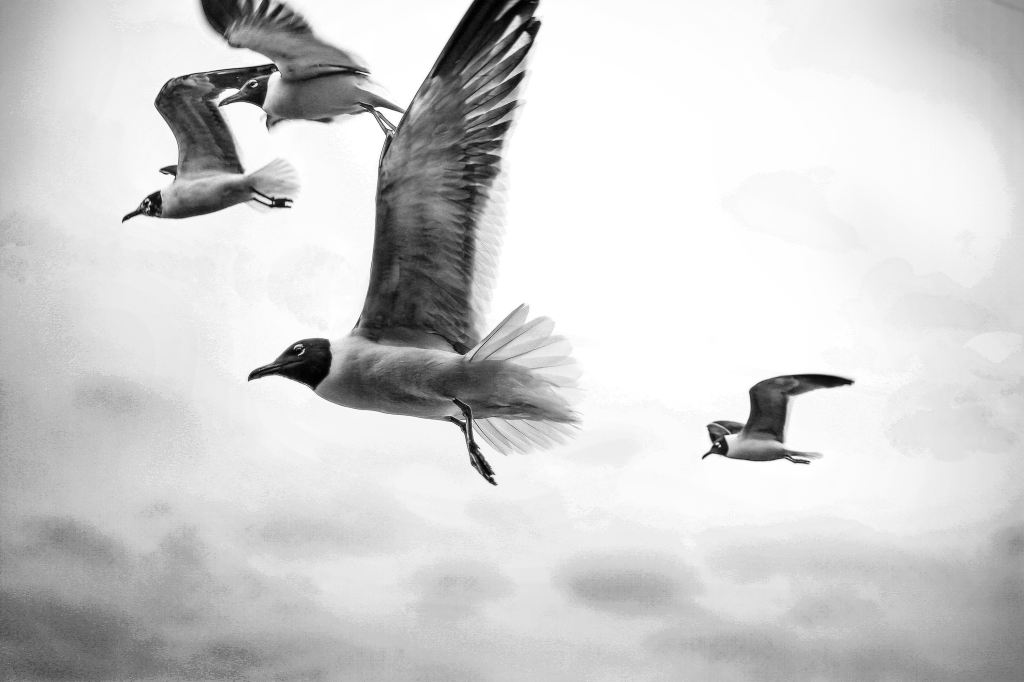




 apagefrommunakusbook