Author: Jane Nannono
I am a mother of three, a medical doctor by profession, who has always been fascinated by the written word. I am a published author- my first fiction novel was published in March 2012 and is entitled ' The Last Lifeline'. I self -published my second fiction novel entitled ' And The Lights Came On' . I am currently writing my third fiction novel and intend to launch it soon. I also write short stories: two of them - Buried Alive in the Hot Kalahari Sand, Move Back to Move Forward were published among the 54 short stories in the first Anthology of the Africa Book Club, Volume 1 of December 2014. It is entitled: The Bundle of Joy.
GOING OUT ON A HIGH NOTE
GOING OUT ON A HIGH NOTE
This post was first published in 2017 and was updated on 11 August 2024

Image by William Warby from London, England, CC BY 2.0 , via Wikimedia Commons
30-year-old Usain Bolt, the Jamaican sprinter, is a 9-time Olympic gold medalist who shot into Olympic lore when he won 3 gold medals at the Olympics in Beijing, 2008. He is the fastest man in the world deserving of the nickname Lightning Bolt.
I for one have always been fascinated by the Olympics and World championships since my teenage years. From the highs of John Akii Bua’s gold medal, the first for Uganda in the 400m hurdles in 1972 to the scandal when Ben Johnson of Canada left the Seoul Olympics (1988) in disgrace-after testing positive for anabolic steroids following his gold medal in the 100m dash, the Olympics are an unparalleled showcase of excellence and human endeavor. It has been a great joy and fun to watch Usain Bolt reinvent himself every year and keep challenging himself without using performance enhancing drugs.
From the onset, Bolt identified his strengths and defined his image that he projected to the world, then he committed fully to his authentic image and made the statement as the greatest athlete of all time. Every time he stepped on the field to compete, he carried himself with dignity and respect thus teaching us how to treat him. He owned his image, loved it and lived it. Who can forget how he worked up the London crowd during the 2012 Olympics after winning the 100 metre race?! He covered himself with the Jamaican flag and ran around the stadium greeting his fans! No wonder the people of Jamaica adore him and consider him among the best representatives of their country. On the track, he demonstrated incredible skills, traits, abilities and strived to play by the rules. He set himself apart from every other athlete and could never be confused with any of them.He declared to us that he was the fastest man in the world and proved it. He had become such an essential part of the Olympics and World championships and since his retirement , we continue to miss him until someone steps up to follow in his footsteps.
He was bold enough to say : “I’m the best. I’m the fastest man alive. I’m now a legend.’’
I was inspired to write this post mainly out of my admiration of him as one of the all time greats but at the same time for his humility that allowed him to know when to quit the game.
According to the Institute of Biomedical Research and Sports Epidemiology; the peak age performance for athletes in track and field events is 26.1. For the 100 metre race, it is 25.4 for men and 26.6 for women. In such a high-powered activity, no one gets better with age. Bolt holds the world record both in 100 metres dash (9.58secs of 2009) and 200 metre race (19.19 secs of 2009) and chose to give himself the 2017 IAAF World Championships in London as his final challenge. He had hoped to go out on a high note by breaking his own 100 metre record. In a highly charged atmosphere, the unexpected happened: Usain Bolt followed behind Christian Coleman (USA) and Justin Gatlin(USA) , the only person who had beaten him twice before. Justin Gatlin had been banned twice for doping and returned with a big bang. The irony was that as Bolt bowed out, Gatlin staged a comeback.
Like all his fans, I very much wanted Bolt to win one more time.
After all,we are always being advised to leave the stage when the audience is still applauding.
Some inspiring quotes by Usain Bolt:
“ Stop waiting for things to happen. Go out and make them happen.’’
“To all my doubters, thank you very much because you also pushed me.’’
“The difference between the impossible and possible lies in determination.’’
Yes, Usain Bolt, you took the games to another level; you made them exciting and made people want to watch them . Most importantly, you have inspired and demonstrated to the young that each one has something great inside her or him and has the responsibility to develop it fully for their own good and for the good of others. You set out to be recognized among the greats like Mohammed Ali and Pele and you achieved it. I cannot wait to see you channel that deep passion, energy and determination into something else.
Fast Forward to August 2024.
The doctor in me has forced me to follow up Usain Bolt’s life after he hung up his sports shoes at the London IAFF World Championships of 2017. He had bagged a bronze medal in the 100m men’s race but still retired as the track legend and the wealthiest sportsman in track and field. He was 31 years of age. Since the age of 16, he has enjoyed sponsorship by PUMA, the sportswear company. Usain Bolt has made PUMA a lot of money by his iconic status while he is paid a minimum of $ 10 m per a season, with another $10m added for the start of 2017 World Championship.
Life after a high profile sports career.
Available information indicates that his coach had wanted him to stage a comeback but knowing himself better , Usain, never did. He instead had a short stint at his favourite game, football till 2019.
After his retirement in 2017, he continued to collect $ 4m per year as PUMA’s brand ambassador. He also signed endorsement deals with other brands like VISA. His charisma and larger-than life personality draws large audiences whenever he appears at any event. He earns large appearance fees at any event.
Virtual appearances are the lowest while athletic appearances range from$ 200,000-400000.
He has a management team that maximizes his earning potential as the man with the most unmatched athletic performance worldwide.
He is engaged in business and some philanthropic efforts.
In his personal life, he started a family with his girlfriend of over a decade: Kasi Bennet.
They had their first child, a daughter, in 2020 followed by twin sons in 2021. He is committed and focused on being a hands-on head of the family and hands-on father.
He tries to live a normal life though his fame throws him some restrictions.
As for the 33rd Summer Olympics that started in Paris on the 26th July and ending on the 11th August 2024, the sports fans are on a daily high as surprises keep rolling in.
Noah Lyles won gold in the 100m event in 9.784 seconds and Letsile Tebogo from my second country, Botswana, won gold in the 200 m event in 19.46 seconds , setting an African record. This was Botswana’s first gold medal at the Olympics so it was not surprising at all when the President of this country, known for its high quality diamonds, declared Friday a half- holiday to celebrate the success.
Usain Bolt’s world records (of 9.58 seconds in the 100m event and 19.19 seconds for the 200m event are unbroken, proving that Usain Bolt remains the fastest man in history.
As a Ugandan, I screamed with delight when Joshua Cheptegei won gold in the men’s 10000m event and Peruth Chemutai bagged silver in the women’s 3000 m steeplechase.
One last quote from Lightning Bolt:
“ I know what I can do so it doesn’t bother me what other people think or their opinion about situations.’’
No wonder the self-belief, discipline, determination, hard work, resilience and adaptability that turned a
16-year-old Jamaican boy into a world athletic icon, still guide him into being his own man.
QUESTION:
There is always life after a career, however simple. Has Usain Bolt’s resilience and adaptability to life after a high profile career helped you find strength in managing change and embracing new challenges?
Has it given you some ideas on how to turn your personality into influence and inspiration?
MAKING DECISIONS IN LIFE
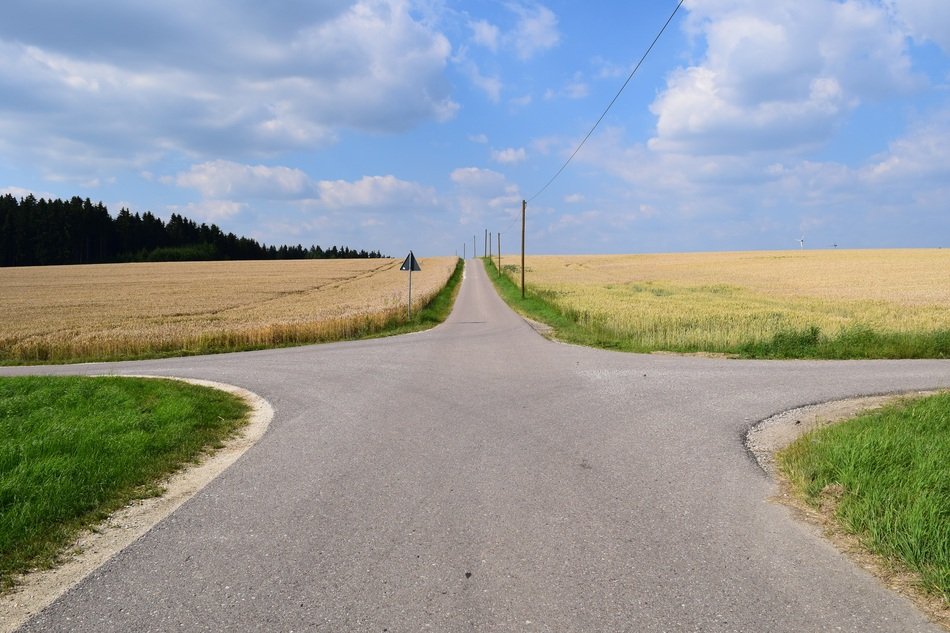
At the Crossroads: courtesy of pixy.org
MAKING DECISIONS IN LIFE
Life’s journey is created by a collection of decisions made every day. Each one of us makes countless decisions which when added together possess incredible power over our lives.
“We ‘re our decisions.’’– Prof Salem Al Shereida
“The quality of life is built on the quality of your decisions.’’ – Wesam Fauzi
”Nothing is more difficult, and therefore more precious than to be able to decide.’’- Napoleon Bonaparte
“Decision making is easy when your values are clear.’’– Roy Disney
“Sometimes you make the right decision, sometimes you make the decision right.’’– Phil McGraw
“The best decisions are not made with your mind, but with your instinct.’’- Lionel Mess
A decision can be defined as a conclusion or resolution reached after thinking through of the benefits and costs and considering short term and long term consequences.
Choice is the purest expression of free will but it can be difficult because it also represents sacrifice.
The choices we make determine and shape our decision making process and therefore are key to whom we are to ourselves and to others. Every choice made impacts our lives positively or negatively. These choices are key in determining our level of success, happiness and fulfilment.
There are some significant, life-changing decisions – the ones that seem to hold the keys to our future.
These tough decisions include:
1.Choosing a career
2.Pursuing an education
3. Choosing a life partner.
4.Managing the finances
5.Taking calculated risks
Decisions on these major five aspects of our lives have a huge impact on our overall success and happiness in life.
The decisions made are never written in indelible ink but can be changed especially when faced with the need to change- to open up to new opportunities and be willing to adjust your goals and plans. In pursuit of our personal and professional growth, we have to be ready for challenges at each stage of our lives. Resilience and determination help us to overcome obstacles and succeed.
Surprisigly, it is the smallest decisions that we make every day that hold significance.
Some of them like changing where you live could have a multiplier effect to almost all aspects of the life you are creating.
Data from cognitive research on human beings and chimpazees shows that
human beings have evolved over millions of years to develop a bigger and advanced brain especially the front lobe and cortex to enable them to think and remember. Our brains are approximately 3-4 times that of our closest relatives: the chimpanzees, while they share about 99 percent of the human genetic material (DNA) . Our brain is about 2 percent of our body weight and consumes 20 percent of the total body energy and oxygen. It is highly connected and active thus enhancing our cognitive ability. It also allows us to have specialised functions as language, tool making and reasoning.
The human cognitive function is fully functional between 25 and late 40s.
It this highly developed and intricately connected brain that allows us to learn and understand what we have to learn and to create analogue memories to recall and connect to the new memory.
During this structured process, we form opinions, choose actions through our mental processes as informed by the brain, reason, emotions and memories.
This enables us to weigh the benefits and costs of our choices and whether we can cope with the consequences.
“Decision making is a sharp knife that cuts clean and straight ; indecision , a dull one that hacks and tears and leaves ragged edges behind it. ‘’ – Gordon Graham
“You can’t make progress without making decisions.’’– Jim Rohn
The psychologists believe that effective decision-making involves striking a balance between what the mind has evaluated as logical and what our emotions consider as our desires and preferences.
After identifying and defining the exact issue at hand, the psychologists advise you to consider these basic principles to reach a decision:
- Clarify your values and principles- what matters most to you. Understanding your values enables you to evaluate your choices and align them to your core values.
- List the options available to you at that moment in time
- Write down the pros and cons of each option
- Step outside your comfort zone and think about the long term implications.
- Trust your instincts -rational analysis and logic are crucial but consider too the power of your intuition- gut feeling. Do this for each option to reach a choice that resonates with you at a deeper level. Sometimes the subconscious can pick on a detail that our conscious mind misses.
- Embrace the uncertainty- rarely does one get to make the ‘’perfect choice’’, each decision is tagged with trade-offs. Sometimes you just make the right decision other times the best you can do is to gather the information, trust your instincts and move forward. Even if you make the wrong choice, later you can analyse it and learn from the experience.
- Practice Decision –making. It is a skill so like any other skill, you have to keep practicing to become better at it. Start with small decisions and move to bigger ones; that way you build your confidence and inspiration.
“ There’s no wrong time to make the right decision.’’- Dalton Mc Guinty
Looking back at my own life, I strived to make the right decisions but also made wrong decisions and some of them have stayed with me.
One major one, was deciding to become a doctor to help people, when I was about eight years old. Being an all-round student, it saved me from being pushed into the A-level Arts class by my teacher of English and literature.
To have decided to leave for greener pastures in Botswana mainly to get better opportunities for our personal and professional growth while at the same time opening up better opportunities for our three children.
My decision to give up private practice in Botswana and instead return to start afresh in Uganda while taking good care of my octogenarian mother has paid huge dividends to the two of us.
I vividly recall one small decision that ruined our day in the 90s. My late husband and I drove my young sister to catch an early flight the United Kingdom. Close to Entebbe airport, a traffic policeman waved us down . I convinced my husband not to stop but to deal with the policeman on our return. My sister got on the plane in good time but my husband, a surgeon, never touched a patient on his theatre list for the day. He never left the Entebbe magistrate’s court until 4pm, after paying a hefty fine!
“Life is about choices. Some we regret, some we’re proud of. Some will haunt us forever. The message, we are what we choose to be.’’- Graham Brown
As a senior citizen, I truly know whom I am : truly authentic, having been liberated of conformity and masks. I choose courage over fear and self-awareness over societal expectations. My choices are more genuine than when I was :
30-45 thrived on work and status
45-65-the age of mastery- finding your voice to assert yourself, focusing on being independent. Clear about who you are. Doing what you feel is right and what is your own to do.
65-85+ – The age of integrity, of new pursuits while fully emancipated. Repossessing your intellectuality and originality.
Authenticity-fully embracing one’s true self: unique qualities and imperfections, comes to us late in life usually after 50 years of age. After learning to trust your inner voice or intuition, you tap into its inner wisdom daily. It helps you find clarity amidst the myriad of distractions in a fast-paced world. The consequence is that you live the life you love, a life lived with purpose and meaning. A life in alignment with your innate nature.
As we grow older we become clear on what matters most to us in life and understand the unseen forces that drive the majority of our daily decisions. It translates into living the life you love one day at a time- turning your dreams into reality on a daily basis.
“Authenticity is the daily practice of letting go of who we think we’re supposed to be and embracing who we are.’’ – Brene Brown
QUESTION:
Do you realise that being unapologetically yourself is one of the key unseen forces that drive the majority of your daily decisions which themselves result in your living a fulfilled life?
SOME QUOTES AND PROVERBS ABOUT SOME IMPORTANT ELEMENTS OF LIFE
THE OLD AND FAMILIAR

Watching my nonagenarian mother lose most of the people she has known intimately has humbled me and made me think seriously about what is considered old and familiar and how it affects all aspects of our lives.
Familiar people and things are less threatening and reduce the amount of effort put in interpreting things in our surroundings. Naturally, mere exposure to people and things endows us with familiarity which itself makes us comfortable.
By observing my mother, myself , my eldest son , our thirty year old helper, and my grandchild who has just turned three years old, I would say that the old and familiar may have a few constant elements like family but as one grows and gets exposed to different people, things and products, the strength of the sense of familiarity becomes variable. Exposure affects our choices, attitudes and behaviour.
At ninety-three, my mother still clings to the old and familiar. Inevitably, she has lost most of her relatives, peers and friends. She is very much aware that she could be the next one in the firing line. She has never come to terms with the death of two of her children including the youngest.
Her eyes light up and she speaks with an excited tone when she is in the company of her children, grandchildren and some people she has known for a long time, irrespective of their age. At that moment in time, she is less tense and can crack a few jokes and laugh heartily. When unfamiliar faces surround her, she becomes agitated and at times she just withdraws into her shell.
The passage of time and the technology wave of the time has made the familiar unfamiliar to her.
In a world transformed in many ways including traditional things like how people dress at weddings and the huge entourages at the Introduction ceremonies, she cannot understand how a groom in a suit wears trainers at his wedding!
“What happened to a fine and soft pair of leather shoes?’’ she keeps asking.
Three months ago, the helper who had lived with us for four years left us to try her hand at self-employment. The cost of her four children’s school requirements had gone through the roof.
The new one, almost thirty, has two children whom she has entrusted to her mother. She comes from a rural area in the central region of Uganda about 150 kilometres west of the capital city. She could not go beyond primary seven after the loss of her father. Her prospects were capped by an unintended teenage pregnancy.
For her, the old and familiar was growing staple foods in her mother’s small garden, collecting water from the village well, using a kerosene lantern for light at night. In her small village, everyone knows everyone and almost every adult has a basic phone.
She found herself in a gated big house with her own room, drawing water from a tap and using a flushing toilet, using electricity for lighting while cooking on a gas cooker.
She was utterly overwhelmed by the new people, the routine and use of domestic utensils like an electric kettle and microwave.
My mother initially considered her too young to take good care of her.
Three months down the line, spending time with each other has opened them up. The helper has shown genuine interest in my mother as a grandmother. I would say that one familiar thing that has significantly joined them together is their Catholic faith. They pray together and listen to radio programmes on Radio Maria on my mother’s old radio. On Sundays, they are both glued to the TV for the 10 am Lubaga Cathedral church service. Gradually, my mother trusts her enough to do more things for her; she tells her of her complaints and the helper is patient with her. A great affinity has developed between the two. Mama is less stressed and easier to handle. The parish priest outreach prayer committee arranges with the helper when to visit them.
“Intelligence is the ability to adapt to change.’’ Stephen Hawking
I for one, a senior citizen, I am forced by circumstances to sober up fast. Since the COVID-19 pandemic, familiar faces are disappearing at a rapid rate. My friendship circle is shrinking fast!
Things that I used to take for granted like time, are now limited and very precious to me.
Sometimes I find it necessary to recreate the good times by gathering childhood friends for a glass of wine to reminisce about the past, laughing at all the crazy things we used to do.
At the same time, I have to learn fast as new technology disrupts old ways of doing things including computer systems programmed to learn and work as humans – Artificial Intelligence.
In a noisy and busy world, the familiar is quickly disappearing as technology runs most aspects of our lives and keeps changing. Staying closer to earth has become a challenge.
“To master a new technology, you have to play with it.’’ – Jordan Peterson
My eldest son is in his early forties, a millennial, and cannot imagine a world without the Internet and computers. The internet shrunk the world into a global village and made it highly competitive.
“ Man cannot discover new oceans until he has the courage to lose sight of the shore.’’- Andrew Gide.
In this fast-paced global village; things are changing rapidly by new advances in science and technology, keeping his generation vigilant. In today’s workplaces, there are apparently no more permanent jobs!
To remain relevant and useful in this highly connected world, he has to keep exposing himself to new skills, knowledge, new experiences and connect with diverse people to become more open-minded. To his generation, sticking to the old and familiar is a disadvantage. The high rate of unemployment in the country demands that he keeps improving himself to increase his chances of employment either in the public or private sector. His generation and those following them have almost all that they need to function on a smartphone or laptop. This instant-solution- generation is living in the online world. An environment of this nature results in daily stress and inevitable challenges that affect their overall health.
The psychologists advise these young generations to stay grounded in reality by cultivating these basic essential soft skills:
- Self-awareness- having a firm sense of self, being centred and connected to the present. Aware of your thoughts and emotions and physical sensations without being carried away by them.
- Emotional resilience-having a resilient emotional state and positive attitude and recovering quickly from negative exposures.
- Having a balanced perspective- grounded in reality. It enables you to remain mentally and emotionally self-aware.
These soft skills enable the youth to approach life with a sense of purpose.
The psychologists also highly recommend that in this fast-paced work environment demanding for high productivity, beating deadlines and achieving great expectations, workers, especially new recruits, have to be helped to develop mental resilience. To enhance their well-being, their mental health has to be addressed and improved. They should be provided with the tools they need to live their best possible lives.
A supportive environment should be created to enable them to act within their values, maintain healthy boundaries and open up to different perspectives and seek the truth and understanding other than cling to rigid beliefs.
For my three-year- old granddaughter, the old and familiar simply means her mother’s warmth and smell: Kangaroo pouch-like, her mother’s voice and a ride on top of her father’s shoulders and her laughter as he bathes her. Interestingly, the digital technology craze is slowly creeping into her life through her toys, children’s online games and both her parents’ smartphones and laptops. The exposure keeps growing by the day!
As we go through life, change is all around us. In this 21st century driven by science and technology, learning to adapt to changes is key to our overall well- being. It requires creativity, teamwork, time management and adaptability. No wonder my mother’s and my own “old and familiar’’ is slowly fading into the unfamiliar!
“ Good, bad or indifferent, if you are not investing in new technology , you are going to be left behind.’’- Phillip Green
“ Life shrinks or expands in proportion to one’s courage.’’– Anais Nin“
QUESTION:
Do you realise that we all find comfort in the familiar and that mere exposure makes things familiar and that familiarity impacts our decision-making process?
TEN GREEN BOTTLES STANDING ON THE WALL

Donkey’s years ago when I was in the primary school we used to sing one nursery rhyme often:
Ten green bottles standing on the wall, ten green bottles standing on the wall.
One bottle kept falling off accidentally , leaving one less bottles standing on the wall until all the bottles fall off. The song served the purpose of introducing counting and early number skills to us.
I would call it an exercise in subtraction. Of late, I have found myself singing that song often when alone in the house. I am relating it to what is happening in my life. In the last one year, I have found myself walking from one funeral service or burial into another!
I have been losing peers, childhood friends, relatives, colleagues left right and centre.
It just goes to confirm my birth order in society as a senior citizen. Amazingly, a few green bottles are still standing on the wall.
In Uganda, the life expectancy at birth for male and female was 62.9 and 67.2 respectively according to the 2019/2020 Uganda National Household Survey. Generally, worldwide, females tend to live at least five years longer than their male counterparts.
Generally, we are all living longer worldwide due to :
*Medical advancements- such as the development of vaccines and the discovery of antibiotics.
*Better access to health care
*Improvement in nutrition
*Better hygiene and living conditions.
I just have to learn to live comfortably with the fact that at my age , I am living on borrowed time.
I have never stopped appreciating that members of my generation have gone through turbulent years of civil strife ( 1966-1986), the HIV/AIDS pandemic of the 90s and beyond and the recent COVID-19 Respiratory Disease Pandemic of 2020-2022. Whoever is still standing is a real survivor and should exploit the opportunity of making the most of the time left.
If one green bottle should accidentally fall, there will be nine green bottles standing on the wall.
Ageing is a biological process and can be defined as the time-related deterioration of the physiological functions necessary for survival and reproduction.
The United Nations uses 60+ as old age but in Africa where generally life expectancy at birth is lower than in the developed countries, 50 or 55 is considered old. Pension schemes tend to use 60-65 for eligibility.
In August 2020, The United Nations General Assembly declared the decade of 2021-2030 as the decade of Healthy Ageing to improve the lives of old people, their families and their communities.
This healthy ageing concept consists of five key aspects aimed at improving functional ability. They include:
*The ability to meet basic needs
*The ability to learn and grow and make decisions.
*The ability to be mobile
*The ability to build and maintain relationships
*The ability to contribute to society
All five are largely dependant on the environment.
The three main factors for successful ageing include: *Physical well being, *Cognitive health and
*emotional and social well-being.
The healthiest group in any population is the 18-29 years while the ages most vulnerable to infection, disease and cancers is 65+ .
Some geographical areas were defined as Blue Zones by researchers Michel Poulain and Giovanni Mario Pes in March 2000 as areas with lower rates of chronic disease and longer life expectancy than anywhere else.
They include :
Sardinia, Italy
Okinawa, Japan
Nicoya , Costa Rica,
Icaria Greece
Loma Linda , California.
The longevity and good health of individuals in these zones is dependent on their environment. Other influencing factors include:
*Diet- mostly plant- based, *restrict their caloric intake,
*minimal use of alcohol or drink only in moderation mostly take the red wine rich in antioxidants.
*Regular exercise- their lifestyle encourages natural vigorous movement; walking, farming, gardening, cook daily, clean, doing house work as part of their daily chores.
*They have a sense of purpose in life.
*They incorporate stress relief in a purposeful, regular manner into daily life.
*Faith is central to these communities.
*They have an extended family structure with the young and old living together.
*They have strong supportive social networks that encourage healthy, happy lives.
In my country , Uganda, those aged 60+ make up about 3.7 % of the total population.
According to the Uganda Bureau of Statistics Population Projections Reports, 2015-2050
60-64—–1.4%
65-69 —–0.8%
70-74 makeup 0.7% of the population
75-79 —- 0.4
80+ —- 0.4 %
Little wonder then that anyone aged 65+ is hopping from one funeral vigil into another.
According to the Uganda Ministry of Health report on causes of death for the period of 2011-2021 , the leading causes of death in the 50+ age groups were:
*Heart disease
*Cancer
*Accidents ( preventable injury)
*Stroke(cerebral vascular diseases)
*Alzheimer’s disease
*Diabetes
There are multiple theories of ageing like the wear and tear.
Parts of the body wear out from repeated use.
Genetic mutations/abnormalities occur and accumulate with increasing age. Cells which are the building blocks of tissues and organs divide every day to replace old ones and during this process damage occurs in the genetic code/ DNA (deoxyribonucleic acid) but are removed by the cells of the immune system. At 65+ the damage occurs fast and the weakened immune system fails to repair them as fast as they are being produced. Damage to the DNA in the mitochondria- the cell’s powerhouse in which the energy to drive functions of each cell is produced results in abnormal uncontrolled growth of the body cells which is linked to cancer and increases the risk of developing chronic diseases like Alzheimer’s.
Between 70 and 80 years of age, the immune system suffers severe deterioration with age. It is less able to mount an effective immune response when challenged with germs, especially the new emerging ones like COVID -19 respiratory virus.
This explains why in Italy at the beginning of the Covid-19 pandemic, 81 % of the COVID-19 deaths occurred in people over the age of 65.
The Human Immunodeficiency virus( HIV) that has been with us for almost 40 years, infects and kills the cells of the immune system:CD4+ T lymphocytes thus weakening the body’s capacity to fight off infections. In the final stages of the disease –AIDS, the cells of the immune system are so depleted that the person dies of opportunistic infections. Since the discovery of highly active antiretroviral drugs in 1995, HIV/AIDS has become a chronic manageable disease.
Globally, we are living longer; we have to be prepared for the diseases that come with old age. Among these are different types of cancers. According to the Uganda cancer registry data of 2018, an estimated 33,000 Ugandans were diagnosed with cancer and there were 21, 829 deaths due to cancer. The most common cancers in Uganda are: cancer of the cervix, prostate, breast, Kaposi Sarcoma, Burkitt’s Lymphoma and lung cancer.
Worldwide new cancer cases are on the increase.
The old adage of : Prevention is better than cure, still holds today. The prevention of Noncommunicable diseases like cardiovascular diseases- heart attacks, stroke, cancers, diabetes and
chronic lung illness
should start early on in childhood by reducing the common risk factors and practicing healthy living.
Healthy Diets- eat a balanced diet every day.
Regular physical activity- keep your body moving and active. This boosts our mood and energy. The heart needs to be kept active.
*Avoid harmful use of alcohol.
*Avoid use of tobacco.
*Regular adequate sleep- an adult needs 7-8 hours of sleep every night.
*Stress Management – find a way that works for you to keep stress to the minimum. Stress affects other important elements of our health.
*Have a happy and positive attitude to life
*Regular health checks -especially after the age of 35- they can help to identify early warning signs of disease or illness. It increases the chances of treatment and cure.
He who has health has hope, and he who has hope has everything.- Arabian Proverb.
For the green bottles still standing on the wall, keep walking and keep having fun by doing what you love and enjoy doing.
“It is health that is real wealth not pieces of gold and silver.’’- Mahatma Gandhi
QUESTION :
Are you aware that the most healthy people among us are the ones who are always moving about like the barmaids and nurses?
PICTURES CAN SPEAK VOLUMES
Those working in the advertising world know better than any of us that complex and sometimes multiple ideas can be conveyed by a single still image. A simple image can bring out character, emotion and colour into the message we want to convey.
“ A picture is worth a thousand words.’’– Fred . R. Barnard advertising executive.
Human beings have five primary senses namely sight, sound, smell , taste and touch. We use these five senses to collect information about our environment and send them to our brains for interpretation. This serves one main purpose – enabling us to survive in our environment. Sight is our dominant sense while hearing is the most sensitive. About 80% of what we learn from the world around us is due to perception, learning, cognition and activities are mediated through vision. A child learns from those around her/him mainly by observing, listening and imitating.
In today’s world of consumerism, manufacturers and service providers have to compete to capture our attention. They study our behaviour then target us with well designed, clear messages and bold colours. They do this consistently to increase our awareness about the products and services- influencing our behaviour and creating familiarity. Living in this era of digital marketing and online advertising, outdoor advertising like use of billboards, banners and signs usually in public areas are still very effective in capturing people’s attention and conveying the intended message aiming at motivating consumers to take the intended action.
Writers are being constantly reminded to write with brevity- brief, simple and concise. Be objective and focused; avoiding verbal clutter. Practice a bit of “Kiss: keep it Short and Simple.
“If It is possible to cut a word out, always cut it out .’’– George Orwell
In this post, I have decided to express my thoughts loudly throug some photographs from my collection.
Nature:

SUNRISE OVER the Atlantic ocean in Cape Town , South Africa.

Table Mountain overlooking a calm ocean

Midmorning by Lake Nalubaale.
TIME CHANGES US:

Maama at her best.
Seasons change

Harsh winter is usually followed by a glorious Spring.
There is a Time for Everything

A time to sow and the time to harvest.
Last but not least, let me briefly talk about two important elements that affect how we navigate the ever changing Digital world.
Working online or offline is the order of the day in this Digital era. Nearly every online activity leaves some form of digital trace: digital footprint. This data is stored by third-party services and is relatively permanent. It includes website visits searches ran, social media posts , comments or any other interaction. It can reveal a lot of personal information about you. Once data is made public or semi-public the owner has very little control over how it can be used. it can be abused. It can be used to distort or destroy your reputation, relationships and employment opportunities both negatively and positively. We are advised to minimise our Digital footprints.
http://www.keeper security.com advises us to reduce information publically available about ourselves. Among the actions that we are advised to take to limit data that is left behind after working online are:
- Use tighter privacy settings
- Use strong passwords
- Delete accounts
- Delete social media accounts
- Limit your online accounts.
- Always to update your software. Not updating the software for your computer or mobile phone increases their risk for a cyberattack.
- Restrict mobile app permissions.
While trying to protect and reduce our Digital footprints, we have also to prepare ourselves for both the potential of positive and negative effects of Artificial Intelligence ( AI).
Computer scientists have long been in the quest to develop machines that control the world- machines that can see, read and at least appear to think. This is what is called Artificial Intelligence(AI). AI is gradually empowering people in a myriad ways. It has the potential to make the world a better place like increasing the access to education and health care but at the same time , it has the potential to be grossly abused if not well regulated worldwide.
We have to brace ourselves to accept and work with AI experiences. As of now, Computing power can be used in many things like :
AI can write anything for you.
It can outperform many humans
AI can generate photographs, videos- creating pictures of events that have never happened. It can generate made- believe photos and videos.
This potential comes with new challenges as well as opportunities.
We live in a world that changes so quickly; knowledge changing fast. AI
is here to stay and demands that we minimise its potential for abuse worldwide immediately.
www.linkedin.com. The largest professional network on the internet
suggests the following actions:
- All countries should establish clear legal frameworks that foster responsible AI practises.
- Promote education and awareness and encourage international co-operation in a manner that benefits society while safeguarding human values and interests.
- Label synthetic AI generated content to distinguish it from human –created content. It has the ability to mislead and misinform thus threatening both individual and democratic institutions at large.
In today’s fast-changing Digital world; flooded with information and an explosion of video content, the mantra of “ less is more’’ defines effectiveness. Research has shown that the average human span is low: around 8 seconds. It is now a daunting task to capture and retain viwers’ attention. The viewers need concise, focused simple message: easy to understand and remember.
Both writers and content producers have this daunting task to deliver the message quickly and effectively.
“ Transformation is not a future event ; it’s a present activity.’’- Jillian Michaels
QUESTION: How are you navigating the digital transformation for your development and success in a rapidly evolving digital landscape?
GRADUATION WEEK AT MAKERERE UNIVERSITY
I was reluctant to write about the graduation week at my university where I graduated with my undergraduate degree and post graduate diploma donkey’s years ago. When I remembered that each year produces a new crop of graduates adding on the already existing ones , I just dived into writing something for this year’s graduates.
Makerere university is the oldest university in East Africa. It celebrated its centenary in 2022. It was started by the colonial administrators in 1922 as a technical school: with 14 students training as carpenters, builders and mechanics . Over time, it grew to become one of the most prestigious universities in Africa. Since 1945, when it admitted its first women students, it changed its motto to: We build for the Future– aiming at becoming a centre of excellence whose graduates transform society in all its areas. Makerere’s rich history of 100 years is well documented on its website : https://100.mak.ac.ug
For a long time, it was the only university in Uganda but as I write now there are 11 Government universities and 11 private chartered ones. Makerere, the largest, has ably continued to produce accomplished academicians, professionals and researchers and leaders for Uganda, Africa and the world at large.
Like all Ugandans aged above forty, structures and institutions , Makerere university has weathered numerous challenges reflecting the years of civil strife of the 60s to the late 80s.
A Makerere Symposium on national development was held at the university in March 2023 to strategise ways on how Makerere university and other institutions of higher learning and the private sector can meaningfully contribute to the development of Uganda.
From the 29th January to the 2nd February 2024, Makerere university held its 74th Graduation Ceremony.
As par news.mak.ac.ug : A total of 12, 913 graduands received degrees and diplomas of Makerere Univ-
Of these , 11, 016 received bachelor’s degrees
1.585 with master: 888 Males and 699 females
132 PhD’s : 86 M and 46 Females
156 Post graduate Diplomas
24 undergraduate Diplomas
As a female activist, I could not help but cheer loudly that 53% of the graduates were females while 47% were males. The Affirmative action policy of 1990 which allows 1.5 points added to every application of a female student is bearing fruits.
As women, we have come a long way since the first 6 female students were admitted to Makerere college in 1945 with some opposition. Among them was Sarah N. Ntiro, who in 1954, became the first woman university graduate in East and Central Africa from the University of Oxford, England.
1955, Eunice Lubega Posnansky(1927-2003) graduated with a BA from Makerere College. She later went on to graduate with a master’s degree from the University of Oxford.
Hon. Joyce Mpanga ( January 1934-Nov 2023) graduated with a BA in 1957 and later went on to become the first female lecturer in the faculty of Education of Makerere College.
In 1959, Dr. Josephine Namboze ( 1930- ) became the first Ugandan female to graduate as a medical doctor from Makerere College. She went on to have a flourishing career as a professor in the school of public health. Her last posting was in the World Health Regional Office for Africa.
After our Independence in October 1962, several girls’ senior secondary schools introduced Science subjects at A-levels and since then the number of women graduates in science –based professions has increased. By the time I graduated as a medical doctor in March 1977, there were seven Ugandan females in our class among 110 Ugandan males.
According to the Uganda Bureau of Statistics, Uganda ‘s population growth rate was at 3.04 % in 2022,
among the high ones in the world and yet our institutions have not expanded fast enough to accommodate the big numbers.
Statistics from the National Planning Authority indicate that each year, about 700,000 graduate from the universities and other institutions of higher learning to compete for a mere 90,000 jobs in the job market. This leaves out more than 85% of them!
Uganda has one of the world’s highest youth populations: according to UBOS, 78% of the population are 15-24 years of age.
The youth unemployment rate to the share of the labour force is about 6.58%(2022)
Several factors combine to push the unemployment rate among the highest in the world. They include:
- Misplaced national priorities
- The archaic educational system which creates job seekers other than job creators.
- A mismatch of courses offered at tertiary institutions and actual skills on demand in the job market.
- The youth’s attitude to work- looking for instant gratification, not interested in farming or agribusiness.
- Some jobs were wiped out during the COVID -19 pandemic lockdown and others are disappearing due to the use of robots, Artificial intelligence and Online services.
- More males tend to get into regular jobs than the females- 53% females are unemployed. This pushes them into early marriages and early pregnancies.
- Generally, the youths especially those in the rural areas have neither skills nor resources like land or capital to venture into startups.
The government has taken some initiatives but they are taking a long time to be rolled out in the whole country.
We are living in the 21st century, driven by Digital technology- creating an ever changing environment. Technology affects how we live, how we do work, where we do things and who does the work.
“It is not the strongest of the species that survives, nor the most intelligent that survives. It is the one that is most adaptable to change.’’ – Charles Darwin
Our educational system has to be overhauled to impart knowledge, train students with soft skills, enable them to become critical thinkers, and to become creative and innovative. Students should be helped into identifying the different ways of seeing and doing things. Only then, can they begin to understand that a degree does not guarantee them a successful future. Today’s world has shrunk to a global village, is Solution- orientated and demands for collaboration across global communities to solve society’s most important and challenging issues like Climate change, deforestation, food security and maximising the use of clean, renewable energy by exploiting available Digital technology. Not forgetting that the technology itself is hugely dynamic. All systems have become dynamic: demanding change from parents, students, teachers and employers to continually make the systems vital, useful and relevant.
The need to develop an entrepreneurial spirit and a strong culture of research then plan and collaborate with like-minded people has never been more urgent.
“The world needs problem solvers.’’– Anonymous
Developing countries like mine, have a lot to learn from
Switzerland, Germany and Austria. These countries have had a Vocational Education and Training system since the late 60s with the aim of drawing strong emphasis on apprenticeship programmes and close collaboration between education institutions and industries. This shared responsibility of the state, industries and institutions is regulated by law and has resulted in a high rate of employability among graduates and development of the countries in general. Uganda’s education system should have been pruned into something functional yesterday. Establishing more publically –funded vocational schools enables students to learn the skills that are most in demand in the workforce- making it easy for the youth to slot into the job market. One factor has remained constant: 70% of Ugandan population live off the land in the rural areas so the focus on engaging the youths in agriculture and agribusiness cannot be overemphasised.
As Alvin Toffler (1928-2016) an American writer and business man rightly said, “The illiterates of the 21st century will not be those who cannot read and write, but those who cannot learn, unlearn and relearn.’’
Graduation day marks the beginning of the rest of your life. It is your life, believe in yourself and make the most of it. Congratulations to you all.
QUESTION:
Are you ready to keep skilling yourself for the jobs of the future?
LOOKING FOR THE BEAUTY IN EVERYTHING
I posted this article here on the 24th January 2024 after visiting both Namugongo Martyrs Shrine and the Martyrs Museum at leisure. Since 1975, the 3rd June has been celebrated as Martyrs Day in Uganda in honour of the 23 young Catholic converts and 22 Anglican ones who were killed for their faith at Namugongo under the orders of Kabaka Mwanga II of Buganda. They were killed between January 1885 and January 1887. Their blood has remained the “seed of the church” in Uganda.
May, one of my young sisters from London, joined us celebrate the festive season last year. My mother could not have enough of her ; it left the two emotionally rattled. What was not said between them spoke more than what was said. Having a lot of time to ourselves, we chose to visit the cradle of our Christian faith at leisure at the Uganda Martyrs Shrine, Namugongo . It is located about eleven kilometre east of the capital, Kampala. Being a long holiday, we had the place to ourselves.
Naturally, we started off at the Anglican Church Museum built under the stewardship of Archbishop Livingstone Mpalanyi Nkoyoyo (1938-2018). Archbishop Nkoyoyo conceived the idea of building the museum at the Anglican Martyrs Shrine in 2013 , had it constructed and it was opened by Pope Frances in 2015 when he visited Uganda.
Archbishop Livingstone Nkoyoyo built this world class faith-based and pilgrimage complex for the following reasons:
- To preserve the history of the young martyrs killed and buried at the site on 3rd June 1886.
- To develop a pilgrimage site that can be visited throughout the year and generate some money to fund some church activities.
- To show case Uganda’s rich cultural heritage
He was driven into this huge undertaking because his grandfather was among the few converts who survived the killings. It proved to be a tough undertaking but he persevered.
The first missionaries from the Church Missionary Society of Britain led by Alexander Mackay arrived in Buganda in June 1877 and were followed by the White Fathers from France led by Father Simeon Lourdel and Brother Amans in February 1879 during the reign of Mutesa 1. They competed for converts , managed to get a number among the Kabaka’s/king royal pages. Kabaka Mwanga 11, aged 18 years, succeeded his father in October 1884. As the Kabaka, he had absolute power and found it hard to accept that the newly converted subjects worshipped a god higher than him. Between 1885 and June 1886, he ordered the converts either to renounce their new church-based faith or die.
Archives indicate that as far as 1764, the then Kabaka of Buganda had set Namugongo site as a place where the royal executioner brutally killed anyone who disobeyed the Kabaka. During the reign of Mwanga 11 , the chief executioner was called Mukajanga.
The hands and legs of the condemned were tied as they walked the ten kilometres to this execution site. At the site, they would be tortured and dragged on their backs ( Omugongo) as the executioners collected the firewood and tools needed for the slaughter. By the time they were executed they were weak but they still sang and bore witness to Jesus Christ in both words and actions.

Some were speared to death or beheaded while many were tied up in reeds and thrown into a raging fire. Their remains were later buried at the site.

Between January 1885 and January 1887 , 23 Catholic converts and 22 Anglican Church ones were executed at Namugongo. Youngest among them was John Baptist Kizito(1872-1886), the patron saint of children.
On the 3rd June 1886, a total of 32 young men, Catholics and Anglicans were burned alive at Namugongo.
This explains why later in 1975, the 3rd June was officially declared Martyrs day in Uganda in recognition of the of these young men who were persecuted for their faith and the site had been declared a religious Shrine in 1967.
I visited the shrine in the early 70s but my mother, being a staunch Catholic attended the first Mass celebrated by Pope Paul V1 in July 1969. She continued to make the annual pilgrimage until 2016 when the degenerative chronic arthritis almost confined her at home.
Walking around in Mukajanga’s territory after about 138 years, was extremely humbling and arresting. With the help of the tour guides, I was able to stretch my imagination to experience the horrors of the time.
The architectural structure of the museum complex is truly African ; with reeds set firmly into concrete and the floor looking old and familiar with the earth tone colours of brown, grey and beige and muted shades of orange, red and yellow.
The sculptor of the chief royal executioner, Mukajanga, at the entrance , with his big , terrifying eyes , his pose, his huge muscles, his attire and amulets set the tone of what is to follow.

The sculptures of the executioners and the condemned wrapped up in pyres of reeds, others being tied up and dragged on their backs under the torture tree within the executioner’s command post are very real. So is the raging fire in which they are later thrown to burn to death. I was spell bound until I entered the small chapel next to this fireplace. An experience of this nature is unforgettable and nags your conscience to relive it as you live your life daily as a Christian. I had a similar experience during my pilgrimage to Israel in 2011 when I visited the garden of Gethesemane and the Calvary. It is indeed a spiritual revelation.
Thereafter, we walked to the spring where Mukajanga and his team washed their tools
and cleansed themselves symbolically before returning to normality.
I must admit that the Sculptor, Fred Kigozi Lubwama did an amazing job with their facial expressions; reflecting a degree of inner turmoil enveloping them at that moment in time. Unfortunately , Fred Kigozi died in a motorcycle accident near his home on 31st December 2019, aged 36. He was a natural enthusiastic and talented sculptor. His creations will always remind us of him. He created all these sculptures out of the friendship and respect he had for Archbishop Nkoyoyo other than for money.
By sheer coincidence, the church was preparing for a memorial service in honour of the late Archbishop Livingstone Nkoyoyo who died of cancer on 5th January 2018 and was buried at this very site too. We said a thankful prayer over his grave.
Another humbling effect for the two of us was finding our names and four other family members including our father and mother on a plaque recognising 22 friends of the Uganda martyrs from the United Kingdom. I remembered that in 2014, while visiting my sister in London, Archbishop Nkoyoyo happened to be in London fundraising for the construction of the museum. We had willingly given some money towards the noble cause and left it at that.
The Catholic martyrs shrine built under the stewardship of the late Cardinal Emmanuel Nsubuga, the second Ugandan Catholic archbishop of Uganda, was completed in 1967. In July 1969, Pope Paul V1 who had declared the 22 Ugandan martyrs as saints in 1964, visited the shrine. An open air mass was celebrated at the site and my beloved mother could not miss it for anything.
By the time we arrived at the basilica, a regular mass was being celebrated so we missed the opportunity to look around. Our well trained guide took us around the grounds.

The sculptures of the young martyrs were built by a sculptor and the Roko Construction company. Some martyrs were beheaded, others tortured and left to bleed to death others were speared to death. The horror and violence of each event was captured remarkedly. Each of the young martyrs has been made a patron saint : the heavenly advocate of a nation, place, craft or activity. The tour guide informed us the most visited martyr by Ugandans is James Buuzaabalyaawo, the patron saint of traders and merchants. The grounds are well kept, have some green areas. The church has been innovative in creating hope and joy in a place that once symbolised horror.
Mass weddings and baptisms are conducted at the central alter of the amphitheatre. Symbols of new beginnings.

The water from the spring is clean, treated and is considered as holy water by the pilgrims.
The Uganda martyrs shrine of Namugongo has become the largest Christian pilgrimage destination in Africa just as both the late Cardinal Emmanuel Nsubuga and late Archbishop Livingstone Nkoyoyo envisaged.
It is said that, “The blood of the martyrs is the seed of the church.’’
I appreciated the fact that the spread of Christianity in Buganda, happened during the time of the Europeans’ scramble for Africa. The British in particular wanted to control the source of the Nile in Uganda to consolidate their control over Egypt.
Kabaka Mwanga 11 fears were genuine in that the white man’s religion threatened his power and sovereignty. After the killing of the new converts in Namugongo in 1886, a period of religious wars followed in Buganda as Protestants, Catholics and Muslims fought for dominance at the Mengo court. It ended in 1892 when the Protestant converts sought the assistance of Captain Fred Lugard of the Imperial British East African Company. He armed them with guns and they decisively defeated the Catholics and Muslims.
After 1892, there was renewed effort by both the Protestants and Catholic missionaries to spread Christianity in Uganda. Some good was born out of the killings of the martyrs: In 1903,
King Mwanga 11 died a baptized Christian while exiled in the Seychelles.
According to Uganda’s 2014 census, over 84 percent of the population was Christian, 14 percent Moslem while the rest practiced traditional religions.
What stands out for me is that 138 years after the martyrs’ deaths, the loss of life has continued in Uganda. Those in position and power use their power to oppress their opponents. In February 1977, the then archbishop of the Anglican church, Janani Luwum and two other government ministers were murdered for speaking out on the violence and horror against the people by President Amin Dada’s government.
The November 2020 violence and terror leashed on some members of the opposition just before the 2021 January general elections was scary. Up to today, many are being tortured for their political leanings. Debating, negotiating and reaching a consensus on the important issues that affect us is yet to become an integral part of our governance.
The two Archbishops built the Basilica and martyrs’ museum, the onus is on every Christian to visit and promote these historical religious sites. Not forgetting to live by our religious convictions.
QUESTION:
When was the last time you visited the Uganda Martyrs Shrine in Namugongo? Did the visit leave you the same way you went there?
Behold the New Year

A lot to be grateful for including this beautiful addition to my small garden : an elegant pink gladiolus/sword lily, my birthday month (August) flower.
I am reposting this post of December 2022 because it still holds true and sincere. It is most appropriate as another year draws to its end. Each one of us should pause, reflect and count her/his blessings ; one by one. There is a lot to be grateful for and this gives us hope and optimism for the future. Studies in human behavior show that practicing gratitude positively contributes to our emotional, mental, social and physical wellbeing. Focusing on what we are thankful for makes us more positive about the here and now and more optimistic for the future. It increases our trust in people.
I am a senior citizen, I grew up hearing four magic words in my parents’ home which I later taught my children and they are now teaching them to their children. They include: “ Please’’, “Thank you’’, “I’m sorry’’, “ You’re welcome’’. As I grew up, they expanded to include, “excuse me’’ and “May I’’. Like the dynamite, they are small but very powerful words. They are used in our daily life and have come to represent good manners across the board.
Good manners are not absorbed but are seen and copied by children as they watch their parents do what they do. Among the commonly used words in my childhood were “Thank you.’’ These words were as natural to my parents as the first greeting of the day and were always part of their normal conversation. They could thank me several times for the same act of kindness. Their behaviour rubbed on to all of us and continues in the grandchildren.
As 2023 draws to the end, I have a myriad of things to be grateful for more so after the unprecedented two-years COVID-19 pandemic lockdown. In a world full of wars and natural disasters: floods, fires, earthquakes, famine and here in my country, Uganda, facing a grim post-COVID economy and high levels of youth unemployment.
Being up and about today cannot simply be taken for granted.
Thanking God by counting my blessings other than my burdens is the right thing to do. If not, I may remain buried under the rubble of life. Practicing an attitude of gratitude irrespective of what is going on around me makes me feel positive and hopeful, energises me to be able to deal with adversity and build strong relationships.
“Acknowledging the good that you already have in life is the foundation for all ABUNDANCE.’’ – Eckhart Tolle
Among the things I am most grateful for are:
• Being alive- up and about- the COVID-19 pandemic crystallised well how fragile life is.
• Writing- making a difference to people’s lives in my small way.
• Caring for my nonagenarian mother- continued sharing of our lives together and other siblings.
• Motherhood- it never ends. It has now endowed me with the gift of being called “Jajja’’/grandmother.
• Lifetime friendships- making it easier to share highs and lows and to trust life more.
• Being open to continued dreaming and learning- it has taught me that there is no limit to what is possible in life.
According to Mindful.Org
Living with an attitude of gratitude improves our mental health and helps us to appreciate small positive things and little moments in life.
We have all to learn to practice gratitude every day.
“Feeling grateful and not expressing it is like wrapping a present and not giving it.’’ – William Arthur Ward
Here are some of their recommendations to encourage us practice gratitude every day while building our lifetime capacity for gratitude.
- Keep a gratitude journal to record and recall moments of gratitude.
- Remember the hard times that you experienced before-it multiplies the gratitude.
- Meditate on your relationships with family, friends, colleagues at work- Consider what you have received from them, what you have given them and what troubles and difficulties you have caused. Affirm the good things that you receive from others and acknowledge the role other people play in providing your life with goodness.
- Gratitude lubricates all relationship as it reduces friction between people.
- Share your gratitude with others- it strengthens relationships.
- Apply your five senses of: touch, smell, vision, taste and hearing, to express your gratitude for being alive.
- Make a vow to practice gratitude every day. It reminds us of the goodness of the people in our lives and builds our capacity for being more grateful.
- Focus on the good things that others have done on your behalf- with the aim of expressing and thanking them through gifts.
- Notice the people and things around you and appreciate them. Acknowledge gratitude through smiles, saying thank you, writing notes of gratitude.
- Spread gratitude through your social media platforms- grateful people are more mindful of others.
Carry the attitude of Gratitude wherever you go.
The psychologists tell us that when we notice goodness and beauty and are thankful for them , we experience pleasure. This feeling stimulates the brain to release the ‘feel good hormones’: Dopamine, Oxytocin, Endorphins and Serotonin. Dopamine makes us feel pleasure, satisfaction and motivation.
Endorphins are the body’s natural pain killers, they reduce stress and discomfort while oxytocin promotes social interaction; bringing people closer.
Grateful people are happy , less depressed, they are optimistic and positive.
Showing gratitude strengthens our immune systems, improves sleep patterns and makes us feel more helpful and generous.
Observing what is going on around me during the period of October to January, I have come to define this period as the main Season of GRATITUDE.
Harvest Thanksgiving
I am a Christian and I know very well that during the month of October up to early November, Anglican churches hold Harvest celebrations to thank God for the abundance of the harvest of the fruits of the earth. Offering the best of all that your land produces honours God and has great rewards: Proverbs 3:9-10.
Thanksgiving in USA
In 1942, President Franklin Delano Roosevelt declared the fourth Thursday in November as Thanksgiving day in America. It is a day for family and friends to gather to celebrate the harvest and other blessings of the past year. Currently it is the busiest holiday of the year and falls on the Last Thursday in November.
From economist.com, Thanksgiving day has been celebrated in America since 1621. In November 1620, a group of English pilgrims landed in Cape Cod, Massachusetts and a year later, they had a successful harvest which they celebrated with a Turkey feast. It is a day for being thankful- sharing what you are most thankful for in your life. They also give back by collecting and giving food to the needy.
This year, it was celebrated on Thursday 23rd November.
“I am thankful for my struggles because, without them, I wouldn’t have discovered my strength.’’- Alex Elle
“It is not happiness that brings us gratitude. It’s gratitude that brings us happiness.’’ – Unknown
The Festive Season
Out of habit, by early December, radio stations start playing the Christmas carols ushering in the Festive season, centred on the story of the birth of Jesus Christ.
Familiar Christmas carols like Long Time Ago in Bethlehem, Jingle bells, Silent Night, Joy To the World, We wish you a merry Christmas, and a variety of local ones are common staples that flood my heart with joy; bringing my faith alive. They also remind me of what it was like to be young and to have big dreams.
No doubt this year I shall be most thankful for the 65 plus Christmases that I have so far celebrated with family and friends. It is a welcome throwback to childhood as well as a celebration for the gift of Life.
We are now in the Festive season- a season for family gatherings, religious services and gift giving.
The Christmas holiday will be followed on its heels by the New Year holiday. We can all use this opportunity to express our gratitude to God by caring for the needy among us.
“The more grateful I am, the more beauty I see.’’– Mary Davis
There is a local proverb about thanking people for what they do. It says: Ndyebaaza ndya tagunjula munafu. Loosely translated, it means that waiting to thank anyone for a task completed does not motivate lazy people to be useful. Ideally thank someone for the little effort taken towards completing the main task.
The Buddhists consider gratitude as a reflection of someone’s integrity and civility.
Thank you for following my blog and helping me to grow as a writer through your comments and feedback.
Wishing you a year filled with happiness, new beginnings, fulfilled dreams and contentment.
 apagefrommunakusbook